
Marketing Best in category 1 results Algorithmic Marketing AI Tool

Popular AI tools in the Algorithmic Marketing field of Marketing include Juice, etc., helping you quickly improve efficiency.

Juice

Juice

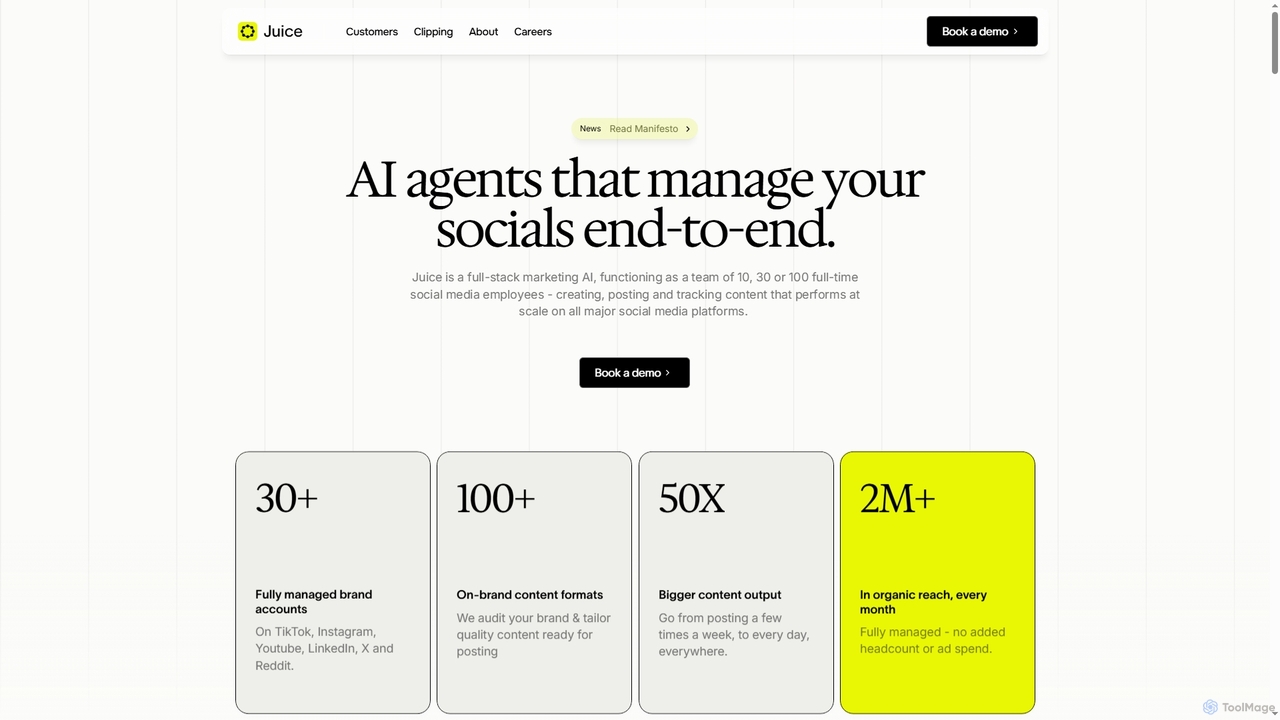
Juice is an AI-powered platform that automates end-to-end social media management, from content creation and strategic posting to …

6.1K

About Algorithmic Marketing

Algorithmic Marketing tools leverage AI and machine learning to automate and optimize marketing decisions and campaigns. These sophisticated platforms analyze vast datasets in real-time, identifying complex patterns and predicting customer behavior with high accuracy. They empower marketers to deliver highly personalized content, optimize ad spend across channels, and enhance overall campaign performance with unprecedented precision. This data-driven approach transforms traditional marketing strategies into proactive, adaptive, and highly efficient systems.

Core Features

  • Audience Segmentation: Automatically identifies and segments target audiences based on behavioral data, demographics, and preferences for hyper-targeted campaigns.
  • Personalized Content Delivery: Dynamically generates and delivers tailored advertisements, emails, and website content to individual users in real-time.
  • Bid Optimization: Automates and refines bidding strategies for digital ad campaigns across various platforms to maximize ROI and achieve specific marketing goals.
  • Predictive Analytics: Forecasts future customer behavior, campaign performance, and market trends, enabling proactive strategic adjustments.
  • Real-time Campaign Optimization: Continuously monitors campaign performance and automatically adjusts parameters like budget, targeting, and creative elements for optimal results.

Use Cases

Algorithmic Marketing is crucial for e-commerce businesses seeking to personalize product recommendations, digital advertisers aiming to optimize ad spend in real-time, and content marketers looking to dynamically tailor content delivery. It also benefits enterprises focused on predictive customer churn prevention and maximizing customer lifetime value.

How to Choose

When selecting Algorithmic Marketing tools, consider their data integration capabilities with existing CRM, CDP, and ad platforms. Evaluate the sophistication and customization options of their underlying algorithms, along with scalability to handle growing data volumes and campaign complexity. Prioritize platforms offering intuitive interfaces, robust reporting, and strong compliance with data privacy regulations like GDPR and CCPA.

Algorithmic MarketingUse Cases

1

Automate Ad Bidding and Optimize Campaign Performance

Digital marketing managers can utilize algorithmic marketing tools to automatically adjust bids for online ad campaigns across platforms like Google Ads and social media. By analyzing real-time performance data, these tools dynamically allocate budget, optimize targeting, and select the best ad creatives to maximize conversions and minimize cost-per-acquisition, freeing up significant manual effort and improving ROI.

2

Deliver Personalized Product Recommendations in E-commerce

E-commerce retailers can deploy algorithmic marketing solutions to analyze individual customer browsing history, purchase patterns, and demographic data. The system then generates highly relevant product recommendations on product pages, in emails, or through retargeting ads, significantly increasing cross-selling and up-selling opportunities, and enhancing the overall customer shopping experience.

3

Dynamic Segmentation for Targeted Email Marketing

Email marketers can leverage algorithmic tools to segment subscriber lists dynamically based on real-time engagement, purchase intent, and lifecycle stage. This allows for the automated delivery of highly personalized email content, promotions, and follow-ups, moving beyond static segmentation to improve open rates, click-through rates, and ultimately, conversion rates for email campaigns.

4

Predict and Prevent Customer Churn Proactively

Subscription-based businesses or service providers can use algorithmic marketing to identify customers at high risk of churning. By analyzing usage patterns, support interactions, and demographic data, the algorithms predict potential churners, allowing marketing teams to proactively engage these customers with targeted retention offers, personalized communications, or special incentives before they decide to leave.

5

Personalize Website Content in Real-time for Visitors

Website owners and content managers can implement algorithmic marketing to tailor website content, offers, and calls-to-action for each visitor in real-time. Based on their browsing behavior, referral source, and known preferences, the website dynamically adjusts its display, creating a highly relevant and engaging experience that increases user satisfaction, time on site, and conversion rates.

6

Optimize Marketing Budget Allocation Across Channels

Marketing directors can utilize algorithmic platforms to analyze the performance of various marketing channels (e.g., social media, search, email, display ads) and automatically reallocate budget for optimal ROI. These tools provide data-driven insights into which channels are most effective for specific goals, ensuring that marketing spend is always directed towards the highest-performing areas, maximizing overall campaign efficiency.

Algorithmic MarketingFrequently Asked Questions