Adly
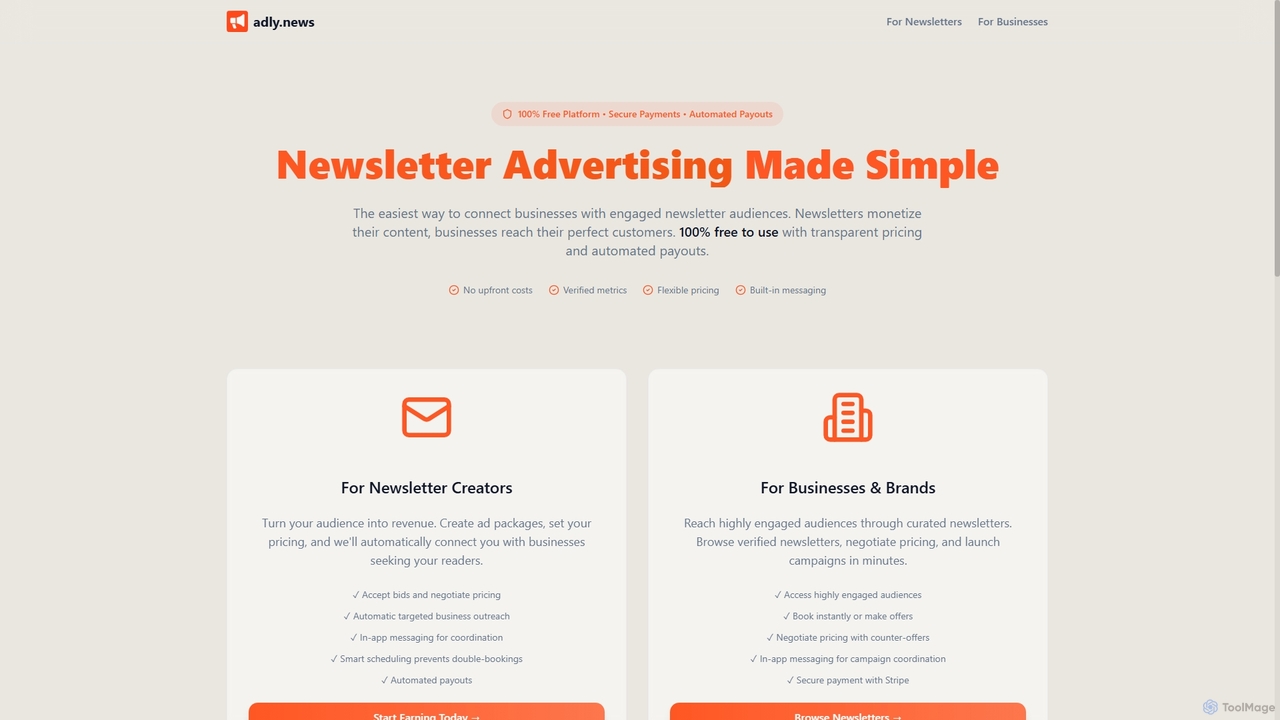
Adly is a 100% free-to-join newsletter advertising marketplace that seamlessly connects newsletter creators with businesses seeking highly engaged …
Adly is a 100% free-to-join newsletter advertising marketplace that seamlessly connects newsletter creators with businesses seeking highly engaged audiences. It simplifies content monetization for creators through automated outreach and secure payouts, while offering businesses transparent access to verified newsletter metrics and flexible campaign coordination.
Guest Glance
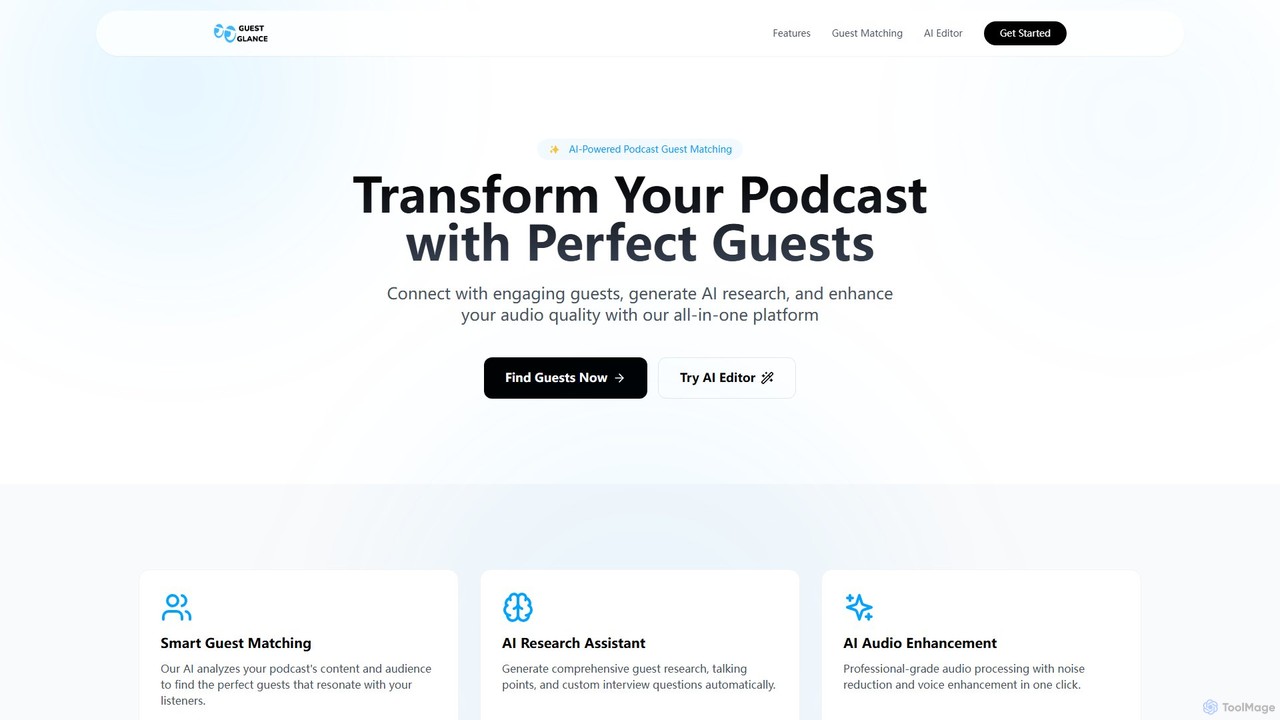
Guest Glance is an all-in-one AI platform for podcasters, offering smart guest matching, automated research, and one-click audio …
Guest Glance is an all-in-one AI platform for podcasters, offering smart guest matching, automated research, and one-click audio enhancement. It analyzes your podcast's content to find perfect guests, generates comprehensive interview prep materials, and improves audio quality, streamlining your entire production workflow.
About Audience Engagement
AI Audience Engagement tools are a specialized category of marketing software designed to create interactive and personalized experiences that captivate users. They leverage artificial intelligence to automate and enhance interactions, moving beyond one-way communication to foster active participation. These tools enable businesses to build stronger relationships, gather valuable feedback, and increase user loyalty by making digital experiences more dynamic and responsive. By analyzing user behavior in real-time, they can trigger personalized content, polls, or quizzes to maintain user interest.
Core Features
- Interactive Content Creation: Generate dynamic polls, quizzes, surveys, and interactive videos to capture user attention.
- Real-time Interaction Management: Automatically manage Q&A sessions, filter comments, and respond to user input during live events or on social media.
- Behavior-driven Personalization: Deliver personalized pop-ups, recommendations, and content based on real-time user actions and history.
- Gamification Implementation: Integrate elements like points, badges, and leaderboards to encourage sustained participation and competition.
- Community Sentiment Analysis: Analyze conversations in forums or social groups to understand audience sentiment and identify key topics.
Use Cases
These tools are invaluable for digital marketers, community managers, event organizers, and content creators. For instance, a brand can use them to run an interactive poll during a product launch webinar to gather instant feedback. An online educator can embed AI-powered quizzes into video lessons to improve learning retention and student participation.
How to Choose
When selecting a tool, consider the specific channels you use (website, social media, live events) and ensure compatibility. Evaluate the depth of its analytics and reporting capabilities. Assess the ease of use for creating interactive elements and the level of automation provided. Finally, check its integration options with your existing marketing stack, such as your CRM or email platform.
Audience EngagementUse Cases
Enhancing Live Webinar Interactivity
Event marketers use AI tools during live webinars to manage audience participation at scale. The AI can automatically categorize incoming questions in a Q&A panel, run pre-scheduled polls to gauge audience understanding, and display real-time results. This frees up the host to focus on delivering content while ensuring the audience remains actively involved, transforming a passive viewing experience into a dynamic, two-way conversation.
Gamifying Social Media Marketing Campaigns
A social media manager for a consumer brand launches a new product with an interactive campaign. They use an AI tool to create a 'personality quiz' that matches users with a product variant. The tool handles the logic, collects user data (with consent), and encourages sharing by generating a unique, shareable result image for each participant. This gamified approach significantly boosts engagement, reach, and lead generation compared to a standard announcement post.
Personalizing On-site User Journeys
An e-commerce manager aims to reduce cart abandonment. They deploy an AI engagement tool that tracks user behavior on the website. If a user hesitates on the checkout page, the AI can trigger a personalized pop-up offering a small discount or assistance via a chatbot. For returning visitors, it can display a poll asking about their shopping preferences to better tailor future recommendations, increasing conversion rates and customer satisfaction.
Automating Online Community Moderation
Community managers overseeing large forums or Discord servers use AI to maintain a healthy environment. The tool can be trained to automatically detect and flag spam, inappropriate language, or personal information. It can also identify frequently asked questions and direct users to existing resources or knowledge base articles, allowing human moderators to focus on fostering meaningful discussions and resolving complex issues.
Creating Interactive Educational Modules
An online course creator wants to improve student completion rates. They integrate an AI audience engagement tool into their learning platform. This allows them to embed interactive quizzes, 'choose your own path' scenarios, and reflection prompts directly within video lessons. The AI provides instant feedback to students and gives the instructor detailed analytics on which concepts are most challenging for learners, enabling targeted content improvements.
Scaling Audience Feedback Collection
A product marketing team needs to gather user feedback on a new feature. Instead of a generic survey, they use an AI tool to deploy contextual micro-surveys on their app. The tool triggers a simple, one-question poll right after a user interacts with the new feature. It can then analyze thousands of open-ended text responses for common themes and sentiment, providing actionable insights far more quickly than manual analysis would allow.