Marketing Best in category 1 results Augmented Reality AI Tool

Popular AI tools in the Augmented Reality field of Marketing include Wizart, etc., helping you quickly improve efficiency.

Wizart

Wizart

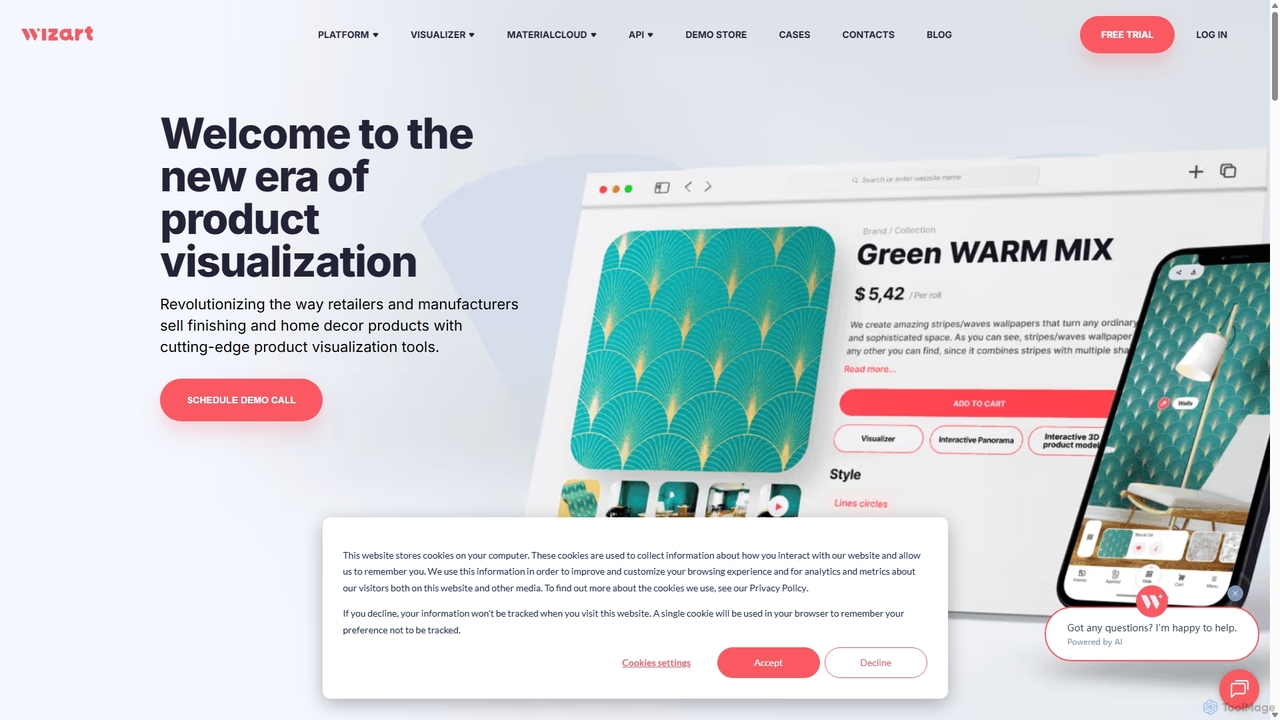
Wizart provides AI-powered product visualization tools for the home decor industry. It enables retailers and manufacturers to offer …

31.8K

About Augmented Reality

Augmented Reality (AR) tools are a class of software that overlays computer-generated images, 3D models, and information onto the real world as viewed through a device's camera. These tools utilize technologies like SLAM (Simultaneous Localization and Mapping) and computer vision to anchor digital content to physical environments. For marketers, AR provides a powerful way to create immersive and interactive brand experiences, allowing customers to visualize products in their own space and bridging the gap between online and offline retail. This technology transforms passive viewing into active participation, significantly boosting engagement and purchase confidence.

Core Features

  • Virtual Try-On: Allows users to virtually test products like makeup, glasses, or clothing using their device's camera.
  • 3D Product Visualization: Enables customers to place and view realistic 3D models of products, such as furniture or electronics, in their own environment.
  • Markerless Surface Tracking: Recognizes and tracks flat surfaces like floors and tables to place digital objects without needing a specific QR code or image.
  • WebAR Support: Delivers AR experiences directly through a mobile web browser, eliminating the need for users to download a separate application.
  • Interactive Analytics: Tracks user engagement metrics within the AR experience, such as interaction time, features used, and conversion events.

Applicable Scenarios

AR tools are highly effective in marketing for industries like e-commerce, retail, real estate, and automotive. E-commerce brands use them for "view in your room" features, while cosmetic companies offer virtual makeup try-ons. In real estate, agents can stage empty properties with virtual furniture. Automotive brands can let potential buyers explore a car's features in 3D from their driveway.

Selection Criteria

When choosing an AR marketing tool, consider its platform support (WebAR, iOS, Android) and ease of use, especially for non-technical teams. Evaluate the quality of 3D rendering and tracking stability. Also, check the capabilities of its content management system (CMS) for uploading assets and the depth of its analytics dashboard for measuring campaign performance.

Augmented RealityUse Cases

1

Virtual Furniture Placement for E-commerce

An e-commerce manager for a home decor brand wants to reduce returns and increase conversion rates for large furniture items. Using an AR tool with WebAR support, they integrate a 'View in Your Room' button on their product pages. Customers can tap this button on their smartphones, which activates their camera and allows them to place a true-to-scale 3D model of a sofa or table directly in their living room. This helps customers accurately assess size, style, and color fit, leading to higher purchase confidence and a reported 25% decrease in product returns.

2

Interactive Product Packaging Experience

A marketing team at a beverage company aims to boost brand engagement directly from their product. They use an AR platform to create a marker-based experience linked to the bottle's label. When a customer scans the label with their phone's camera, an interactive game or an animated brand story appears, overlaid on the bottle. This 'phygital' experience turns the physical product into a digital content portal, increasing social media shares and strengthening brand loyalty without requiring any additional media spend.

3

Virtual Makeup Try-On for Beauty Brands

A digital marketer for a cosmetics brand needs to overcome the online barrier of customers not being able to test products. They implement an AR virtual try-on tool on their website. Using their device's front-facing camera, shoppers can see how different shades of lipstick, eyeshadow, or foundation look on their own face in real-time. The tool's realistic rendering and color accuracy help users find the perfect match, which significantly increases add-to-cart rates and boosts online sales for color-sensitive products.

4

AR-Enhanced Real Estate Tours

A real estate agent is marketing an unfurnished property and finds it difficult for potential buyers to visualize the space's potential. Using an AR application, the agent offers guided tours where buyers can point their tablet or phone at empty rooms to see them fully furnished with virtual furniture in various styles. They can also use the AR tool to visualize renovation possibilities, like changing wall colors or flooring. This immersive experience helps buyers form an emotional connection to the property, shortening the sales cycle.

5

Gamified Trade Show Booth Engagement

An event marketer wants to make their company's booth stand out at a crowded trade show. They develop an AR-powered scavenger hunt. Attendees scan a QR code at the booth to launch a WebAR experience on their phones. They are then prompted to find and scan several 'hidden' markers around the booth, with each scan revealing a piece of product information and a puzzle piece. Completing the hunt earns them a prize. This gamified approach significantly increases booth traffic, dwell time, and lead capture, while creating a memorable brand interaction.

6

AR Portals for Immersive Brand Storytelling

A travel agency wants to give potential customers a taste of a destination before they book. A content marketer uses an AR tool to create a 'portal' experience. Through their phone, users can place a virtual door in their own room. When they walk through it, their screen transforms into a 360-degree immersive video of a beach in Thailand or the streets of Paris. This novel and highly engaging format allows the brand to tell a powerful story and evoke emotion, driving higher interest and lead generation for specific travel packages.

Augmented RealityFrequently Asked Questions