Calton Datx
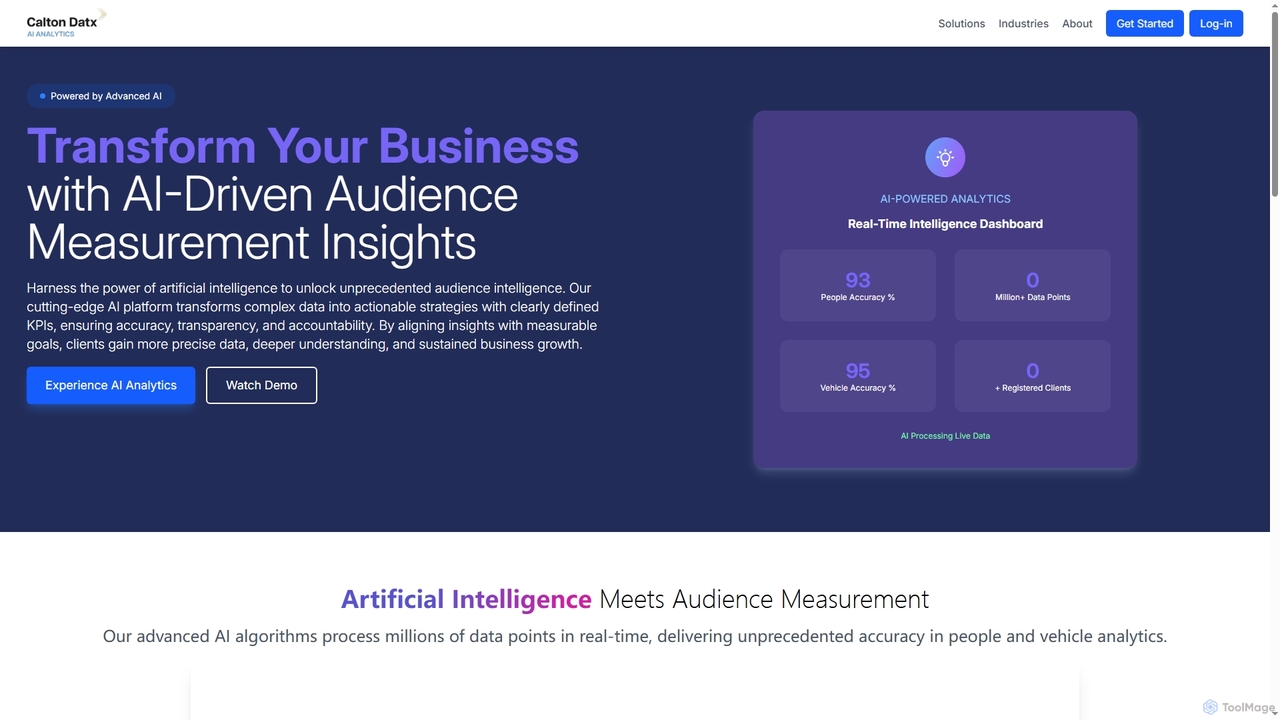
Calton Datx is an AI-powered audience measurement and analytics platform that provides real-time insights into people and vehicle …
Calton Datx is an AI-powered audience measurement and analytics platform that provides real-time insights into people and vehicle movements for Out-of-Home (OOH) advertising and retail environments. It leverages advanced computer vision and machine learning to transform complex data into actionable strategies, optimizing campaign performance and ROI.
Accurment
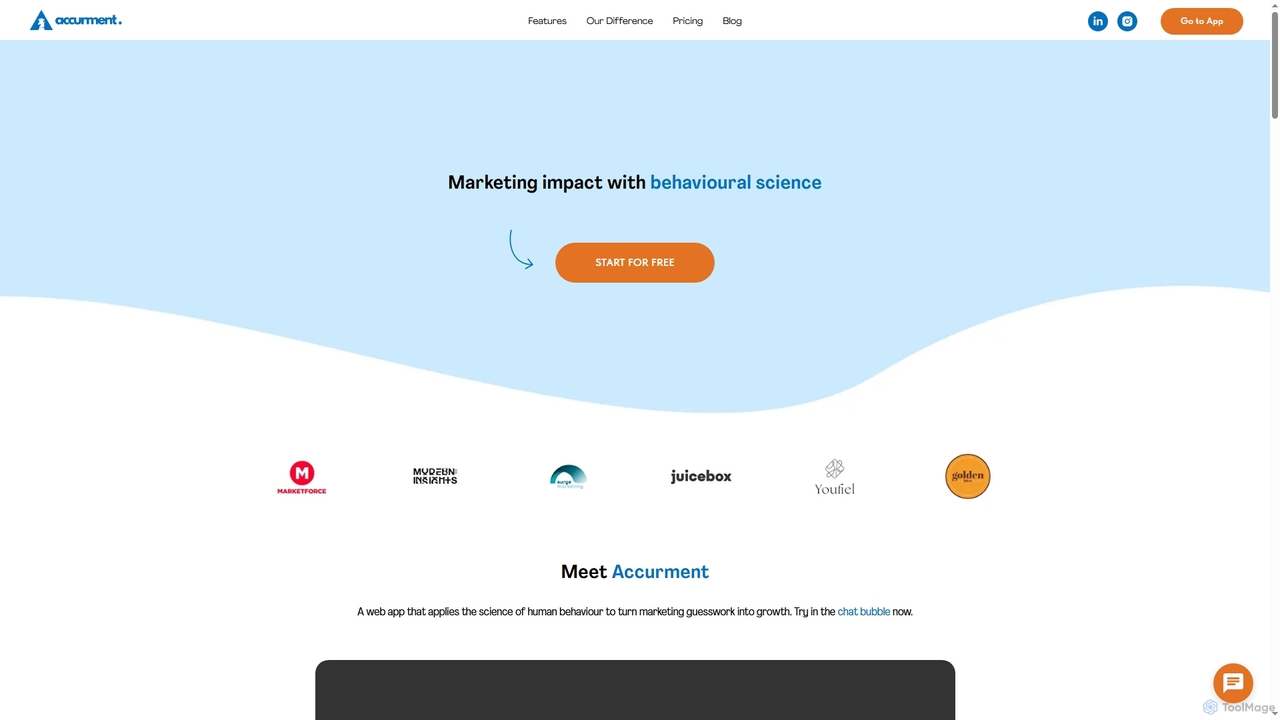
Accurment is an AI-powered web app that leverages behavioral science to transform marketing guesswork into strategic growth. Designed …
Accurment is an AI-powered web app that leverages behavioral science to transform marketing guesswork into strategic growth. Designed by marketing professors, it provides expert-curated insights for planning, testing, and optimizing campaigns. It helps businesses and marketers make data-backed decisions, measure impact, and achieve more credible and effective marketing outcomes.
About Campaign Optimization
Campaign Optimization tools are AI-powered platforms designed to automatically analyze and adjust marketing campaigns to maximize performance. These tools utilize machine learning algorithms to process real-time data on ad creatives, audience segments, bidding strategies, and channel effectiveness. This enables marketers to significantly improve key metrics like Return on Ad Spend (ROAS) and lower Cost Per Acquisition (CPA) without constant manual oversight. They go beyond standard ad management by providing predictive insights and automating complex, cross-channel decision-making.
Core Features
- Predictive Analytics: Forecasts campaign outcomes and identifies growth opportunities based on historical and real-time data.
- Automated Budget Allocation: Dynamically shifts advertising spend to the best-performing channels, campaigns, and audience segments.
- AI-Powered A/B Testing: Rapidly tests numerous variations of ad creatives, copy, and landing pages to find the most effective combinations.
- Real-time Bid Management: Automatically adjusts bids across ad platforms to achieve specific goals like maximizing conversions or clicks.
- Cross-Channel Optimization: Harmonizes and optimizes campaign performance across multiple platforms like Google, Meta, and TikTok from a single interface.
Applicable Scenarios
These tools are essential for performance marketing teams, e-commerce businesses, and digital agencies managing complex, multi-channel advertising campaigns. They are particularly effective for scaling paid acquisition efforts, optimizing large advertising budgets, and improving the efficiency of lead generation or sales-focused initiatives.
Selection Criteria
When choosing a tool, evaluate its integration capabilities with your existing ad platforms (e.g., Google Ads, Facebook Ads). Consider the sophistication of its predictive models, the level of automation control it offers, its reporting and analytics features, and its pricing structure, which is often based on a percentage of ad spend.

Campaign OptimizationUse Cases
Automate ROAS Maximization for E-commerce
An e-commerce marketing manager responsible for a large product catalog uses a campaign optimization tool during a peak sales season. They set a target Return on Ad Spend (ROAS) goal within the platform. The AI continuously analyzes sales data from their Shopify store and ad performance across Google Shopping and Facebook Ads. It automatically reallocates the daily budget, shifting funds from underperforming product ads to those generating high-value conversions. This process ensures the ad spend is concentrated on the most profitable items, maximizing overall revenue without manual daily adjustments.
Dynamic Creative Optimization for SaaS Lead Gen
A marketing team at a B2B SaaS company wants to improve its lead quality. They upload multiple ad components—headlines, descriptions, images, and calls-to-action (CTAs)—into their campaign optimization tool. The AI engine automatically assembles and tests hundreds of ad variations across LinkedIn and Google Search. It identifies which combinations resonate best with specific professional audiences, such as 'Project Managers' or 'IT Directors'. The tool then prioritizes serving the winning ad creatives to the most relevant segments, resulting in a higher conversion rate for demo requests and a lower overall Cost Per Lead (CPL).
Cross-Channel Budget Pacing for Digital Agencies
A digital agency manages a $100,000 monthly ad budget for a client across Google, Meta, and TikTok. To avoid overspending early in the month, they use a campaign optimization tool with budget pacing features. The tool automatically monitors daily spend against the monthly target for each platform. If one channel, like Meta, is spending too quickly, the AI throttles its delivery and reallocates some budget to a more cost-effective channel, like Google Search, that is still performing well. This ensures the budget lasts the entire month and is spent efficiently across the entire marketing mix.
Predictive Audience Targeting for Mobile Apps
A mobile gaming app wants to acquire users who are likely to make in-app purchases. Their marketing team connects their app's analytics data to a campaign optimization platform. The AI analyzes the behavior of existing high-value users (e.g., those who spend the most money). It then identifies common patterns and characteristics to build a predictive model. The platform uses this model to create highly targeted lookalike audiences on platforms like Facebook and TikTok, focusing ad spend on acquiring new users who mirror the behavior of their most profitable players, thus improving the overall lifetime value (LTV) of new cohorts.
Optimize Bidding Strategies for B2B Lead Quality
A B2B technology company is running Google Ads to generate demo requests, but many leads are low quality. They integrate their CRM with a campaign optimization tool. The tool analyzes which keywords and ad groups lead to deals marked as 'Closed-Won' in the CRM. Using this data, the AI automatically adjusts bidding strategies, increasing bids for keywords that attract high-quality leads and decreasing bids on terms that generate unqualified inquiries. This shifts the focus from lead quantity to lead quality, improving the marketing team's contribution to actual sales revenue.
Manage Ad Fatigue and Automate Creative Rotation
A direct-to-consumer brand runs always-on awareness campaigns on social media. To prevent audience burnout, a performance marketer uses an optimization tool to monitor ad fatigue. The AI tracks metrics like click-through rate (CTR) and frequency for each ad creative. When it detects that an ad's performance is declining after being shown too many times to the same audience, it automatically pauses the fatigued ad and rotates in a fresh creative from a pre-approved library. This maintains campaign effectiveness, keeps the brand message engaging, and saves the marketer hours of manual performance monitoring each week.