
Marketing Best in category 1 results Conversational Commerce AI Tool

Popular AI tools in the Conversational Commerce field of Marketing include OneText, etc., helping you quickly improve efficiency.

OneText

OneText

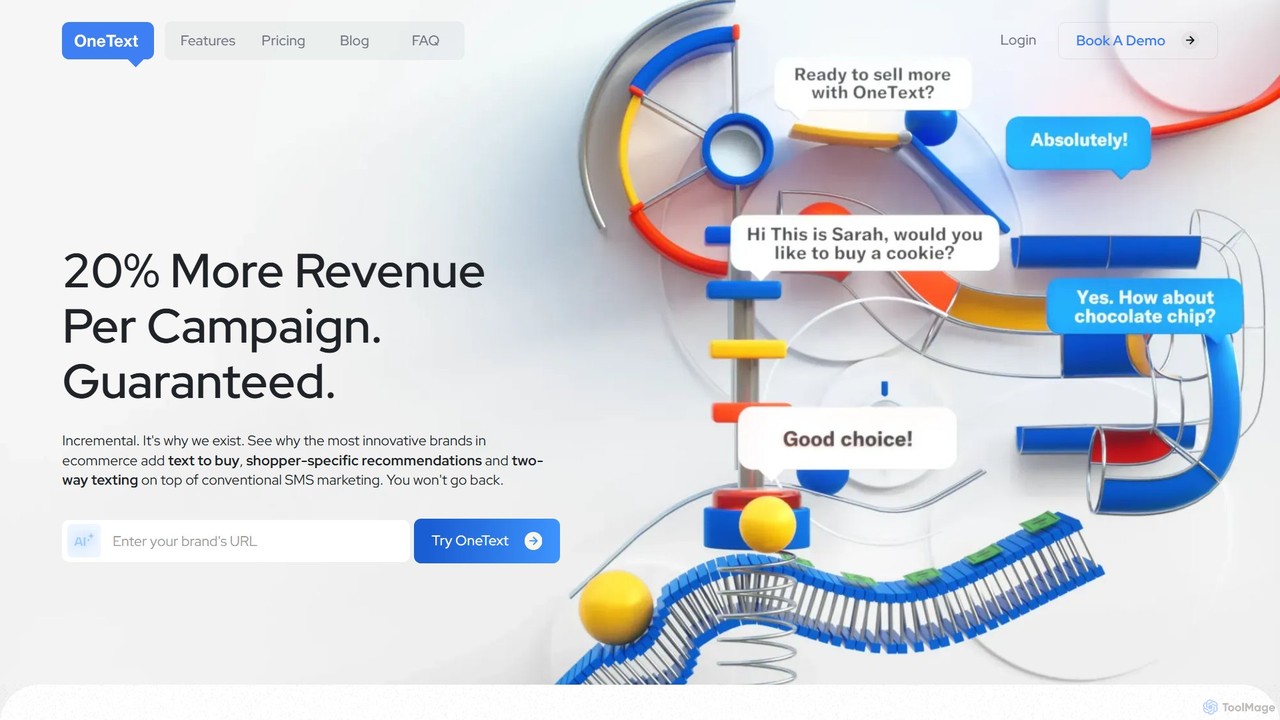
OneText is an AI-powered conversational commerce platform that enables e-commerce brands to increase revenue through "Text to Buy" …

19.6K

About Conversational Commerce

Conversational Commerce tools are AI-powered platforms that enable businesses to sell products and services through messaging apps and chat interfaces. These tools utilize Natural Language Processing (NLP) and chatbots to engage customers in real-time, personalized dialogues. They transform passive browsing into an interactive shopping experience, guiding users from product discovery to checkout directly within a conversation. This approach helps increase conversion rates and build stronger customer relationships by meeting consumers on their preferred communication channels.

Core Features

  • AI-Powered Chatbots: Automate customer interactions, answer queries, and guide users through the sales funnel 24/7.
  • Multi-Channel Integration: Connect seamlessly with platforms like WhatsApp, Facebook Messenger, Instagram DMs, and website live chat.
  • In-Chat Product Catalogs: Allow users to browse products, view details, and add items to a cart without leaving the chat window.
  • Secure In-Chat Payments: Facilitate transactions directly within the conversation, providing a frictionless checkout process.
  • Live Agent Handoff: Escalate complex conversations from an AI bot to a human agent smoothly for specialized support.

Use Cases

Conversational Commerce is widely adopted in e-commerce for personalized shopping assistance and abandoned cart recovery. It is also used by service-based businesses for automated appointment booking and lead qualification. In the B2B sector, these tools help nurture leads and provide instant answers to prospective clients, shortening the sales cycle.

How to Choose

When selecting a tool, evaluate its integration capabilities with your existing e-commerce platform (e.g., Shopify, WooCommerce) and CRM. Assess the sophistication of its AI and NLP for understanding user intent. Also, consider the range of supported channels, the ease of building conversation flows, and the quality of its analytics for tracking performance.

Conversational CommerceUse Cases

1

Automate Sales via Social Media DMs

An online fashion retailer uses a conversational commerce tool integrated with their Instagram account. When a user comments on a product post, an AI chatbot automatically initiates a conversation in their DMs. The bot asks about size and color preferences, displays product images from the catalog, and confirms availability. The customer can add the item to their cart and complete the purchase using a secure payment link sent directly in the chat, creating a seamless shopping experience without ever leaving the app.

2

Recover Abandoned Carts via WhatsApp

An e-commerce store selling electronics notices a high cart abandonment rate. They implement a conversational commerce system linked to their website. When a logged-in user leaves items in their cart for over an hour, an automated message is sent to their WhatsApp. The message reminds them of the products, offers a time-sensitive discount code, and provides a direct link to complete the checkout. This proactive, personal outreach helps recover a significant portion of potentially lost sales.

3

Qualify B2B Leads on a Website

A SaaS company uses a website chatbot to engage potential business customers. Instead of a static contact form, the chatbot initiates a conversation, asking about the visitor's company size, industry, and specific challenges. Based on the responses, the bot qualifies the lead in real-time. For high-value leads, it can instantly schedule a demo with a sales representative by integrating with their calendar. For others, it provides relevant case studies or whitepapers, ensuring every visitor gets immediate, tailored value.

4

Automate Appointment Booking for Services

A local spa uses a conversational commerce bot on its Facebook Page and website. Potential clients can start a chat to ask about services and availability. The bot provides a list of services with prices, answers common questions, and checks the booking calendar in real-time. The client can select a service, choose an available time slot, and confirm their appointment all within the chat. The system then automatically sends a confirmation and a reminder message 24 hours before the appointment.

5

Provide Personalized Post-Purchase Support

A customer buys a smart home device. A day after delivery, they receive a message from an AI assistant via the company's app. The bot proactively offers a link to a quick-start video guide and asks if they have any setup questions. When the customer asks about connecting to a specific Wi-Fi network, the bot provides step-by-step instructions. This conversational support enhances the customer experience, reduces calls to the support center, and builds brand loyalty by showing the company cares after the sale is complete.

6

Launch Interactive Marketing Campaigns

A beverage company launches a new product and runs a campaign via Facebook Messenger. Users can scan a QR code on the product to start a conversation with a branded chatbot. The bot engages them with a fun quiz about the new flavor, offers exclusive content, and provides a coupon for their next purchase. This interactive approach drives higher engagement than traditional ads, collects valuable customer feedback through the quiz, and encourages repeat purchases, all within a single conversational flow.

Conversational CommerceFrequently Asked Questions