
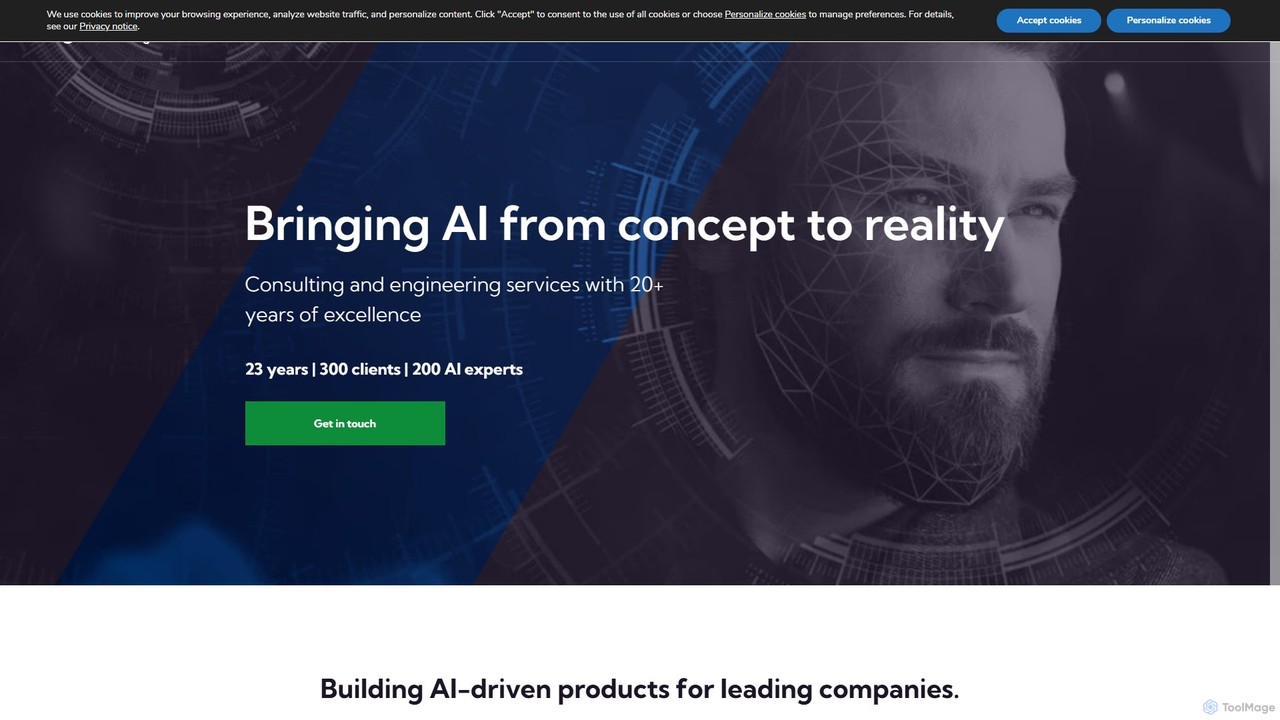
Visage Technologies
Visage Technologies provides advanced, high-performance computer vision solutions, specializing in face tracking, analysis, and recognition SDKs. With over …
Visage Technologies provides advanced, high-performance computer vision solutions, specializing in face tracking, analysis, and recognition SDKs. With over 20 years of expertise, they offer custom AI development and edge AI optimization for industries like automotive, security, retail, and healthcare.
About Customer Analytics
Customer Analytics AI tools are specialized platforms that leverage artificial intelligence to analyze vast amounts of customer data. These tools employ machine learning algorithms to uncover patterns, predict behaviors, and generate actionable insights into customer preferences and journeys. They empower businesses to understand their audience deeply, personalize experiences, and optimize marketing and sales strategies for better engagement and retention. By focusing on individual customer interactions, these tools provide a granular view that complements broader marketing analytics.
Core Features
- Behavioral Segmentation: Automatically groups customers based on their actions, demographics, and preferences.
- Churn Prediction: Identifies customers at risk of leaving, enabling proactive retention efforts.
- Customer Lifetime Value (CLV) Calculation: Estimates the future revenue a customer will generate, aiding in resource allocation.
- Personalized Recommendations: Delivers tailored product or content suggestions to individual users.
- Sentiment Analysis: Extracts and analyzes customer emotions and opinions from feedback and reviews.
Applicable Scenarios
Customer Analytics AI tools are crucial for e-commerce businesses seeking to personalize shopping experiences, SaaS companies aiming to reduce churn by identifying at-risk users, and marketing departments optimizing campaign targeting based on deep customer insights. They are also vital for customer service teams looking to understand common pain points and improve satisfaction.
How to Choose
When selecting a Customer Analytics AI tool, consider its data integration capabilities with your existing CRM and marketing platforms, the depth and variety of its analytical models (e.g., predictive, prescriptive), its scalability to handle growing data volumes, and the clarity of its reporting and visualization features. Evaluate the ease of use for your team and the level of support provided.
Customer AnalyticsUse Cases
Optimize Personalized Marketing Campaigns
Marketing teams utilize Customer Analytics AI to segment their audience with high precision. By analyzing past purchase history, browsing behavior, and demographic data, the AI identifies distinct customer groups. This allows marketers to craft highly personalized messages and offers for each segment, leading to significantly higher conversion rates and improved campaign ROI, moving beyond generic mass marketing.
Predict Customer Churn and Proactively Intervene
SaaS companies and subscription services leverage Customer Analytics AI to predict which customers are likely to churn. The AI analyzes usage patterns, support ticket history, and engagement metrics to flag at-risk accounts. Customer success managers can then proactively reach out with targeted offers, personalized support, or educational resources, significantly reducing churn rates and improving customer retention by up to 15-20%.
Enhance Customer Lifetime Value (CLV)
E-commerce businesses and financial institutions use Customer Analytics AI to identify high-value customers and those with high CLV potential. By understanding their purchasing habits, product affinities, and engagement levels, the AI helps tailor upselling and cross-selling strategies. This data-driven approach ensures that marketing efforts are focused on maximizing long-term revenue from each customer, leading to a substantial increase in overall CLV.
Analyze Customer Feedback and Sentiment
Product development and customer service teams employ Customer Analytics AI to process vast amounts of unstructured customer feedback from surveys, social media, and review platforms. The AI performs sentiment analysis and topic extraction, identifying common pain points, emerging trends, and areas for product improvement. This enables businesses to make data-driven decisions to enhance product features and service quality, directly addressing customer needs.
Identify High-Value Customer Segments
Business strategists and sales leaders leverage Customer Analytics AI to pinpoint their most profitable customer segments. By analyzing purchasing frequency, average order value, product categories, and engagement with marketing efforts, the AI identifies the characteristics of top-tier customers. This insight allows businesses to allocate resources more effectively, focus on acquiring similar customers, and develop tailored loyalty programs, driving sustainable growth.
Optimize Product Recommendation Systems
E-commerce platforms and media streaming services deploy Customer Analytics AI to power their product and content recommendation engines. By analyzing individual user preferences, viewing history, purchase patterns, and interactions with similar items, the AI generates highly relevant suggestions. This leads to increased user engagement, higher average order values, and improved customer satisfaction, as users discover products or content they genuinely desire.