brynga
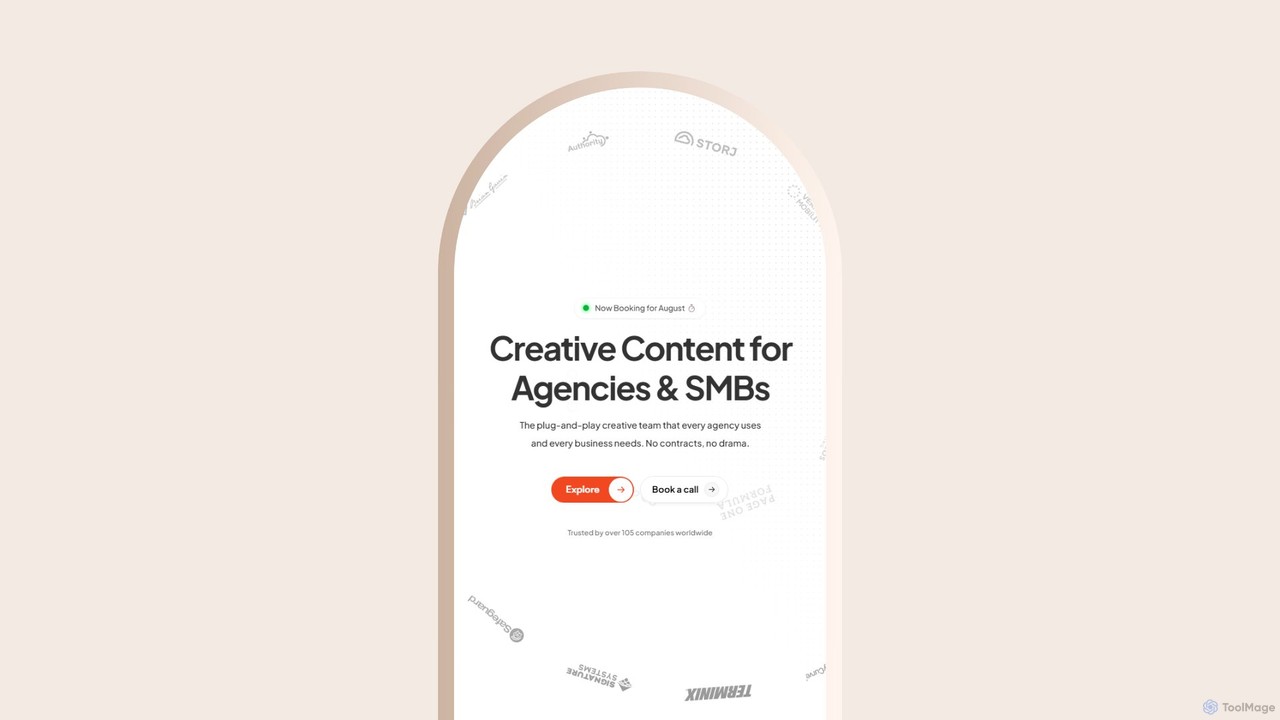
Brynga is an AI-powered, subscription-based creative service providing unlimited design, UI/UX, and copywriting for agencies and SMBs. It …
Brynga is an AI-powered, subscription-based creative service providing unlimited design, UI/UX, and copywriting for agencies and SMBs. It offers a dedicated team of senior creatives, a streamlined workflow via a client portal, and a rapid 48-hour turnaround for most requests, all for a flat monthly fee.
About Design
AI Design tools for marketing are applications that automate and accelerate the creation of visual assets for promotional activities. They use generative AI to produce on-brand images, social media posts, advertisements, and logos from simple text prompts or templates. This enables marketing teams to scale content production, A/B test visual concepts rapidly, and maintain brand consistency without requiring deep graphic design expertise. The core value lies in converting marketing ideas into campaign-ready visuals with remarkable speed and efficiency.
Core Features
- Template-Based Generation: Quickly create visuals using a vast library of professionally designed and customizable templates for various marketing channels.
- Brand Kit Automation: Automatically apply your brand's logos, color palettes, and fonts to any design for consistent branding.
- AI Text-to-Image Creation: Generate unique, royalty-free images from textual descriptions, perfect for ad creatives and blog visuals.
- Automatic Resizing: Instantly adapt a single design to the specific dimensions required by different social media platforms and ad networks.
- AI Layout & Copy Suggestions: Receive intelligent recommendations for visual composition and compelling marketing copy to improve engagement.
Applicable Scenarios
These tools are essential for digital marketers, social media managers, content creators, and small business owners. They are frequently used for creating daily social media content, designing high-volume ad creatives for performance marketing campaigns, generating graphics for blog posts and email newsletters, and quickly mocking up product visuals for e-commerce stores.
Selection Criteria
When choosing an AI Design tool for marketing, consider its integration capabilities with social media scheduling and ad platforms. Evaluate the quality and variety of its template and asset library. Assess the robustness of its brand control features to ensure consistency. Prioritize an intuitive user interface for non-designers and verify it supports all necessary output formats (e.g., JPG, PNG, MP4).

DesignUse Cases
Generate Social Media Campaign Visuals
A social media manager needs to create a week's worth of content for a new product launch across Instagram, Facebook, and Twitter. Instead of designing each post manually, they use an AI design tool. They input a single prompt like 'promotional post for a new eco-friendly water bottle' and select their brand kit. The tool generates ten different visual concepts. The manager selects their favorite three, and the tool automatically resizes them into posts, stories, and headers for each platform, saving over 80% of the typical design time.
A/B Test Ad Creatives at Scale
A performance marketer needs to test multiple ad variations for a Google Ads campaign to find the highest-converting creative. Using an AI design tool, they input their core value proposition and target audience. The AI generates five distinct ad creatives with different imagery, headlines, and color schemes. This allows the marketer to launch a comprehensive A/B test in under an hour, a process that would typically take days and require a graphic designer, leading to faster campaign optimization and improved ROI.
Create On-Brand Blog and Newsletter Graphics
A content marketer writes a blog post about 'Future Trends in E-commerce' and needs a compelling header image. Instead of spending time searching generic stock photo websites, they use an AI design tool's text-to-image feature. They enter the prompt 'futuristic online shopping interface, clean and minimalist style'. The AI generates a unique, high-quality image that perfectly matches the article's theme. They then use a template to create a matching email newsletter banner, ensuring visual consistency across content channels in minutes.
Quickly Generate E-commerce Product Mockups
An e-commerce store owner is launching a new line of custom-printed mugs. To create compelling product listings, they need photos of the mugs in various settings. Using an AI design tool, they upload their print design file. The tool automatically generates dozens of realistic mockups, showing the mug on a desk, in a kitchen, and held by a model. This eliminates the need for an expensive photoshoot, reduces time-to-market, and provides a rich set of visuals for product pages, social media, and advertisements.
Design Cohesive Event Promotion Materials
A marketing coordinator is organizing a webinar and needs a full set of promotional materials. Using an AI design tool, they start with a template for a webinar announcement. After customizing it with their event details and brand kit, the tool suggests creating matching designs. With a few clicks, they generate a consistent set of visuals including an email header, a LinkedIn event banner, and Instagram story graphics. This ensures a professional and cohesive brand experience for the event across all marketing touchpoints, all created in under 30 minutes.
Generate Logos and Brand Kits for Startups
A new startup founder needs a professional logo and brand identity but has a limited budget. They use an AI design tool's logo maker. By inputting the company name, industry (e.g., 'SaaS for finance'), and desired style (e.g., 'modern, trustworthy'), the AI generates hundreds of logo variations. After selecting a logo, the tool automatically creates a full brand kit, including color palettes, font pairings, and examples of the logo on business cards and social media profiles. This provides a foundational brand identity in minutes for a fraction of the cost of a design agency.