ToolMage
Sign in

Best 1 Events AI tools for Marketing

Popular Events AI tools in Marketing include MeetMoji, helping you work more efficiently.

MeetMoji
Freemium

MeetMoji

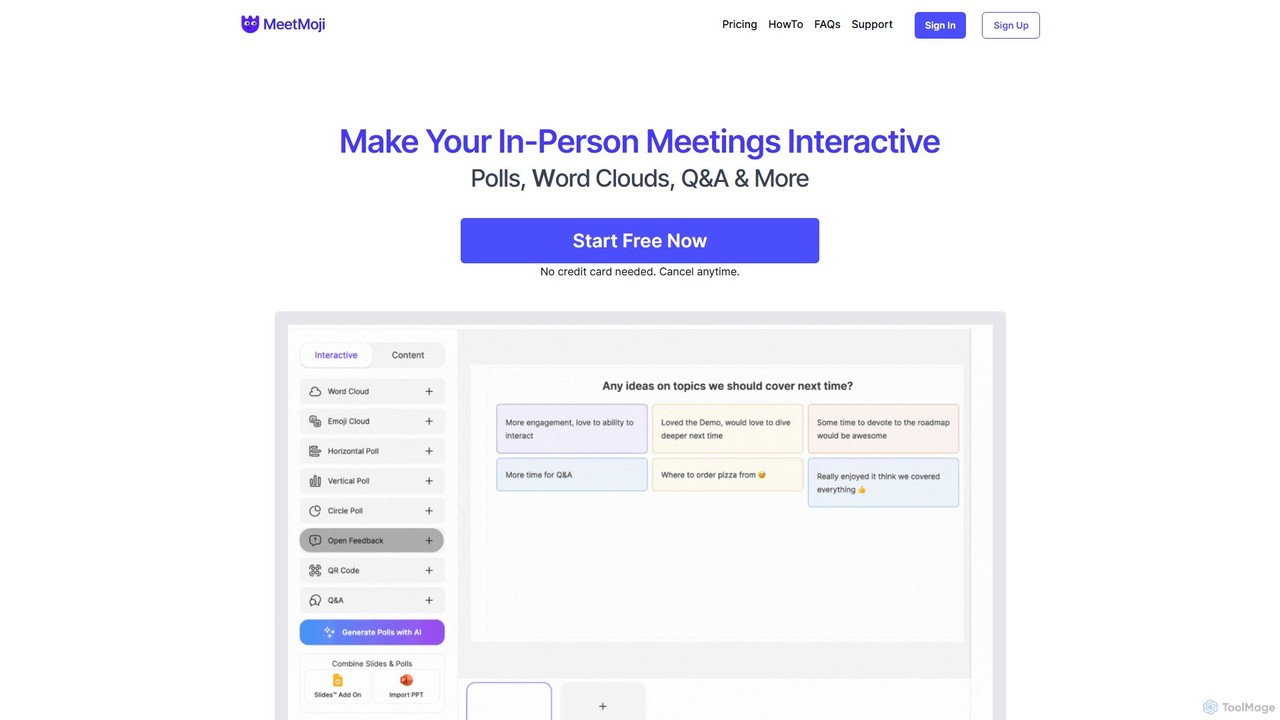
MeetMoji is an interactive presentation tool that boosts audience engagement through live polls, word clouds, Q&A, and emoji reactions. It seamlessly integrates with Google Slides, PowerPoint, and more, allowing audiences to participate instantly by scanning a QR code, with no downloads required.

Collaboration
Visits 5.5KFavorites 103Likes 103

About Events

AI Events tools are a specialized category of marketing software that use artificial intelligence to optimize the promotion, execution, and analysis of virtual, hybrid, and in-person events. These platforms leverage machine learning and natural language processing to automate personalized communication, recommend content, and generate data-driven insights. This enables marketers to enhance attendee engagement, increase registration rates, and accurately measure event ROI. Their primary advantage lies in personalizing the event experience at scale for every participant.

Core Features

  • Intelligent Promotion Automation: Generates targeted email campaigns, social media content, and landing pages to attract specific audience segments.
  • Personalized Attendee Experience: Recommends relevant sessions, networking opportunities, and content to individuals based on their profile and behavior.
  • Automated Content Repurposing: Transforms event recordings into summaries, blog posts, social media clips, and key takeaway reports.
  • Predictive Analytics & Lead Scoring: Analyzes attendee data to forecast engagement, identify high-value leads, and provide actionable post-event insights.

Use Cases

These tools are essential for corporate event marketers, demand generation teams, and community managers. They are applied to large-scale conferences, B2B webinars, trade shows, and product launches where maximizing engagement and proving business impact are critical goals.

How to Choose

When selecting an AI Events tool, evaluate its integration capabilities with your CRM and marketing automation systems. Assess the sophistication of its personalization engine and the depth of its analytics. Also consider its support for different event formats (virtual, hybrid, in-person) and its ability to scale with your audience size.

Events use cases

1

Automating Promotion for a Tech Conference

An event marketing manager for a large tech conference needs to maximize registrations. Using an AI Events tool, they generate dozens of variations of social media posts and personalized email sequences tailored to different audience segments like developers, executives, and students. The AI analyzes past campaign data to suggest the most effective messaging and timing for each group. This results in a higher conversion rate and saves the team hours of manual content creation and scheduling, allowing them to focus on strategic partnerships.

2

Enhancing Attendee Networking at a Hybrid Trade Show

An event organizer wants to increase the value for attendees at a hybrid trade show. Their event platform's AI analyzes attendee profiles, stated interests, and real-time behavior (sessions joined, virtual booths visited). Based on this data, the AI-powered mobile app suggests high-value networking connections to both in-person and virtual attendees. It facilitates meeting scheduling and suggests conversation starters, leading to more meaningful business interactions and higher overall event satisfaction.

3

Generating Post-Webinar Content at Scale

A content marketer hosts weekly B2B webinars but struggles with repurposing the content efficiently. They use an AI Events tool to process the webinar recordings. The tool automatically generates a full transcript, a concise summary for an email newsletter, identifies key quotes suitable for social media graphics, and drafts a blog post based on the main topics discussed. This process reduces the content repurposing time by over 80%, allowing the marketer to consistently generate a wide array of assets from a single event.

4

Personalizing the Virtual Summit Experience

For a large online summit with multiple parallel tracks, an organizer uses an AI platform to create a unique agenda for each attendee. Based on job titles, industry, and interests provided during registration, the AI recommends a personalized schedule of sessions. During the event, it sends real-time notifications for relevant upcoming talks and networking lounges. This level of personalization prevents attendees from feeling overwhelmed and significantly increases session attendance and overall engagement.

5

Analyzing Attendee Sentiment and Feedback

After a major corporate event, the planning team is faced with thousands of survey responses and social media mentions. Instead of manual analysis, they use an AI tool to process all the text data. The AI performs sentiment analysis to gauge overall satisfaction, identifies recurring themes of praise (e.g., 'keynote speaker', 'networking app') and criticism (e.g., 'long registration lines', 'session audio issues'), and generates a visual report. This provides clear, actionable insights for improving future events much faster than human analysis could.

6

Optimizing Sponsorship ROI with AI Lead Scoring

A sponsor at a major expo wants to ensure their sales team follows up with the most promising prospects. They use the event's AI-powered app to capture leads at their booth. The AI scores each lead in real-time based on their profile data and interaction level (booth visit duration, content downloaded, demos attended). The sales team receives a prioritized list of hot leads directly in their CRM, allowing them to focus their efforts effectively and significantly increasing the conversion rate from event leads to sales opportunities.

Events FAQ

What are AI Events tools?

AI Events tools are software platforms that use artificial intelligence to enhance and automate various aspects of event marketing and management. They go beyond simple logistics to provide intelligent features like personalized attendee recommendations, automated content creation for promotion, and in-depth data analysis for measuring success. Their main goal is to create more engaging, data-driven event experiences.

How do AI Events tools differ from traditional event management software?

Traditional event management software primarily focuses on logistics: registration, ticketing, and basic scheduling. AI Events tools incorporate these functions but add a layer of intelligence. They actively work to improve marketing outcomes and attendee experience through:

  • Personalization: Suggesting sessions and connections.
  • Automation: Creating promotional content automatically.
  • Analytics: Providing deep insights into attendee behavior and ROI, not just registration numbers.
In short, traditional tools manage the event, while AI tools optimize it.

What are the key benefits of using AI for events?

Using AI for events offers several significant benefits. Key advantages include:

  • Increased Efficiency: Automating repetitive tasks like creating social media posts or sending follow-up emails saves significant time for event teams.
  • Enhanced Engagement: Personalizing agendas and networking suggestions makes the event more relevant and valuable for each attendee.
  • Data-Driven Decisions: AI provides deep analytics on attendee behavior, content performance, and overall ROI, enabling better planning for future events.
  • Improved Lead Quality: AI-powered lead scoring helps sponsors and sales teams identify and prioritize the most engaged prospects.

How do I choose the right AI Events tool?

Choosing the right AI Events tool depends on your specific needs. Consider these key factors:

  • Integration: Does it connect seamlessly with your existing CRM, marketing automation platform, and other essential software?
  • Feature Set: Evaluate the specific AI features. Do you need strong content generation, advanced networking recommendations, or deep analytics? Prioritize tools that excel in your required areas.
  • Event Type Support: Ensure the tool is well-suited for your primary event formats, whether they are virtual, in-person, or hybrid.
  • Scalability and Support: Can the platform handle your expected audience size? What level of customer support and training is provided?

Who should use AI Events tools?

AI Events tools are most beneficial for professionals and teams who want to move beyond basic event logistics and focus on maximizing marketing impact and attendee value. This includes:

  • Corporate Event Marketers: For promoting conferences, product launches, and trade shows.
  • Demand Generation Teams: To use events as a key channel for generating high-quality leads.
  • Community Managers: For creating engaging and personalized experiences for their community members.
  • Webinar Organizers: To automate promotion, engagement, and content repurposing for online events.