ToolMage
Sign in

Best 1 Generative Content AI tools for Marketing

Popular Generative Content AI tools in Marketing include Brancher.ai, helping you work more efficiently.

Brancher.ai
Freemium

Brancher.ai

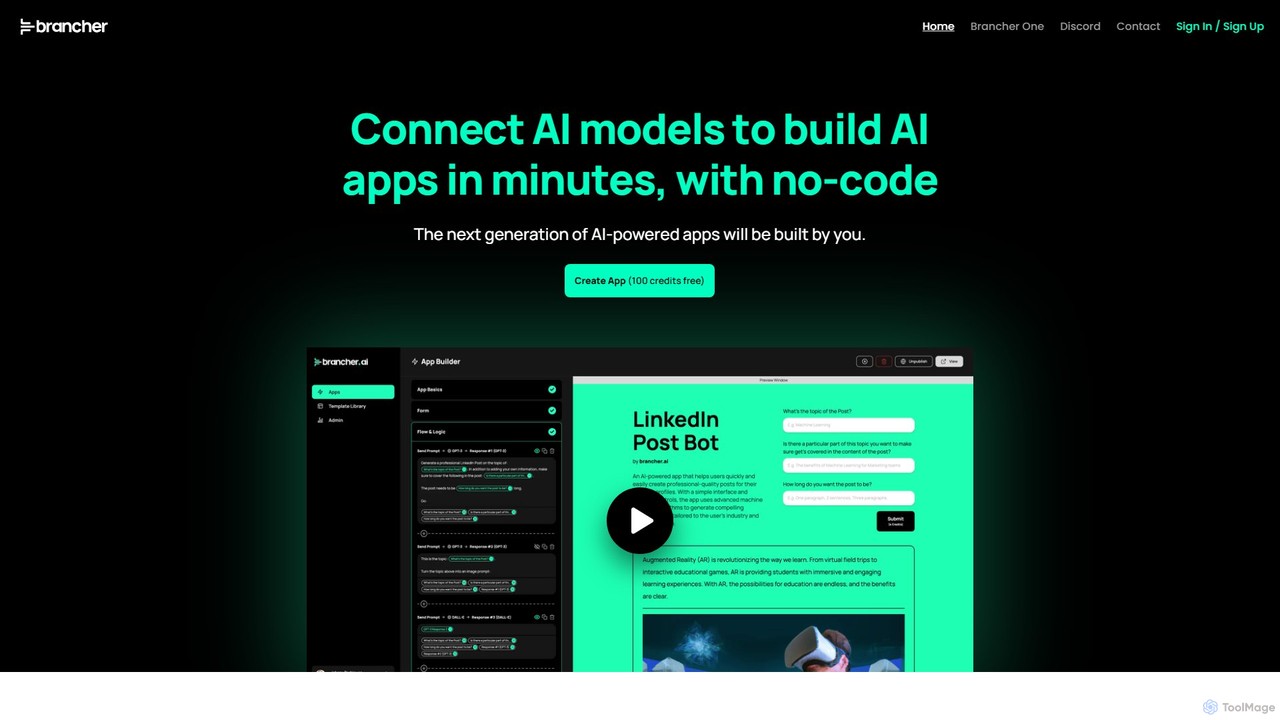
Brancher.ai is a powerful no-code platform that allows users to connect various AI models to build and launch custom AI-powered applications in minutes. It's designed for both individuals and organizations, offering a suite of tools for app creation, workflow automation, AI-powered research, and more, without requiring any coding knowledge.

Workflow Automation
Visits 34.2KFavorites 139Likes 155

About Generative Content

Generative Content tools are AI-powered platforms designed to create original marketing materials from scratch. Using advanced models like LLMs and diffusion models, these tools produce a wide range of content, including text, images, and video clips, based on simple prompts. They are primarily used by marketing teams to scale content production, personalize campaigns, and accelerate the creation of promotional assets. This allows marketers to overcome creative blocks and generate diverse content variations for testing and optimization.

Core Features

  • Multi-Format Output: Generate diverse content types, from blog posts and social media captions to ad creatives and product images.
  • Brand Voice Alignment: Customize outputs to match a specific brand tone, style, and terminology.
  • Campaign-Specific Templates: Utilize pre-built workflows for common marketing tasks like email newsletters, SEO articles, or ad campaigns.
  • Content Remixing and Variation: Create multiple versions of a single piece of content for A/B testing or targeting different channels.

Use Cases

These tools are invaluable for digital marketers, content creators, and e-commerce managers. They are used to automate the creation of social media calendars, draft SEO-optimized blog posts, generate compelling ad copy for platforms like Google and Meta, and create unique product descriptions at scale.

How to Choose

When selecting a tool, consider the specific content formats you need (text, image, video). Evaluate the quality and originality of the AI's output. Check for features that ensure brand consistency, such as style guides. Also, assess its integration capabilities with your existing marketing stack, like your CMS or social media management tools.

Generative Content use cases

1

Automate Social Media Content Creation

A social media manager for a B2C brand needs to post engaging content daily across multiple platforms. Using a generative content tool, they input weekly themes and target audience personas. The AI generates a full week's worth of content, including platform-specific captions, relevant hashtags, and accompanying images or short video ideas. This reduces content planning time from hours to minutes and ensures a consistent posting schedule with fresh, varied material.

2

Scale SEO Article Production

A content marketing team aims to increase organic traffic by publishing targeted blog posts. They use a generative content tool to outline articles based on specific keywords. The AI assists in drafting sections, generating meta descriptions, and suggesting internal linking opportunities. While a human editor reviews and refines the final piece for expertise and accuracy, the tool accelerates the initial drafting process by over 70%, allowing the team to triple their content output.

3

Generate High-Converting Ad Copy

A performance marketer is running a multi-channel advertising campaign for a new product. They use a generative content tool to create dozens of variations of ad headlines, body text, and calls-to-action for Google Ads, Facebook, and LinkedIn. The tool can tailor the copy to each platform's character limits and audience tone. This enables rapid A/B testing to identify the most effective messaging and improve the campaign's return on ad spend (ROAS).

4

Personalize Email Marketing Campaigns

An email marketer wants to increase engagement by personalizing their newsletters. They integrate a generative content tool with their CRM. The tool analyzes customer data segments (e.g., past purchases, browsing history) and generates personalized subject lines, introductory paragraphs, and product recommendations for each segment. This level of dynamic content creation leads to higher open rates and click-through rates without manual effort for each variation.

5

Create E-commerce Product Descriptions

An e-commerce store manager is launching a new collection with hundreds of products. Manually writing unique, SEO-friendly descriptions for each item is a monumental task. They upload a spreadsheet of product specifications (e.g., material, dimensions, features) to a generative content tool. The AI then produces compelling and consistent descriptions for the entire catalog, highlighting key benefits in the brand's voice, saving weeks of manual writing.

6

Draft Scripts for Short-Form Videos

A brand's video content creator needs to produce a series of short-form videos for TikTok and Instagram Reels. They use a generative content tool to brainstorm concepts and draft scripts. By providing a topic and desired tone (e.g., 'humorous explainer about our new feature'), the AI generates several script options, including scene suggestions and dialogue. This helps overcome writer's block and quickly produces a pipeline of video ideas ready for production.

Generative Content FAQ

What are Generative Content tools for marketing?

Generative Content tools for marketing are AI applications that automatically create original content like articles, social media posts, images, and ad copy. Unlike simple templates, they use complex AI models to generate unique materials based on user prompts, helping marketing teams scale production and personalize campaigns efficiently.

How do I choose the right Generative Content tool?

To choose the right tool, first identify the primary content types you need (e.g., text, images). Then, evaluate the output quality and its alignment with your brand's voice. Consider these key factors:

  • Feature Set: Does it offer templates for specific marketing tasks like SEO or social media?
  • Integrations: Can it connect with your CMS, social media scheduler, or other marketing software?
  • Ease of Use: Is the interface intuitive for your team?
  • Cost: Does the pricing model align with your usage needs and budget?
What is the difference between Generative Content tools and a word processor?

A word processor (like Google Docs or Microsoft Word) is a passive tool for writing and formatting text created by a human. In contrast, a Generative Content tool is an active partner that creates the content itself. You provide a prompt or instructions, and the AI generates new text, images, or other media, significantly speeding up the initial creation process.

Is AI-generated content effective for SEO?

AI-generated content can be effective for SEO when used correctly. Search engines like Google prioritize high-quality, helpful, and people-first content, regardless of how it's created. Using AI to brainstorm ideas, structure articles, and accelerate drafting is a powerful strategy. However, it's crucial for a human expert to review, edit, and add unique insights to ensure the final content is accurate, valuable, and meets E-E-A-T (Experience, Expertise, Authoritativeness, Trustworthiness) guidelines.

What are the main benefits of using AI for marketing content?

The main benefits are increased efficiency, scalability, and personalization. AI tools can generate content drafts in seconds, allowing marketing teams to produce more content with the same resources. They make it possible to create numerous variations for A/B testing and personalize messaging for different audience segments at a scale that would be impossible to achieve manually. This leads to faster campaign launches and more data-driven marketing decisions.