Marketing Best in category 1 results Intelligence AI Tool

Popular AI tools in the Intelligence field of Marketing include Omnibound, etc., helping you quickly improve efficiency.

Omnibound

Omnibound

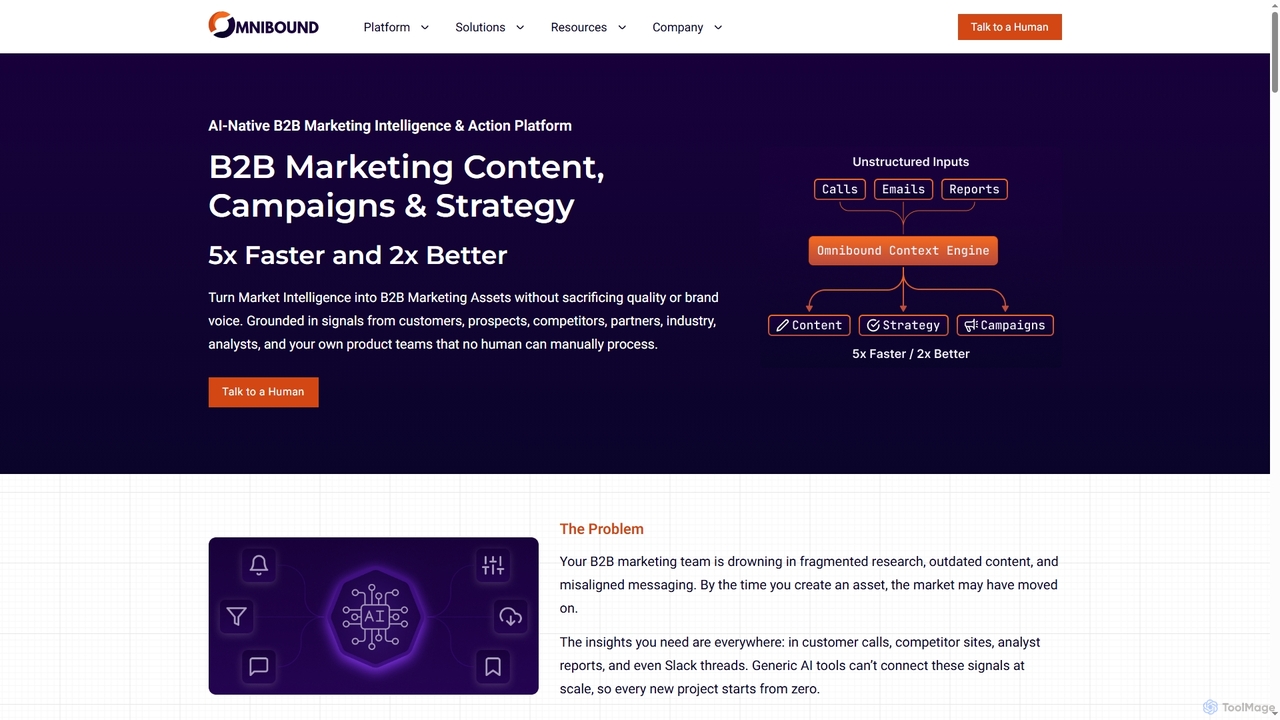
Omnibound is an AI-native B2B marketing intelligence and action platform. It accelerates content creation, campaign execution, and strategy …

12.0K

About Intelligence

Intelligence tools are AI-powered platforms specifically designed to collect, analyze, and interpret vast amounts of marketing-related data, transforming it into actionable insights. These sophisticated tools leverage advanced machine learning algorithms and data science techniques to unify raw data from diverse sources, including web analytics, social media, CRM, and external market reports. Their primary value lies in empowering marketing professionals to make highly informed, data-driven decisions, anticipate market trends, deeply understand customer behavior, and gain a significant competitive edge within the broader marketing landscape by providing a holistic view of market dynamics.

Core Features

  • Comprehensive Data Aggregation: Gathers and unifies disparate data from internal systems (CRM, sales) and external sources (web analytics, social media, market research, competitor activities) for a single source of truth.
  • Advanced Predictive Analytics: Utilizes sophisticated AI models to accurately forecast future market trends, predict customer purchasing behavior, and anticipate the potential performance of upcoming marketing campaigns.
  • In-depth Competitive Benchmarking: Continuously monitors and analyzes competitor strategies, pricing models, product launches, and market share shifts, enabling proactive identification of opportunities and threats.
  • Granular Customer Segmentation: Analyzes extensive customer data to identify distinct segments based on demographics, behavior, and preferences, facilitating highly personalized and effective marketing efforts.
  • Actionable Performance Attribution: Tracks and precisely attributes the impact of various marketing activities across different channels on specific business outcomes, allowing for optimal resource allocation and campaign refinement.

Applicable Scenarios

Marketing intelligence tools are indispensable for businesses aiming to maintain a leading position in rapidly evolving markets. They are extensively utilized by marketing strategists for long-term planning, product managers for market-driven product development, and business analysts for comprehensive market assessments. Specific applications include forecasting shifts in consumer demand, evaluating the real-time effectiveness of diverse marketing channels, identifying untapped market segments, and proactively formulating responses to competitor actions to secure market share.

How to Choose

When selecting an AI intelligence tool, it's crucial to consider its seamless data integration capabilities with your existing CRM, ERP, and marketing automation systems. Evaluate the breadth and depth of its AI-driven analytics, focusing on features like predictive modeling, natural language processing for sentiment analysis, and advanced statistical analysis. Assess the clarity and customizability of its reporting and visualization dashboards, its scalability to efficiently handle growing data volumes, the overall ease of use for your marketing team, and the direct relevance of its insights to your specific marketing objectives and industry challenges.

IntelligenceUse Cases

1

Market Trend Forecasting for Product Strategy

A product development team uses an AI intelligence tool to analyze global search trends, social media discussions, and competitor product launches. By identifying emerging consumer needs and technological shifts, they can forecast future market demands for specific product categories, informing their R&D roadmap and ensuring new products align with anticipated market opportunities.

2

Optimizing Ad Spend with Predictive Performance

A digital marketing manager leverages an intelligence platform to predict the performance of various ad creatives and targeting strategies before launching campaigns. By analyzing historical data and current market signals, the tool suggests optimal budget allocation across channels and audience segments, significantly reducing wasted ad spend and maximizing ROI for upcoming campaigns.

3

Competitive Landscape Monitoring and Strategy Adjustment

A marketing strategist employs an intelligence tool to continuously track competitor pricing, promotional activities, and new feature releases. The tool provides real-time alerts and detailed reports on competitor movements, allowing the strategist to quickly adjust their own marketing messages, pricing, or product positioning to maintain a competitive edge and respond effectively to market shifts.

4

Identifying Untapped Customer Segments

An e-commerce business uses AI intelligence to analyze customer purchase history, browsing behavior, and demographic data. The tool identifies previously unrecognized customer segments with unique preferences and unmet needs, enabling the marketing team to develop highly targeted campaigns and personalized product recommendations that resonate deeply with these new audiences.

5

Enhancing Customer Retention through Churn Prediction

A subscription service company utilizes an intelligence platform to predict which customers are at high risk of churning. By analyzing usage patterns, support interactions, and engagement metrics, the AI identifies early warning signs. This allows the customer success team to proactively intervene with personalized offers, support, or engagement strategies, significantly improving customer retention rates.

6

Strategic Pricing Optimization Based on Market Demand

A retail chain employs an intelligence tool to dynamically adjust product pricing based on real-time market demand, competitor pricing, and inventory levels. The AI analyzes vast datasets to recommend optimal price points that maximize sales volume and profit margins, ensuring products are competitively priced while capitalizing on peak demand periods and minimizing stock obsolescence.

IntelligenceFrequently Asked Questions