Slideworks
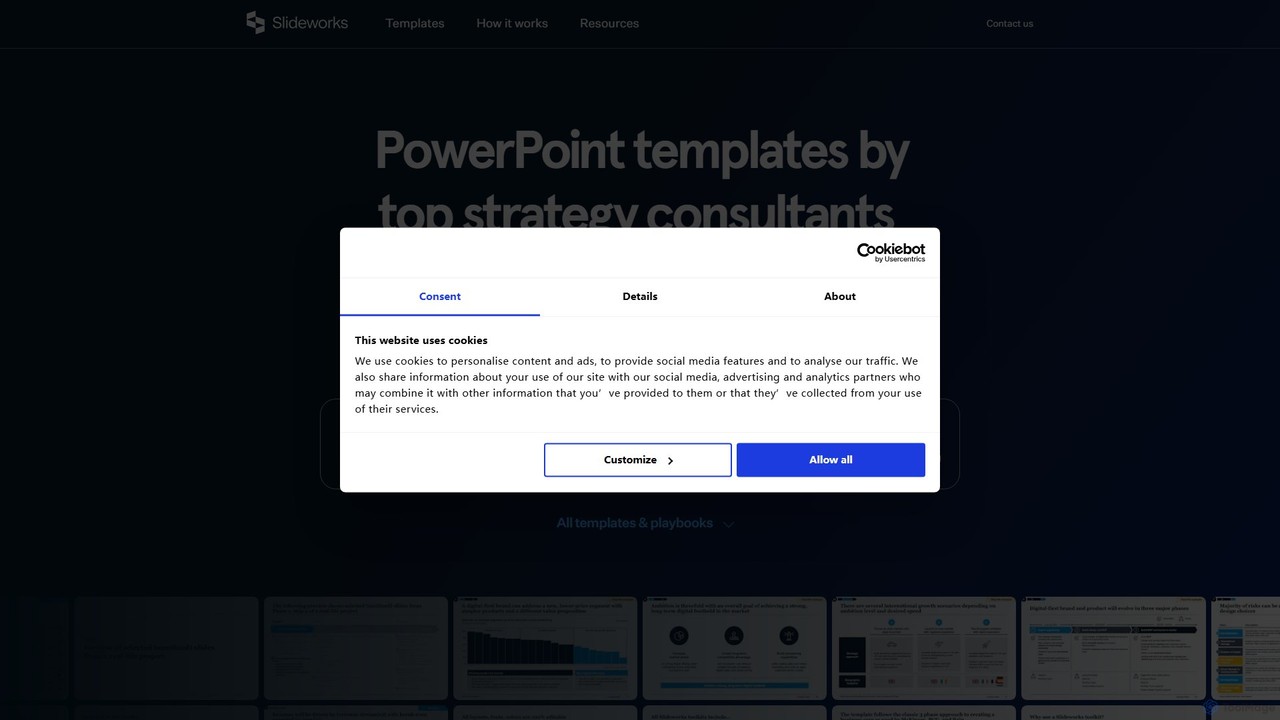
Slideworks offers premium, consulting-grade PowerPoint and strategy templates designed by ex-McKinsey consultants. It provides a vast library of …
Slideworks offers premium, consulting-grade PowerPoint and strategy templates designed by ex-McKinsey consultants. It provides a vast library of fully editable slides, frameworks, and data visualizations to help professionals create high-impact presentations for business strategy, project management, and investor pitches, saving time and ensuring a top-tier professional standard.
About Pitch Decks
AI Pitch Deck tools are specialized platforms that leverage artificial intelligence to assist in creating compelling and professional fundraising presentations. These tools analyze successful deck structures and use generative AI to suggest content, refine messaging, and automate visual design. They streamline the entire process, from structuring a persuasive narrative to visualizing complex data, enabling founders to produce investor-ready decks efficiently. This technology helps ensure key elements like market analysis, business model, and financial projections are presented clearly and persuasively.
Core Features
- AI Content Generation: Suggests text and talking points for crucial slides like Problem, Solution, and Market Size based on user inputs.
- Narrative Structuring: Provides proven templates and AI-driven guidance to build a logical and compelling story flow that resonates with investors.
- Automated Design & Branding: Instantly applies consistent branding, including logos, color palettes, and fonts, across the entire presentation for a professional look.
- Data Visualization: Transforms raw data and financial metrics into clear, easy-to-understand charts, graphs, and tables.
- Performance Analytics: Tracks viewer engagement, such as who viewed the deck, which slides they spent the most time on, and completion rates.
Applicable Scenarios
These tools are primarily used by startup founders, entrepreneurs, and business development teams preparing for fundraising rounds (e.g., pre-seed, seed, Series A). They are also valuable for internal innovation teams pitching new projects to management, or for participants in business plan competitions who need to create a high-impact presentation quickly.
Selection Criteria
When choosing an AI Pitch Deck tool, consider its primary focus: some excel at content and narrative suggestions, while others are stronger in visual design and customization. Evaluate the quality and relevance of its templates. Assess the level of control you retain over the final output and check for integration capabilities with data sources. Finally, determine if you require advanced features like viewer analytics.
Pitch DecksUse Cases
Seed Round Fundraising for a Tech Startup
A first-time founder of a SaaS startup needs to create a compelling 10-slide pitch deck for their seed funding round. Lacking design skills and a large budget, they use an AI pitch deck tool. By inputting key business details—problem statement, target audience, and revenue model—the AI generates a complete narrative structure and drafts content for each slide. The tool automatically applies a clean, modern design consistent with their brand, saving dozens of hours of manual work and producing a professional deck that clearly communicates their vision to potential investors.
Visualizing Data for a Series A Pitch
A growing company is preparing for its Series A funding round and needs to present complex user growth metrics, financial projections, and market data. An analyst uses an AI pitch deck tool's data visualization feature. They upload spreadsheets with raw data, and the AI suggests the most effective chart types (e.g., bar charts for monthly recurring revenue, line graphs for user growth). The tool instantly generates polished, on-brand charts, transforming dense data into compelling visual evidence of traction and potential, making the investment case much stronger.
Creating an Internal Pitch for a New Project
A product manager within a large corporation needs to secure budget and stakeholder buy-in for a new product initiative. They use an AI pitch deck tool to structure their proposal. Instead of a fundraising focus, they adapt the templates for an internal audience, focusing on slides like 'Internal Problem/Opportunity,' 'Proposed Solution,' 'Resource Requirements,' and 'Alignment with Company Goals.' The AI helps them articulate the business case clearly and professionally, ensuring their presentation is persuasive and easy for executives to digest, increasing the project's chances of getting approved.
Tailoring Pitches for Different Investor Types
A startup founder needs to pitch to both venture capitalists (VCs) and strategic corporate investors. These audiences have different priorities. Using an AI pitch deck tool, the founder creates a master deck. Then, they quickly generate two variations. For VCs, the AI helps emphasize slides on market size and scalability. For the strategic investor, it helps reframe the narrative to highlight synergies and potential for acquisition. This allows for efficient, targeted communication without creating multiple decks from scratch, significantly improving the relevance of each pitch.
Preparing a Pitch for a Business Plan Competition
A team of university students is entering an entrepreneurship competition with a tight deadline. They have a solid business idea but limited experience in creating professional presentations. They use an AI pitch deck generator to quickly get started. The tool provides a standard, competition-friendly structure (e.g., the 10/20/30 rule). The AI helps them refine their value proposition and market analysis sections, ensuring their language is clear and impactful. This allows the team to focus on practicing their delivery, confident that their visual aid is polished, professional, and covers all the essential points judges expect to see.
Analyzing Pitch Deck Engagement with Investors
After sending out their deck to a list of potential investors, a founding team uses the analytics feature of their AI pitch deck tool. They can see which investors opened the deck, how much time was spent on each slide, and whether the deck was viewed to completion. They notice that most viewers drop off at the 'Go-to-Market Strategy' slide. This data provides an invaluable feedback loop, prompting them to revise that specific slide to be clearer and more compelling before their next outreach campaign, thus optimizing their fundraising efforts based on real engagement data.