
ToolMage
Sign in

Best 1 Product Descriptions AI tools for Marketing

Popular Product Descriptions AI tools in Marketing include Wondr AI, helping you work more efficiently.

Wondr AI
Freemium

Wondr AI

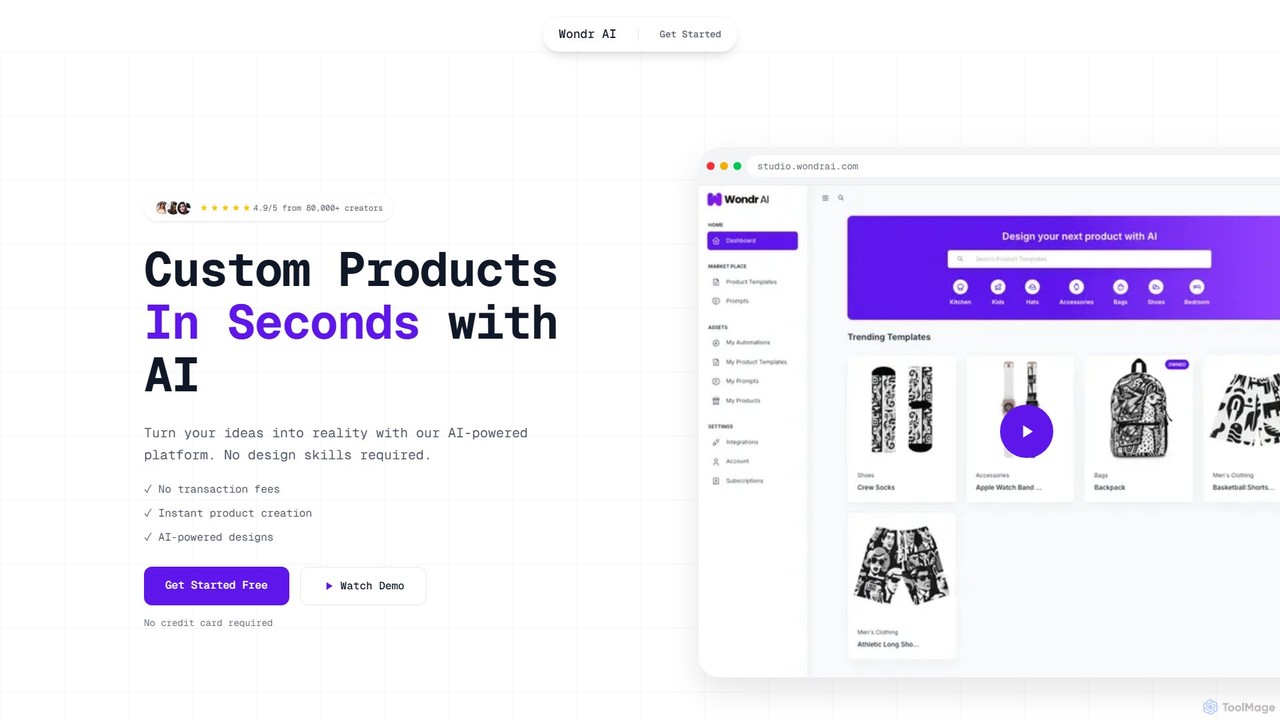
Wondr AI is an AI-powered platform designed for the Print-On-Demand (POD) industry. It enables creators and entrepreneurs to turn ideas into market-ready products in seconds. The tool generates unique product designs and compelling descriptions from simple text prompts, requiring no design or copywriting skills. It's an all-in-one solution for ideation, design, and product launch.

Image Generation
Visits 7.5KFavorites 111Likes 110

About Product Descriptions

AI Product Description generators are specialized marketing tools that automatically create compelling, persuasive, and accurate copy for e-commerce products. Leveraging advanced natural language generation (NLG) models, these tools transform raw product features into benefit-oriented narratives. They are designed to increase conversion rates, improve SEO rankings, and save hours of manual copywriting. Many tools also offer features for tone customization and generating multiple variations for A/B testing.

Core Features

  • Feature-to-Benefit Conversion: Automatically translates technical specifications into compelling advantages for the customer.
  • Tone & Voice Customization: Allows users to define a brand voice (e.g., professional, witty, casual) for consistent messaging.
  • SEO Keyword Integration: Seamlessly incorporates target keywords into the description to improve search engine visibility.
  • Bulk Generation: Creates descriptions for hundreds of products simultaneously from a data file like a CSV.
  • Multi-Language Support: Generates and localizes descriptions for different international markets.

Use Cases

These tools are invaluable for e-commerce businesses of all sizes, from individual sellers on platforms like Shopify and Amazon to large online retailers. Digital marketing agencies use them to efficiently produce high-quality copy for multiple clients, while product marketing managers use them to ensure brand consistency across entire product catalogs.

How to Choose

When selecting a tool, consider the quality and creativity of the generated text. Evaluate its ability to customize tone, length, and format. Check for integrations with your e-commerce platform, support for multiple languages if you sell internationally, and a pricing model that aligns with your product volume (e.g., per description vs. monthly subscription).

Product Descriptions use cases

1

Automate E-commerce Product Listings

An e-commerce manager for a fast-fashion brand needs to launch a new collection of 50 items within a day. Instead of writing each description manually, they upload a CSV file with product names, features, and target keywords. The AI tool generates unique, on-brand, and SEO-friendly descriptions for all 50 items in minutes, drastically reducing the time-to-market and freeing up the team to focus on marketing strategy.

2

Enhance Marketplace SEO on Amazon & Etsy

A seller on a competitive marketplace like Amazon wants to improve their product's search ranking. They use an AI Product Description generator to create keyword-rich titles, compelling bullet points highlighting key benefits, and a detailed description that answers common customer questions. The tool helps structure the content according to platform best practices, increasing visibility and click-through rates from potential buyers.

3

Create Unique Dropshipping Descriptions

A dropshipper sources products from suppliers who provide generic, uninspired descriptions used by hundreds of other sellers. To stand out and avoid SEO penalties for duplicate content, they use an AI tool to rewrite and enrich these descriptions. The AI crafts a unique and persuasive narrative for each product, establishing a distinct brand identity and building more trust with customers.

4

Maintain Brand Voice Consistency

A large electronics company with a catalog of over 1,000 products struggles to maintain a consistent brand voice across all listings. By setting up a custom tone profile (e.g., 'innovative,' 'user-friendly,' 'reliable') in the AI tool, their marketing team can generate descriptions that consistently reflect the brand's identity, whether for a new smartphone or a simple accessory.

5

Generate A/B Testing Copy Variations

A marketing team wants to optimize the conversion rate of their best-selling product. They use an AI generator to create five different versions of the product description, each with a different angle: one focusing on technical features, one on lifestyle benefits, and another using a more humorous tone. They then run A/B tests on their website to identify which copy resonates most effectively with their audience and drives more sales.

6

Localize Product Content for Global Markets

A business is expanding its online store to Germany and Japan. Instead of just translating existing descriptions, which can sound unnatural, they use an AI tool with multilingual capabilities. The tool generates new descriptions in German and Japanese from the core product features, ensuring the copy is not only linguistically accurate but also culturally relevant and persuasive for local audiences.

Product Descriptions FAQ

What is an AI Product Description generator?

An AI Product Description generator is a software tool that uses artificial intelligence, specifically natural language generation (NLG), to automatically write copy for products. It takes a list of features, keywords, and brand information as input and produces human-like, persuasive descriptions for e-commerce sites and marketing materials. These tools are designed to save time, improve copy quality, and boost sales.

How do I choose the right AI tool for product descriptions?

To choose the right tool, focus on four key areas. First, assess the output quality: does it sound natural and persuasive? Second, check for customization options like tone of voice, length, and format control. Third, consider integrations with your e-commerce platform (e.g., Shopify, WooCommerce) for a streamlined workflow. Finally, evaluate the pricing model to ensure it fits your budget and the number of descriptions you need to generate.

What is the difference between an AI Product Description generator and a general AI writer?

The main difference is specialization. A general AI writer (like a chatbot) is a versatile tool for many tasks, but it lacks specific training for sales copy. An AI Product Description generator is fine-tuned on vast amounts of e-commerce data. It includes specific features like feature-to-benefit conversion, structured outputs (e.g., bullet points for Amazon), and direct platform integrations, making it more efficient and effective for creating high-converting product listings.

Can AI Product Description generators improve my product's SEO?

Yes, they can significantly improve product SEO. Most specialized tools have built-in features to seamlessly integrate primary and secondary keywords into titles, bullet points, and descriptions. By generating unique, high-quality content, they also help you avoid duplicate content penalties, which is a common issue for stores with large catalogs or dropshippers. This leads to better rankings in search engine results.

Who benefits most from using AI Product Description tools?

These tools are most beneficial for e-commerce store owners, marketing teams, and digital agencies managing large product catalogs. They are particularly valuable for businesses that frequently add new products, operate in multiple markets, or want to A/B test their copy to optimize conversions. Dropshippers and marketplace sellers also benefit greatly by quickly creating unique content to differentiate themselves from competitors.