ToolMage
Sign in

Best 3 Product Photos AI tools for Marketing

Popular Product Photos AI tools in Marketing include Pokecut, Presti, and Vinteo AI, helping you work more efficiently.

Presti
Freemium

Presti

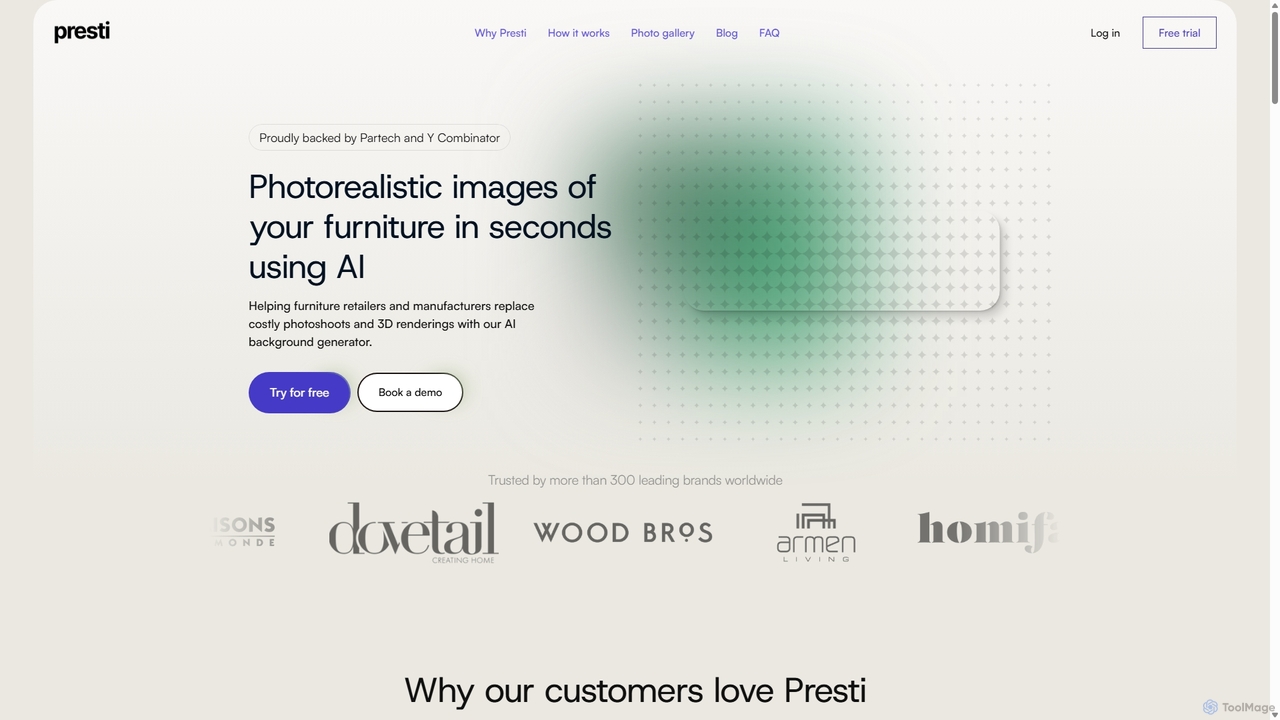
Presti is an AI-powered background generator designed for the furniture industry. It enables retailers and manufacturers to create photorealistic lifestyle images in seconds, replacing expensive photoshoots and 3D rendering. Users can change product colors, stage items in AI-generated scenes, and perform advanced edits to produce high-converting visuals effortlessly.

Product Visualization
Visits 23.5KFavorites 173Likes 170
Pokecut
Freemium

Pokecut

A powerful, free AI photo editor and image generator. Pokecut offers a suite of tools including background removal, photo enhancement, magic eraser, and AI image generation powered by advanced models like Stable Diffusion. It's designed for everyone from casual users to e-commerce sellers and professional designers, available on web, iOS, and Android.

Image Editing
Visits 748KFavorites 160Likes 145
Vinteo AI
Paid

Vinteo AI

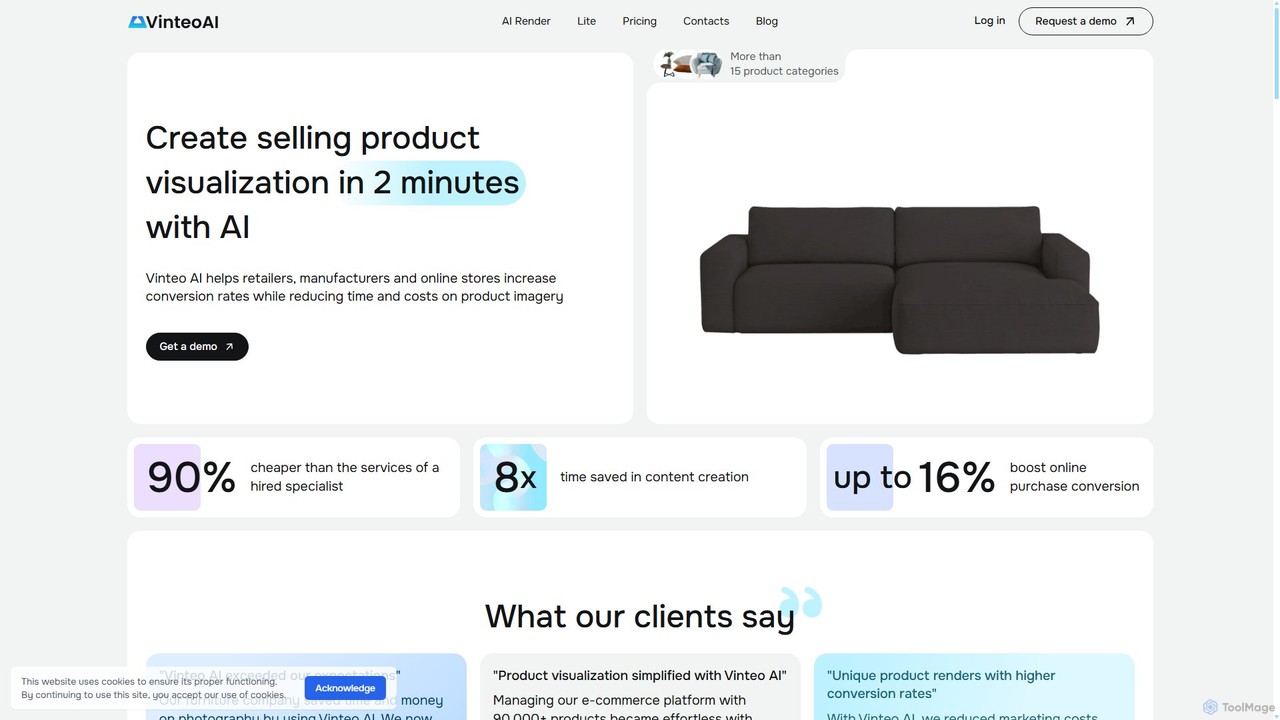
Vinteo AI is an AI-powered product photography platform for e-commerce. It enables businesses to create high-quality, professional product visualizations in minutes. Users can upload product images, place them in custom AI-generated scenes or pre-styled interiors, adjust lighting, colors, and download high-resolution images, significantly reducing photography costs and time while boosting conversion rates.

Product Visualization
Visits 8.1KFavorites 142Likes 128

About Product Photos

AI-powered Product Photos tools are specialized solutions within the broader marketing technology landscape, designed to automate and enhance the creation of high-quality product imagery. These tools leverage advanced artificial intelligence algorithms to generate, edit, and optimize product visuals, often from minimal input or existing photos. They are invaluable for e-commerce businesses, digital marketers, and content creators seeking to produce professional, consistent, and engaging product images at scale, significantly reducing the time and cost associated with traditional photography.

Core Features

  • Background Removal: Automatically isolates products from their original backgrounds, enabling seamless replacement.
  • Virtual Staging: Places products into realistic or stylized virtual environments without the need for physical sets.
  • Image Upscaling & Enhancement: Improves resolution, clarity, and overall visual quality of product images.
  • Variant Generation: Creates diverse product images for different colors, textures, or angles from a single input.
  • Lighting & Shadow Adjustment: Dynamically modifies lighting conditions and adds realistic shadows to product visuals.

Applicable Scenarios

These tools are primarily used by e-commerce store owners, digital marketing agencies, and product designers. They excel in scenarios requiring rapid production of large volumes of product images for online listings, social media campaigns, and digital catalogs. For instance, an online fashion retailer can quickly generate images for hundreds of clothing items across various models and backdrops.

How to Choose

When selecting an AI product photo tool, consider the desired image quality and realism, the range of customization options for backgrounds and staging, and the ease of use for your team. Evaluate its integration capabilities with existing e-commerce platforms or design software, and compare pricing models based on your volume needs. Also, assess the tool's ability to handle specific product types and its output formats.

Product Photos use cases

1

Generate E-commerce Product Listings

E-commerce managers and small business owners can leverage AI product photo tools to create professional, consistent images for their online stores. By uploading raw product shots, the AI can automatically remove backgrounds, apply uniform lighting, and place products on clean, appealing backdrops, ensuring every item looks its best. This significantly speeds up the listing process and enhances visual appeal, leading to better conversion rates.

2

Create Engaging Social Media Ads

Digital marketers and social media managers utilize these tools to produce eye-catching product visuals for various platforms. Instead of costly photoshoots, they can generate multiple creative variations of product images with different themes, models, or settings. This allows for rapid A/B testing of ad creatives and ensures a fresh supply of content tailored to specific campaigns and audience segments, driving higher engagement and click-through rates.

3

Implement Virtual Product Staging

Product designers and interior decorators can use AI for virtual staging, placing products like furniture, electronics, or apparel into realistic virtual environments. This eliminates the need for physical prototypes or elaborate studio setups. Users can experiment with different room styles, lighting conditions, and product arrangements, presenting their offerings in aspirational contexts to potential customers before production even begins.

4

Automate Background Removal and Replacement

Content creators and graphic designers frequently need to isolate products from their original backgrounds for various marketing materials. AI product photo tools automate this tedious task with high precision, even for complex edges like hair or intricate product details. Once removed, the background can be replaced with solid colors, transparent layers, or custom scenes, ensuring product focus and brand consistency across all visuals.

5

Produce Product Variant Images at Scale

Manufacturers and retailers offering products in multiple colors, materials, or configurations face the challenge of photographing every single variant. AI tools can generate high-quality images for these variants from a single base photo or 3D model. This capability drastically reduces photography costs and time, allowing businesses to quickly showcase their full product range without extensive reshoots for every minor alteration.

6

Design Professional Catalogs and Brochures

Marketing teams and print designers use AI product photo tools to efficiently populate product catalogs, brochures, and lookbooks. The ability to generate consistent, high-resolution images with uniform styling ensures a cohesive and professional presentation across all printed and digital materials. This streamlines the design workflow, making it easier to update and customize visual assets for different publications or seasonal collections.

Product Photos FAQ

What are AI Product Photo tools?

AI Product Photo tools are software applications that leverage artificial intelligence to create, edit, and optimize images of products for commercial use. They are designed to automate tasks like background removal, virtual staging, and image enhancement. These tools help businesses, especially in e-commerce, generate high-quality, consistent product visuals quickly and cost-effectively, improving their online presence and marketing efforts.

How to choose the best AI tool for product photos?

To choose the best AI product photo tool, consider several factors. First, evaluate the output image quality and realism, ensuring it meets your brand standards. Look for features like advanced background removal, virtual staging options, and customization capabilities. Assess the ease of use, integration with your existing e-commerce platforms, and the pricing model based on your image volume. Finally, check for customer support and available tutorials.

What are the main benefits of using AI for product photography?

The main benefits of using AI for product photography include significant cost reduction by minimizing the need for expensive photoshoots and studio equipment. It also offers unparalleled speed, allowing businesses to generate hundreds of product images in minutes. AI ensures consistency in lighting, background, and style across all visuals, enhancing brand professionalism. Furthermore, it provides flexibility for creating diverse marketing assets and enables rapid iteration of product visuals for various campaigns.

How do AI product photo tools differ from traditional photography?

AI product photo tools differ from traditional photography primarily in automation and scalability. Traditional photography requires physical products, studios, equipment, and manual editing, which is time-consuming and costly. AI tools, conversely, can generate or enhance images digitally from minimal input, offering instant background changes, virtual staging, and variant creation. While traditional photography offers ultimate control, AI provides speed, consistency, and cost-efficiency for mass production of marketing-ready images.

What common features do AI product photo generators offer?

AI product photo generators commonly offer a suite of features designed to streamline visual content creation. These include automatic background removal and replacement, allowing products to be placed in any scene. Virtual staging is another key feature, enabling products to be rendered in realistic or conceptual environments. Many tools also provide image enhancement (upscaling, color correction), lighting and shadow adjustments, and the ability to generate multiple product variants or angles from a single input image.