GoWit
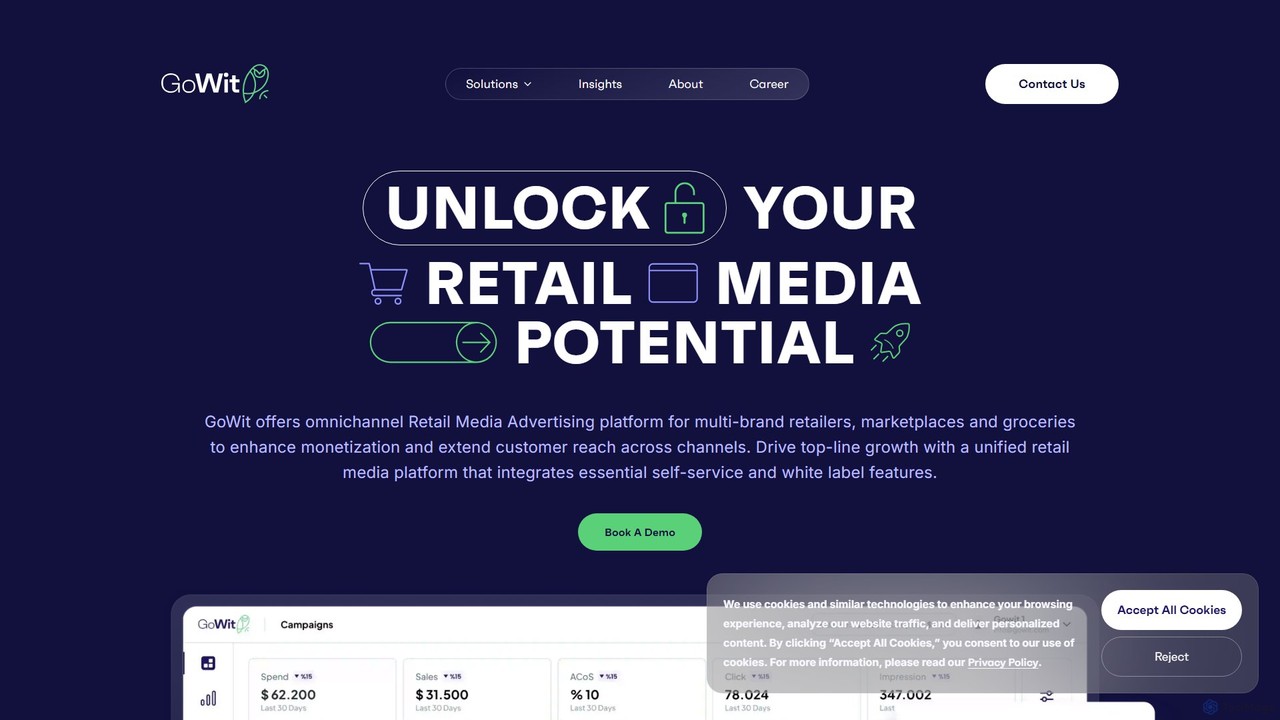
GoWit is an AI-powered retail media platform designed for e-commerce businesses, marketplaces, and retailers. It enables them to …
GoWit is an AI-powered retail media platform designed for e-commerce businesses, marketplaces, and retailers. It enables them to monetize their digital properties through omnichannel advertising solutions. The platform uses an AI bidding engine to maximize ad revenue, activate first-party data for precise targeting, and offer a self-service dashboard for advertisers, ultimately boosting sales and ROAS.
About Programmatic Advertising
Programmatic Advertising tools are a class of AI-powered platforms that automate the buying and selling of digital advertising space in real-time. These tools use algorithms and machine learning to make data-driven decisions on ad placements, targeting, and pricing, replacing manual negotiation processes. This automation allows marketers to execute highly targeted, efficient, and scalable campaigns across various digital channels. By analyzing vast amounts of user data, these platforms optimize ad delivery to the most relevant audiences at the optimal moment, maximizing return on investment.
Core Features
- Real-Time Bidding (RTB): Automatically bids on ad impressions in milliseconds based on predefined criteria and audience data.
- Audience Segmentation & Targeting: Uses data to create and target specific audience segments based on demographics, behavior, and interests.
- Dynamic Creative Optimization (DCO): Personalizes ad creatives in real-time by dynamically assembling different components (images, text, calls-to-action) for individual users.
- Performance Analytics & Reporting: Provides detailed dashboards and reports to track key metrics like impressions, clicks, conversions, and ROI.
- Fraud Detection & Brand Safety: Employs algorithms to identify and prevent ad fraud and ensure ads appear in brand-safe environments.
Use Cases
Programmatic Advertising tools are essential for digital marketers, media buyers, and advertising agencies managing large-scale campaigns. They are widely used in e-commerce for retargeting users who have abandoned carts, in brand marketing for building awareness across a wide but relevant audience, and in performance marketing to drive specific actions like sign-ups or purchases. These platforms are crucial for any business looking to achieve precision and efficiency in their digital advertising efforts.
How to Choose
When selecting a Programmatic Advertising tool, consider its integration capabilities with Demand-Side Platforms (DSPs), Supply-Side Platforms (SSPs), and Data Management Platforms (DMPs). Evaluate the depth and granularity of its targeting options and audience data sources. Assess the sophistication of its reporting and analytics features for campaign optimization. Also, consider the pricing model (e.g., CPM, percentage of ad spend) and the level of customer support and technical expertise required to operate the platform effectively.

Programmatic AdvertisingUse Cases
Automated Real-Time Bidding for Ad Placements
A media buyer at a digital agency needs to manage ad budgets across multiple clients efficiently. Using a programmatic advertising platform, they set up campaigns with specific goals, such as maximizing reach or conversions. The AI algorithm then automates the entire bidding process. It analyzes thousands of potential ad placements per second, evaluates the user's profile against the target audience criteria, and places a bid in real-time. This eliminates manual bidding, secures optimal ad inventory at the best price, and improves campaign ROI by focusing spend on the most valuable impressions.
Hyper-Targeted Audience Segmentation for E-commerce
An e-commerce marketing manager wants to launch a new line of high-end running shoes. Instead of broad advertising, they use a programmatic tool's audience segmentation features. They create a custom audience by combining data points: users who have previously purchased athletic wear, visited competitor websites, shown interest in marathon-related content, and live in specific geographic areas. The platform then targets ads exclusively to this high-intent segment across websites, social media, and apps. This precision targeting results in a higher conversion rate, lower customer acquisition cost, and minimal ad spend wastage.
Dynamic Creative Optimization (DCO) for Personalization
A national retail chain wants to personalize its weekly promotional ads. A digital advertiser uses a programmatic platform with DCO capabilities. They upload various creative components: different product images, headlines, background colors, and call-to-action buttons. The DCO algorithm then dynamically assembles and serves the most relevant ad combination to each individual user based on their browsing history, location, and past purchases. A user in Miami might see an ad for beachwear, while a user in Denver sees one for hiking gear, all from the same campaign. This leads to significantly higher engagement and click-through rates.
Cross-Device Retargeting Campaigns
A SaaS company's growth marketer observes that many users browse their pricing page on a mobile device but sign up on a desktop. To bridge this gap, they use a programmatic tool for a cross-device retargeting campaign. The platform identifies users who visited the pricing page on their phone but didn't convert. Later, when these same users are on their laptops or tablets, the platform serves them targeted ads highlighting a special trial offer or a case study. This consistent messaging across devices reminds users of their initial interest and encourages them to complete the sign-up process, effectively increasing conversion rates.
Geofencing for Local Business Promotion
The marketing team for a chain of coffee shops wants to attract customers who are near their locations. They use a programmatic advertising platform to set up geofencing campaigns. They draw virtual perimeters around each of their stores. When a user who fits their target demographic (e.g., age 25-40, interested in coffee) enters one of these geofenced areas with their smartphone, the platform automatically serves them a mobile ad with a special offer, like '15% off your next coffee, only 5 minutes away!'. This location-based targeting drives immediate foot traffic and increases in-store sales by reaching potential customers at the most opportune moment.
Brand Safety and Ad Fraud Prevention
A brand manager for a global consumer goods company is running a large-scale brand awareness campaign. Their primary concern is ensuring their ads do not appear next to inappropriate or harmful content. They use a programmatic platform with advanced brand safety and fraud detection features. The AI scans publisher websites in real-time for unsafe keywords, content categories, and suspicious traffic patterns. It automatically prevents bids on inventory that doesn't meet the brand's safety guidelines. This protects the brand's reputation, ensures a positive ad experience for users, and prevents budget from being wasted on fraudulent clicks or non-human traffic.