GoWit
GoWit is an AI-powered retail media platform designed for e-commerce businesses, marketplaces, and retailers. It enables them to …
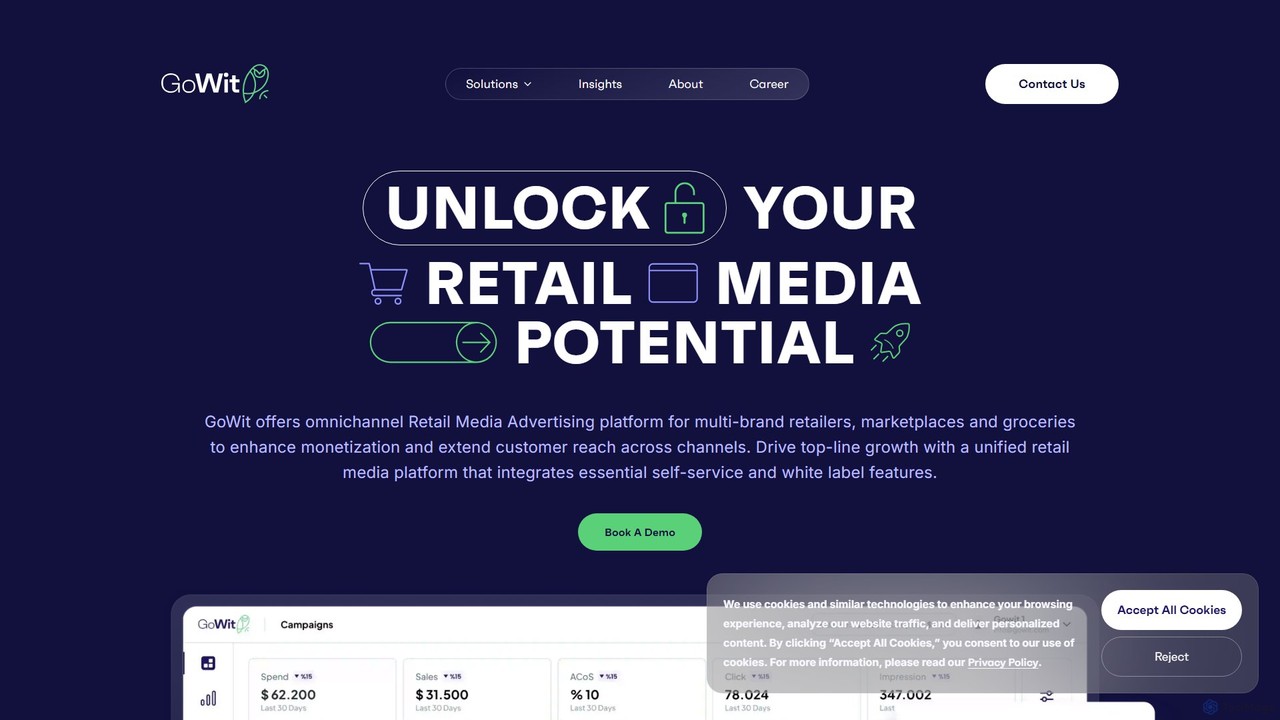
GoWit is an AI-powered retail media platform designed for e-commerce businesses, marketplaces, and retailers. It enables them to monetize their digital properties through omnichannel advertising solutions. The platform uses an AI bidding engine to maximize ad revenue, activate first-party data for precise targeting, and offer a self-service dashboard for advertisers, ultimately boosting sales and ROAS.
About Retail Media
Retail Media tools are AI-powered platforms designed to manage and optimize advertising directly within a retailer's digital properties, such as their website and app. These tools leverage valuable first-party shopper data—including purchase history and browsing behavior—to deliver highly relevant ads to consumers at the point of purchase. By automating processes like audience segmentation, predictive bidding, and creative optimization, they enable brands to increase product visibility, drive sales, and measure return on ad spend (ROAS) with high precision. This direct access to high-intent shoppers makes it a uniquely effective channel within the broader advertising landscape.
Core Features
- First-Party Data Activation: Leverages the retailer's unique customer data for precise audience targeting and personalization.
- Automated Campaign Bidding: Uses AI algorithms to automatically adjust bids on keywords and placements to maximize ROI.
- Performance Analytics & Attribution: Provides clear dashboards that directly link ad spend to sales on the retail platform.
- Dynamic Creative Optimization: Tests and serves the most effective ad copy and imagery for different shopper segments.
- Keyword & ASIN Targeting: Automates the discovery and targeting of high-performing keywords and competitor product pages (ASINs).
Use Cases
These tools are crucial for consumer packaged goods (CPG) brands, electronics manufacturers, fashion labels, and any business selling through major online retailers. E-commerce managers and brand marketers use them to run sponsored product campaigns, launch new items, defend market share, and influence purchasing decisions directly on the digital shelf.
How to Choose
When selecting a Retail Media tool, evaluate its support for key retail networks (e.g., Amazon Ads, Walmart Connect, Instacart Ads). Assess the sophistication of its AI-driven bidding and budget optimization features. Consider the depth of its analytics and reporting capabilities, as well as its pricing structure, which is often tied to a percentage of ad spend or a subscription fee.
Retail MediaUse Cases
Automate Sponsored Product Ad Campaigns
An e-commerce manager for a consumer electronics brand uses an AI Retail Media tool to manage hundreds of sponsored product campaigns on Amazon. The AI automatically adjusts bids based on real-time performance, competitor actions, and seasonality. It identifies and targets long-tail keywords that manual analysis might miss, ensuring the ad budget is spent on the most profitable search terms. This results in a 25% increase in Return on Ad Spend (ROAS) and saves the team over 10 hours per week on manual campaign management.
Launch New Products with Precision Targeting
A CPG brand launching a new organic snack line uses a retail media platform on a grocery retailer's site. The tool analyzes the retailer's first-party data to identify shoppers who have previously purchased organic products or competing snack brands. It then creates a targeted campaign to reach this high-intent audience with introductory offers via sponsored search results and display ads on category pages. This precise targeting leads to a successful product launch, exceeding initial sales targets by 40% within the first month.
Defend Brand Keywords from Competitors
A leading smartphone brand notices competitors are bidding on its brand name within a major electronics retailer's search engine. They use an AI Retail Media tool to implement a brand defense strategy. The AI continuously monitors competitor bids and automatically adjusts their own bids to ensure their products always appear in the top sponsored position for their brand terms. This automated 'always-on' approach protects their market share and prevents traffic diversion to competitors, maintaining a high click-through rate on their most valuable keywords.
Optimize Ad Spend for Seasonal Promotions
During the back-to-school season, a backpack company uses a retail media tool to maximize its budget. The AI platform analyzes historical sales data to predict peak shopping days and times. It then automatically increases ad spend and bids during these high-traffic periods and reduces them during lulls, ensuring maximum visibility when shoppers are most active. The tool also identifies trending keywords like 'durable laptop backpack' and allocates more budget to them, resulting in a 30% higher sales uplift compared to the previous year's manually managed campaign.
Cross-Sell and Up-Sell Complementary Products
A coffee machine brand uses a retail media tool to increase the lifetime value of its customers. The platform identifies customers who recently purchased a coffee machine from the retailer. It then runs targeted display ad campaigns on the retailer's website, showing these specific customers ads for complementary products like coffee pods, descaling solution, and premium mugs. This strategy effectively converts one-time buyers into repeat customers, increasing the average order value and fostering brand loyalty directly within the retail environment.
Analyze and Improve Return on Ad Spend (ROAS)
A marketing analyst for a pet food company uses the analytics dashboard of their retail media tool to track campaign performance across multiple retailers. The tool provides a unified view, attributing sales directly to specific ads and keywords. The analyst discovers that 'grain-free puppy food' has a 50% higher ROAS on Walmart compared to Amazon. Using this insight, they reallocate their budget, shifting more spend to Walmart for that specific product line. This data-driven decision, enabled by the tool's clear attribution, improves the overall campaign ROAS by 15% in one quarter.