LensAI
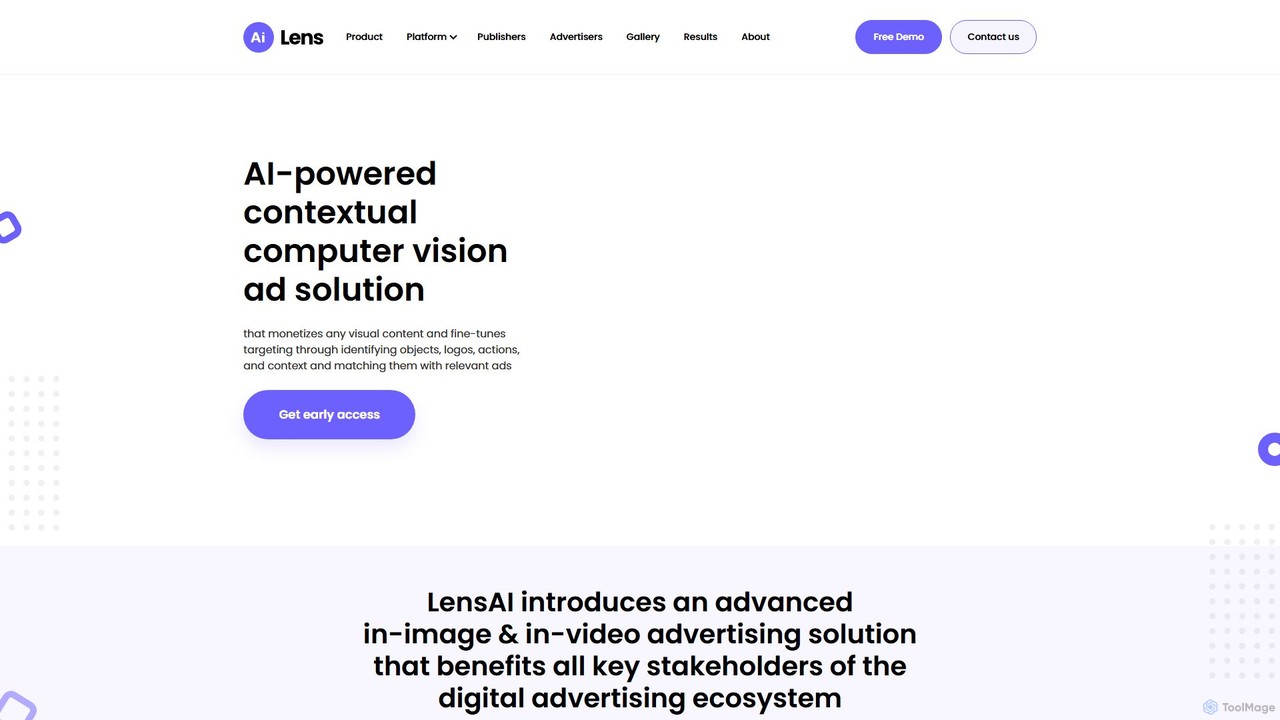
LensAI is an AI-powered contextual advertising platform that uses computer vision to place relevant, non-intrusive ads directly within …
LensAI is an AI-powered contextual advertising platform that uses computer vision to place relevant, non-intrusive ads directly within images and videos. It helps publishers monetize visual content and enables advertisers to achieve high-ROI, cookieless targeting by reaching users at their moment of highest engagement.
About Contextual Advertising
Contextual Advertising tools are a class of AI-powered platforms that place advertisements based on the content of a webpage, rather than user data. These tools utilize advanced Natural Language Processing (NLP) to analyze text, images, and video to understand the topic, sentiment, and nuance of the page in real-time. This enables highly relevant ad placements that align with the user's current interest, enhancing engagement while respecting privacy. As a result, they offer an effective, cookieless solution for modern digital advertising campaigns.
Core Features
- Semantic Content Analysis: Uses NLP to understand the true meaning and sentiment of page content, going beyond simple keyword matching.
- Brand Safety & Suitability: Automatically prevents ads from appearing alongside inappropriate, unsafe, or off-brand content.
- Real-Time Ad Targeting: Analyzes page context instantly to serve the most relevant ad to a user at the moment of viewing.
- Topic & Category Targeting: Allows advertisers to target broad topics or granular sub-categories to reach specific audiences.
- Cookieless Operation: Functions without relying on third-party cookies or personal user data, ensuring privacy compliance.
Use Cases
Contextual Advertising tools are primarily used by digital advertisers, brands, and publishers. Advertisers use them to run privacy-first campaigns that reach engaged audiences. Publishers leverage these tools to increase the value of their ad inventory by serving more relevant ads, which improves click-through rates and revenue. Ad agencies also use them to manage brand safety and campaign performance for their clients.
How to Choose
When selecting a Contextual Advertising tool, consider the sophistication of its AI and NLP capabilities for accurate content analysis. Evaluate the granularity of its brand safety controls and the range of supported languages and media types (text, video). Also, assess its integration capabilities with major Demand-Side Platforms (DSPs) and Supply-Side Platforms (SSPs), and review the depth of its performance analytics and reporting features.

Contextual AdvertisingUse Cases
Enhancing Publisher Ad Revenue
A digital news publisher uses a contextual advertising tool to monetize their articles. When a user reads an article about 'sustainable travel in Southeast Asia', the AI analyzes the text and identifies key concepts like 'eco-lodges', 'ethical tourism', and 'Bali'. It then automatically serves highly relevant ads from travel agencies specializing in eco-tours or airlines flying to Bali. This relevance increases click-through rates (CTR) compared to generic ads, directly boosting the publisher's ad revenue and improving the reader's experience by showing useful offers.
Ensuring Brand Safety for Advertisers
A global automotive brand wants to promote its new family-friendly SUV. Using a contextual advertising platform, their marketing team sets up strict brand safety rules. The AI actively scans webpages for negative contexts such as news about car accidents, traffic fatalities, or environmental pollution debates. It ensures the brand's ads are never placed next to such content, protecting the brand's reputation and ensuring the advertising message is received in a positive and appropriate environment, thereby maximizing campaign effectiveness.
Targeting Niche Audiences Effectively
A startup selling high-end, vegan leather accessories wants to reach a very specific audience. Instead of broad demographic targeting, they use a contextual tool to place ads on blogs, articles, and forums dedicated to 'vegan fashion', 'sustainable materials', and 'cruelty-free products'. The AI's semantic analysis can even distinguish between a news article mentioning veganism negatively and a blog post celebrating it, ensuring placement only in positive contexts. This precise targeting results in a higher return on ad spend (ROAS) by reaching consumers who are actively researching and interested in their niche product category.
Executing Privacy-Compliant Cookieless Campaigns
In response to regulations like GDPR and the phasing out of third-party cookies, a digital marketing agency shifts its strategy for a financial services client. They adopt a contextual advertising platform to run campaigns. The tool targets users reading content on financial planning, investment strategies, and retirement savings across premium publisher sites. Since no personal data or cookies are used for targeting, the campaign is fully compliant with privacy laws. The agency successfully reaches a relevant audience, maintains campaign performance, and ensures their client's advertising practices are future-proof.
Contextual Targeting for Video Advertising
A streaming service wants to place pre-roll ads for a new cooking competition show. They use a contextual video analysis tool to identify relevant videos across the web. The AI analyzes the audio, on-screen text, and visual elements of videos to find content related to 'recipes', 'home cooking', and 'gourmet food'. Ads for the new show are then automatically placed before these videos. This ensures the ad is seen by viewers already engaged in cooking-related content, significantly increasing viewer retention and interest in the new show compared to randomly placed ads.
Dynamic Ad Placement on E-commerce Blogs
An influential tech blog publishes a detailed review of the latest smartphone. An e-commerce marketplace uses a contextual advertising tool that integrates with the blog. The tool's AI identifies the specific product model ('iPhone 15 Pro') and related keywords ('camera quality', 'battery life') within the article. It then dynamically populates ad slots on the page with listings for that exact phone model, compatible cases, and screen protectors from their marketplace. This captures high-intent customers at the peak of their research phase, driving direct sales and providing a seamless user journey from review to purchase.