Food Camera
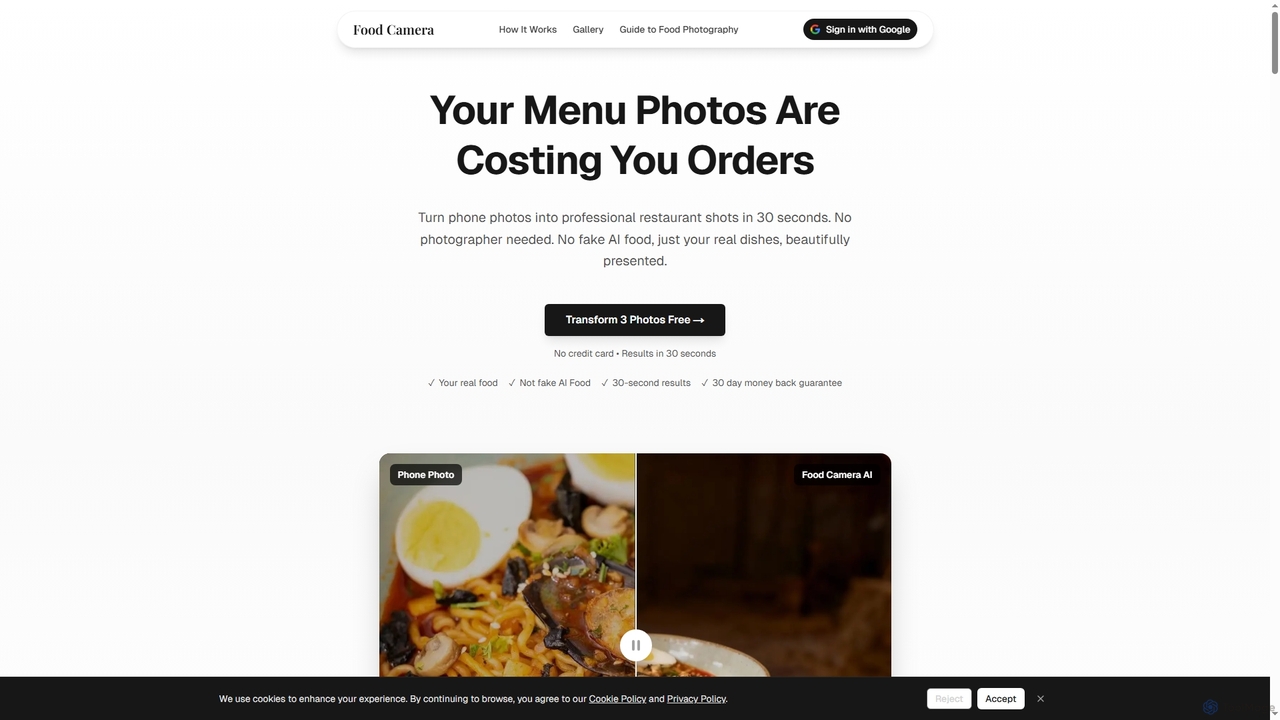
Food Camera is an AI-powered tool that transforms ordinary phone photos of food into professional, studio-quality images in …
Food Camera is an AI-powered tool that transforms ordinary phone photos of food into professional, studio-quality images in just 30 seconds. It enhances lighting, styling, and composition without altering the real dish, making it perfect for menus, delivery apps, and social media.
About Restaurant Marketing
Restaurant Marketing AI tools are specialized platforms that leverage artificial intelligence to optimize promotional strategies and customer engagement for restaurants. These tools analyze market trends, customer data, and operational efficiency to create targeted campaigns, manage online presence, and enhance the dining experience. They empower restaurants to attract new customers, foster loyalty, and drive revenue growth in a competitive industry.
Core Features
- AI-Powered Campaign Generation: Automatically creates personalized marketing campaigns across various channels, including social media, email, and SMS, based on customer preferences and past behavior.
- Reputation Management: Monitors online reviews and social media mentions, providing insights and automated responses to maintain a positive brand image and address customer feedback promptly.
- Dynamic Pricing & Promotions: Utilizes AI to suggest optimal pricing strategies and promotional offers in real-time, considering factors like demand, inventory, and competitor activity.
- Customer Relationship Management (CRM): Tracks customer data, purchase history, and loyalty program participation to enable highly personalized communication and targeted offers.
- Menu Optimization: Analyzes sales data and customer feedback to recommend menu adjustments, pricing, and new item introductions that maximize profitability and customer satisfaction.
Use Cases
Restaurant owners and marketing managers utilize these AI tools to streamline their promotional efforts and enhance customer interactions. For instance, a local bistro can use AI to identify peak dining hours and automatically schedule social media posts promoting daily specials. A chain restaurant might leverage AI for sentiment analysis of customer reviews across all locations, quickly identifying service issues or popular dishes to inform operational improvements.
How to Choose
When selecting a Restaurant Marketing AI tool, consider its integration capabilities with existing POS systems and reservation platforms to ensure seamless data flow. Evaluate the breadth of its marketing channels (e.g., email, SMS, social media, loyalty programs) and the depth of its analytics for actionable insights. Assess the level of automation offered for tasks like campaign scheduling and review responses, and ensure it aligns with your team's technical proficiency and budget.
Restaurant MarketingUse Cases
Automate Social Media Content for Daily Specials
A restaurant's marketing manager can use AI tools to automatically generate and schedule engaging social media posts for daily specials, seasonal menus, or upcoming events. By inputting basic information like dish names and ingredients, the AI crafts compelling captions, suggests relevant hashtags, and even recommends optimal posting times based on audience engagement data, saving hours of manual content creation and scheduling.
Enhance Online Reputation and Review Management
Restaurant owners can leverage AI for proactive online reputation management. The AI continuously monitors review platforms (e.g., Yelp, Google, TripAdvisor) and social media for mentions of their establishment. It can then categorize feedback, identify common themes, and even draft personalized, empathetic responses to both positive and negative reviews, ensuring timely engagement and demonstrating commitment to customer satisfaction.
Personalize Customer Loyalty Programs and Offers
For a restaurant aiming to boost customer retention, AI marketing tools can analyze individual customer purchase history and preferences. This allows for the creation of highly personalized loyalty programs and targeted offers, such as a discount on a customer's favorite dish or a special birthday promotion. Such tailored incentives significantly increase the likelihood of repeat visits and stronger customer relationships.
Optimize Menu Pricing and Item Performance
Restaurant managers can utilize AI to analyze sales data, ingredient costs, and customer feedback to optimize their menu. The AI identifies underperforming dishes, suggests price adjustments for maximum profitability, and even recommends new menu items based on current food trends and customer preferences. This data-driven approach ensures that the menu is both appealing to customers and financially viable for the business.
Targeted Email and SMS Marketing Campaigns
A restaurant can employ AI to segment its customer database based on dining habits, visit frequency, and spending patterns. The AI then designs and executes highly targeted email and SMS campaigns, such as sending a "We Miss You" offer to lapsed customers or promoting a new wine pairing event to known wine enthusiasts. This precision marketing yields higher engagement rates and better ROI.
Predict Demand and Manage Inventory More Efficiently
AI tools can analyze historical sales data, local events, weather forecasts, and even social media buzz to predict future customer demand for specific dishes or overall restaurant traffic. This predictive capability allows kitchen staff and management to optimize ingredient ordering, minimize food waste, and ensure adequate staffing levels, leading to significant cost savings and improved operational efficiency.