ToolMage
Sign in

Best 1 Review Platform for Marketing

Popular Review Platform in Marketing include Fritz AI, helping you work more efficiently.

Fritz AI
Free

Fritz AI

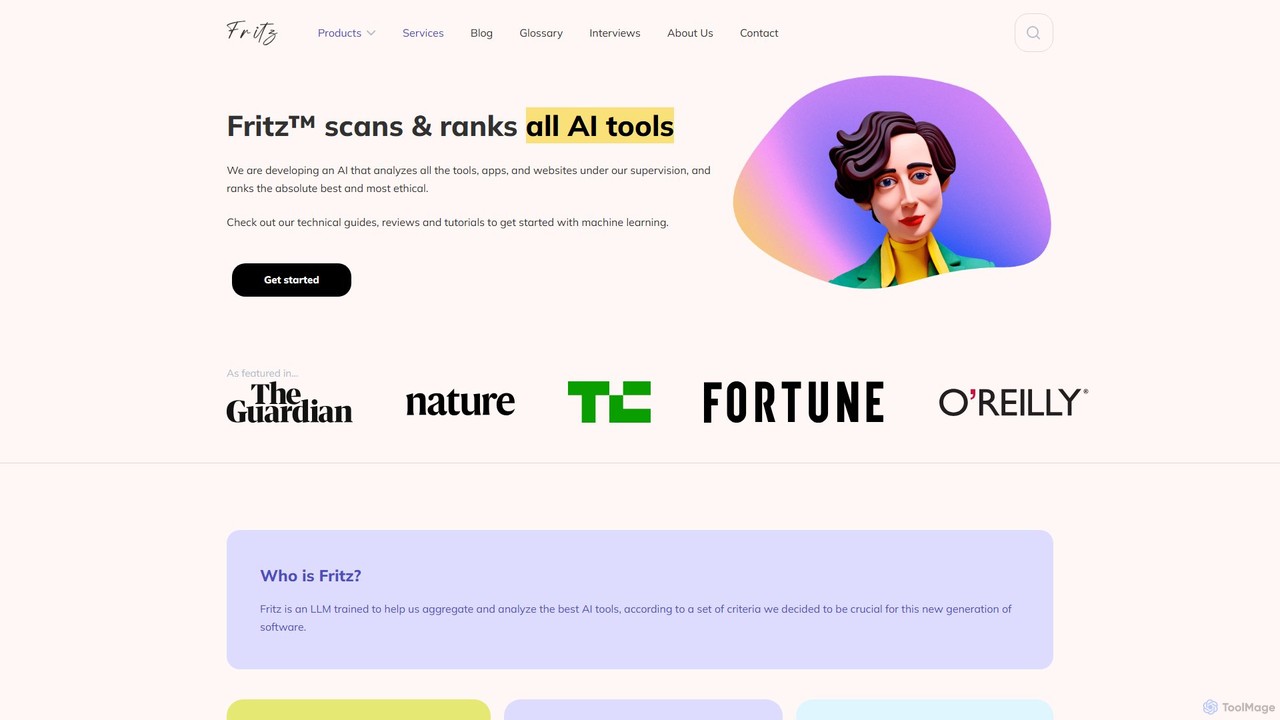
Fritz AI is an AI-powered discovery platform that scans, analyzes, and ranks AI tools. It provides in-depth reviews, tutorials, and comparisons to help users find the best and most ethical AI solutions for writing, design, development, and more, focusing on functionality, user experience, and innovation.

Resource
Visits 270.1KFavorites 123Likes 131

About Review Platform

An AI Review Platform is a specialized marketing tool designed to automatically aggregate, analyze, and manage customer feedback from multiple online sources. Leveraging Natural Language Processing (NLP), these platforms analyze review sentiment, identify key topics, and generate response suggestions. This enables businesses to efficiently monitor their online reputation, derive actionable insights from customer voice, and improve customer satisfaction at scale. They streamline the entire review management lifecycle, from collection to response.

Core Features

  • Automated Aggregation: Gathers reviews from various sites like Google, Yelp, and industry-specific portals into one dashboard.
  • Sentiment Analysis: Automatically categorizes reviews as positive, negative, or neutral to gauge overall customer feeling.
  • AI Response Generation: Creates context-aware, personalized draft replies to customer reviews, saving significant time.
  • Trend Identification: Analyzes review data to uncover recurring themes, product issues, or service highlights.
  • Review Request Campaigns: Facilitates sending automated requests to customers to encourage them to leave feedback.

Use Cases

These platforms are crucial for businesses in hospitality, e-commerce, healthcare, and local services. Marketing managers use them for brand reputation management, while product teams mine reviews for development insights. Multi-location businesses also leverage them to maintain consistent service quality and boost local SEO.

How to Choose

When selecting a Review Platform, consider the range of supported review sites and integration capabilities with your existing CRM or helpdesk. Evaluate the sophistication of its AI analytics, such as topic clustering and sentiment accuracy. Also, assess the customization options for response generation and the scalability of its pricing model.

Review Platform use cases

1

Centralize Brand Reputation Management

A marketing manager for a national restaurant chain uses an AI Review Platform to monitor feedback across hundreds of locations. The tool aggregates reviews from Google Maps, TripAdvisor, and Yelp into a single dashboard. Using sentiment analysis, the manager quickly identifies locations with declining satisfaction scores. The AI-generated response suggestions allow local managers to reply to negative reviews promptly and consistently, helping to protect the brand's image and resolve customer issues before they escalate.

2

Extract Product Improvement Insights

A product manager for a software-as-a-service (SaaS) company analyzes thousands of user reviews from Capterra and G2. The AI platform automatically tags and categorizes feedback related to 'feature requests,' 'bugs,' and 'user interface.' This reveals that a significant number of users are requesting a specific integration. This data-driven insight allows the product team to prioritize the new feature in their development roadmap, leading to higher user retention and satisfaction.

3

Enhance Local SEO for Service Businesses

The owner of a multi-location plumbing company aims to improve search engine rankings in different cities. The AI Review Platform automates sending review requests via SMS to customers after a service is completed. This strategy significantly increases the volume and frequency of positive reviews on their Google Business Profiles. As a result, their local search visibility improves, leading to more inbound calls and a stronger competitive advantage in each service area.

4

Automate Customer Feedback Responses

A customer support lead for an e-commerce brand is overwhelmed by the volume of daily product reviews on their website and Amazon. They implement an AI Review Platform to handle this. The system auto-generates personalized thank-you notes for 5-star reviews and drafts empathetic, solution-oriented replies for 1- and 2-star reviews. The support team simply needs to review and approve the drafts, reducing response time by over 70% and ensuring no customer feels ignored.

5

Conduct In-depth Competitor Analysis

A market research analyst for a consumer electronics company tracks competitor products by monitoring their reviews on sites like Best Buy and Amazon. The AI platform aggregates and analyzes thousands of competitor reviews, identifying their most common complaints (e.g., 'poor battery life,' 'confusing setup'). This intelligence is compiled into a report that informs the company's own product design and marketing messaging, highlighting their product's superior battery performance.

6

Showcase Social Proof on E-commerce Sites

An e-commerce manager wants to increase conversion rates by displaying authentic customer feedback. The Review Platform provides a customizable widget that automatically pulls and displays the latest 4- and 5-star reviews directly onto product pages. The AI can filter reviews to showcase those mentioning specific keywords like 'great quality' or 'fast shipping.' This dynamic social proof builds trust with new shoppers and helps increase add-to-cart rates.

Review Platform FAQ

What is an AI Review Platform?

An AI Review Platform is a software tool that uses artificial intelligence to automate the process of collecting, analyzing, and managing customer reviews. Its core functions include aggregating feedback from multiple sources, using sentiment analysis to understand customer tone, and generating draft responses. These platforms are essential for businesses looking to efficiently manage their online reputation and extract valuable insights from customer feedback.

How to choose the right AI Review Platform?

When selecting a platform, consider these four key factors:

  • Source Integration: Ensure it connects with the review sites most important to your business (e.g., Google, Yelp, Trustpilot, G2).
  • Analytical Depth: Look for advanced features like topic modeling and keyword trend analysis, not just basic sentiment scoring.
  • Response Features: Evaluate the quality of AI-generated responses and whether you can set custom rules and templates.
  • Scalability: Check if the pricing and features can grow with your business, especially if you have multiple locations or products.

What's the difference between a Review Platform and a Social Media Management tool?

The primary difference lies in their focus. An AI Review Platform is specialized in aggregating and analyzing feedback from dedicated review sites (like Google Maps, TripAdvisor, Capterra) to manage reputation and gather product insights. A Social Media Management tool is broader, focusing on content scheduling, community engagement, and analytics across social networks (like Facebook, Twitter, Instagram). While some social tools have review features, they typically lack the deep analytical capabilities of a dedicated review platform.

What are the key benefits of using an AI Review Platform?

The main benefits include significant time savings through automation of review collection and response. They provide deep, actionable insights into customer sentiment and product issues that would be impossible to find manually. Consistently managing reviews also helps improve brand reputation and can positively impact local SEO rankings, leading to increased visibility and customer trust.

Who should use an AI Review Platform?

AI Review Platforms are valuable for any business that relies on online reputation. This includes local service businesses (restaurants, plumbers, dentists), e-commerce stores, hospitality brands (hotels, resorts), SaaS companies, and healthcare providers. Marketing teams, customer support departments, and product managers are the most common users who benefit from the platform's insights and automation.