ToolMage
Sign in

Best 1 Virtual Reality AI tools for Marketing

Popular Virtual Reality AI tools in Marketing include imrsivo, helping you work more efficiently.

imrsivo
Freemium

imrsivo

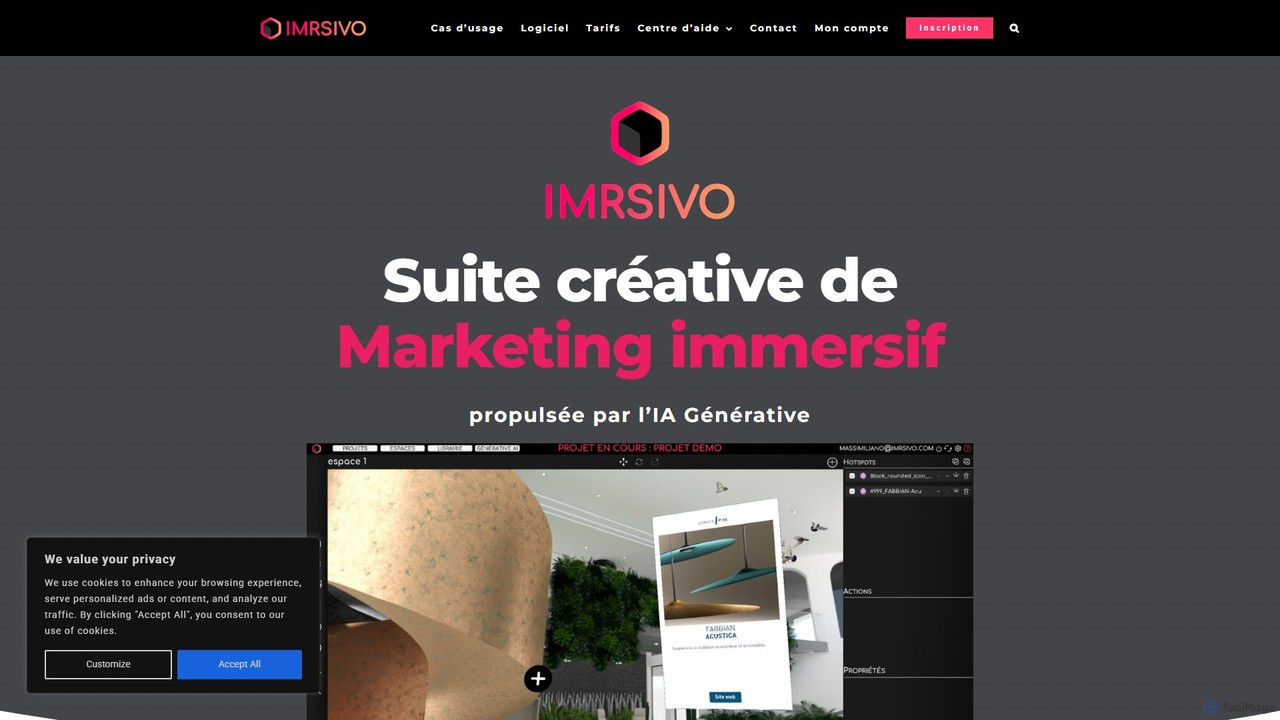
imrsivo is a generative AI-powered creative suite for building immersive marketing experiences. Create interactive 3D/VR tours and product showcases to boost engagement, traffic, and sales. Features an intuitive editor, multi-platform support, and API integration.

3D
Visits 5.4KFavorites 108Likes 101

About Virtual Reality

Virtual Reality in marketing refers to AI-powered tools and platforms designed to create immersive, simulated environments for engaging brand experiences. These technologies leverage advanced graphics, spatial audio, and interactive elements to transport users into virtual worlds, offering unparalleled opportunities for product showcases, virtual events, and experiential campaigns. By enabling deep sensory engagement, VR tools help businesses forge stronger emotional connections with their audience and deliver memorable, interactive content.

Core Features

  • Immersive Environment Creation: Tools for building detailed 3D virtual worlds, from realistic simulations to fantastical landscapes.
  • Interactive Content Integration: Features allowing the embedding of clickable objects, virtual avatars, and user-driven narratives within VR experiences.
  • Multi-sensory Feedback: Support for visual, auditory, and haptic interactions, enhancing the sense of presence and realism.
  • User Engagement Analytics: Capabilities to track user behavior, gaze patterns, and interaction data within the virtual environment for optimization.
  • Cross-platform Deployment: Tools enabling the distribution of VR content across various headsets (e.g., Meta Quest, HTC Vive) and web-based VR platforms.

Applicable Scenarios

Virtual Reality tools are invaluable for brands seeking to offer unique, interactive experiences. They are widely used for virtual product launches, allowing customers to explore and customize 3D models of items. Retailers employ VR for creating immersive virtual showrooms, enabling shoppers to browse and interact with products in a simulated store environment. Furthermore, companies utilize VR for experiential marketing campaigns, such as virtual tours of facilities or interactive brand storytelling, to deepen audience connection.

How to Choose

When selecting Virtual Reality tools for marketing, consider the desired level of immersion and interactivity, ensuring it aligns with your campaign goals. Evaluate platform compatibility to confirm support for your target audience's VR hardware or web browsers. Assess the complexity of content creation, looking for intuitive interfaces or robust SDKs that match your team's technical expertise. Finally, prioritize tools with strong analytics capabilities and integration options to measure campaign effectiveness and streamline workflows.

Virtual Reality use cases

1

Virtual Product Showcases

Automotive brands or furniture retailers use VR tools to create interactive 3D models of their products. Customers can explore vehicles from all angles, customize interiors, or virtually place furniture in their homes, offering a rich, pre-purchase experience that drives informed decisions and engagement.

2

Immersive Brand Storytelling

Travel agencies or cultural institutions leverage VR to transport users to distant destinations or historical sites. Through interactive narratives and 360-degree environments, brands can evoke powerful emotions and create memorable connections, fostering deeper engagement than traditional media.

3

Hosting Virtual Events & Conferences

Businesses utilize VR platforms to host fully immersive trade shows, product launches, or corporate conferences. Attendees can navigate virtual exhibition halls, interact with booths, network with other participants via avatars, and attend keynote speeches, expanding reach beyond physical limitations.

4

Real Estate Property Tours

Property developers and real estate agents employ VR to offer prospective buyers immersive tours of properties, including those still under construction or located remotely. Users can walk through virtual homes, explore different layouts, and visualize spaces, significantly enhancing the buying experience and reducing the need for physical visits.

5

Interactive Educational Marketing

Educational institutions or museums create VR experiences to engage audiences with complex subjects or historical events. Users can interact with virtual artifacts, participate in simulated experiments, or explore ancient civilizations, transforming learning into an engaging and memorable brand interaction.

6

Virtual Retail Experiences

Fashion brands or luxury retailers design immersive VR stores where customers can browse collections, try on virtual clothing, and receive personalized recommendations from AI-powered virtual assistants. This creates a novel shopping journey, blending entertainment with commerce and driving sales.

Virtual Reality FAQ

What is Virtual Reality in Marketing?

Virtual Reality (VR) in marketing involves using immersive, computer-generated environments to engage consumers. These AI-powered tools create simulated experiences where users can interact with products, brands, or services in a 3D digital space. The goal is to deliver highly memorable and interactive brand encounters, moving beyond passive advertising to active participation and deeper emotional connection.

How does VR enhance marketing campaigns?

VR significantly enhances marketing campaigns by offering unparalleled immersion and interactivity. It allows brands to create unique, experiential content that captures attention and fosters stronger emotional bonds with consumers. VR experiences lead to higher engagement rates, better brand recall, and the ability to collect rich data on user behavior within the virtual environment, providing valuable insights for future strategies.

What are the key components of a VR marketing experience?

A typical VR marketing experience requires several key components. Firstly, a VR headset (like Meta Quest or HTC Vive) provides the visual and auditory immersion. Secondly, interactive 3D content, often developed with AI-powered design tools, forms the virtual environment and objects. Spatial audio enhances realism, while haptic feedback (via controllers) adds tactile sensations. Finally, tracking systems monitor user movement and interactions within the virtual space.

What's the difference between VR and AR in marketing?

The primary difference lies in immersion. Virtual Reality (VR) fully immerses users in a completely simulated digital world, blocking out the real environment. Augmented Reality (AR), on the other hand, overlays digital information and objects onto the real world, enhancing it rather than replacing it. In marketing, VR is ideal for creating entirely new brand worlds or detailed product explorations, while AR is often used for "try-before-you-buy" experiences or interactive ads in real-world settings.

Is VR marketing suitable for all businesses?

VR marketing is not universally suitable but offers significant advantages for many businesses. It's particularly effective for brands with complex products, services that benefit from demonstration, or those aiming for high-impact experiential campaigns. Businesses should consider their target audience's tech adoption, budget for content creation, and strategic goals. While initial investment can be higher, the unique engagement and data insights can yield substantial long-term returns for the right applications.