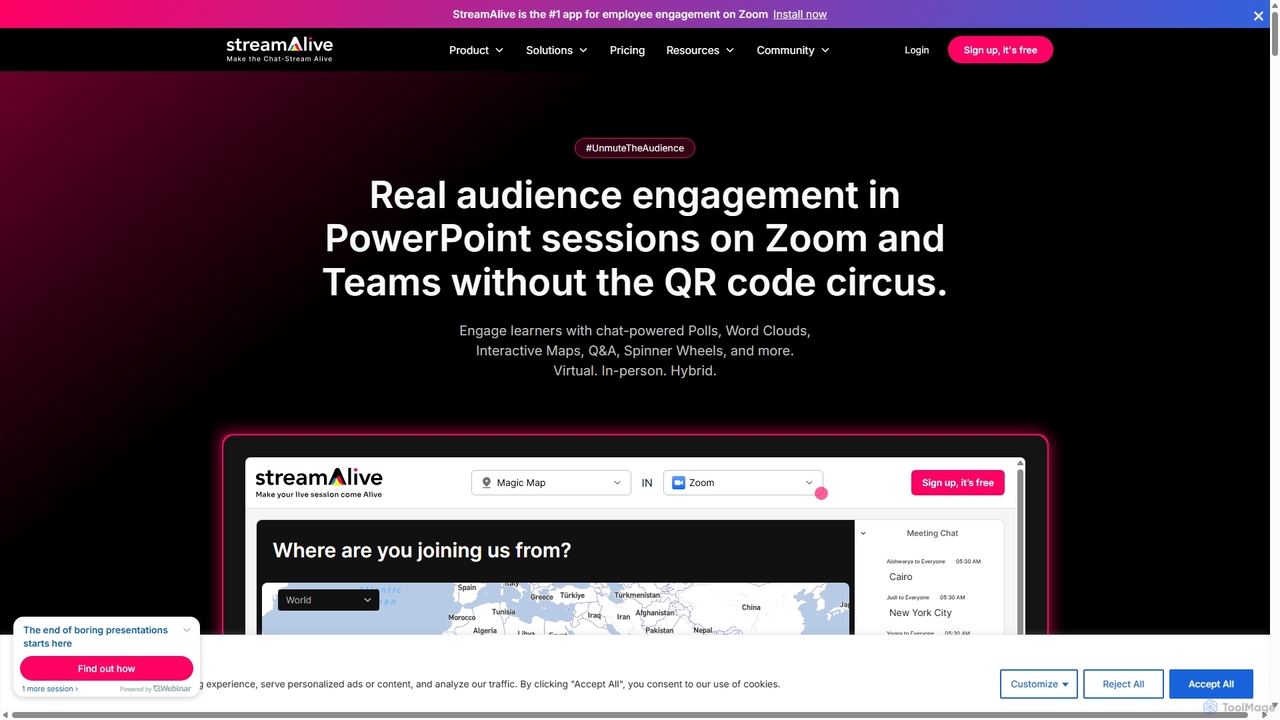
AI Webinar tools are a class of software that uses artificial intelligence to automate and enhance the entire lifecycle of online seminars. These tools leverage technologies like natural language processing (NLP) and generative AI to assist in content creation, promotion, post-event analysis, and content repurposing. Their primary value lies in significantly reducing the manual effort required to produce high-quality webinars, maximizing audience engagement, and extending the value of a single event by transforming it into multiple marketing assets. This allows marketing teams to scale their webinar programs efficiently.
Core Features
- Automated Content Creation: Generates presentation slides, speaker scripts, and talking points from a simple topic or document.
- Promotional Campaign Generation: Creates email sequences, social media posts, and landing page copy to drive event registrations.
- Post-Webinar Analysis: Automatically transcribes sessions, creates concise summaries, and identifies key moments or popular questions.
- Content Repurposing: Transforms a single webinar recording into various formats like blog posts, short video clips, and social media carousels.
- Engagement Intelligence: Analyzes attendee interaction data (chat, Q&A, polls) to identify key topics and sales-ready leads.
Use Cases
These tools are primarily used by marketing departments, demand generation specialists, and content creators in B2B and B2C companies. They are essential for teams that rely on webinars for lead generation, product demonstrations, customer education, and thought leadership. For instance, a tech company can use these tools to streamline its weekly product demo webinars, while a consulting firm can repurpose a single thought leadership session into a month's worth of content.
How to Choose
When selecting an AI Webinar tool, consider its integration capabilities with your existing webinar platform (e.g., Zoom, Microsoft Teams). Evaluate the scope of its AI features—whether it focuses more on content creation, post-event analysis, or both. Assess the quality and variety of its content repurposing options. Finally, consider the depth of its analytics and its ability to provide actionable insights for sales and marketing follow-up.