Marketplace Best in category 1 results Digital Goods AI Tool

Popular AI tools in the Digital Goods field of Marketplace include OpenPrompt, etc., helping you quickly improve efficiency.

OpenPrompt

OpenPrompt

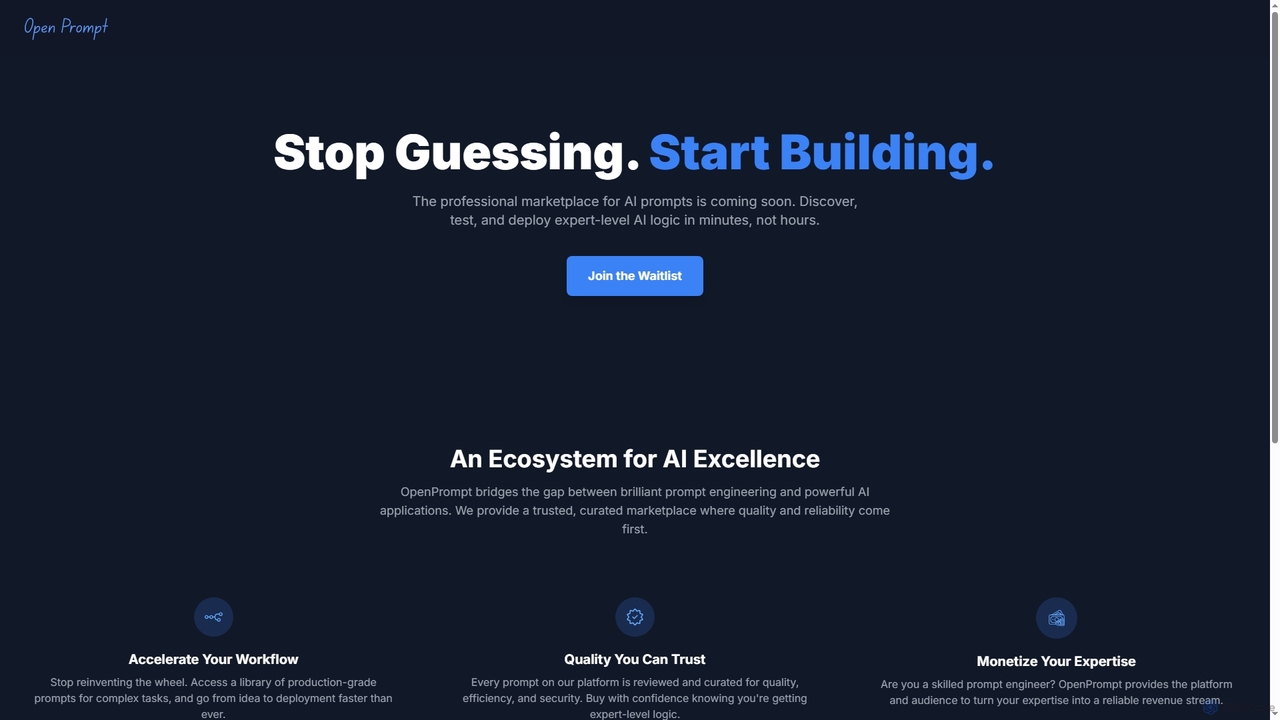
OpenPrompt is an upcoming professional marketplace designed for discovering, testing, and deploying expert-level AI prompts. It connects brilliant …

3.2K

About Digital Goods

Digital Goods tools are platforms designed for creating, managing, and selling AI-native or AI-enhanced digital products. These tools often integrate AI generation capabilities or provide a marketplace for assets like prompts, custom models, and AI-generated art. They empower creators to monetize their AI-driven outputs by providing storefronts, automated delivery, and licensing management. This transforms AI-generated content from a creative pursuit into a viable commercial product.

Core Features

  • AI Asset Marketplace: Provides a dedicated platform for listing, discovering, and purchasing AI-generated assets like images, prompts, and models.
  • Storefront Customization: Allows creators to build personalized shops to showcase their digital products with their own branding.
  • Automated Digital Delivery: Instantly delivers purchased files or access credentials to customers after a successful transaction.
  • Licensing Management: Enables sellers to define and enforce usage rights for their products, such as personal, commercial, or exclusive licenses.
  • Integrated Payment Gateways: Securely handles transactions through various payment methods, managing payouts to creators.

Use Cases

These platforms are primarily used by AI artists, prompt engineers, developers, and content creators. For instance, a graphic designer can sell bundles of AI-generated stock images, while a developer can monetize a custom-trained AI model or a specialized GPT. They are essential for anyone in the creator economy looking to build a business around AI-generated assets.

How to Choose

When selecting a Digital Goods platform, consider the transaction fees and commission structure. Evaluate the types of digital products supported, ensuring they match your assets (e.g., prompts, images, model files). Assess the platform's audience and community features to find the right market for your creations. Also, review the available licensing options to protect your intellectual property effectively.

Digital GoodsUse Cases

1

Selling AI-Generated Art and Illustrations

A digital artist uses AI image generators to create a unique collection of fantasy-themed illustrations. They then use a Digital Goods platform to set up a branded storefront. They upload their high-resolution images, organize them into themed bundles, and set different pricing tiers based on licensing (e.g., personal use vs. commercial use). The platform handles payment processing and automatically delivers download links to customers, allowing the artist to generate passive income from their AI creations without managing individual sales.

2

Monetizing a Curated Prompt Marketplace

A prompt engineer specializes in creating highly detailed prompts for architectural visualization. They establish a niche marketplace on a Digital Goods platform. They list individual prompts for sale, each with example outputs, compatibility information (e.g., Midjourney v6, DALL-E 3), and usage tips. Customers, such as architects and designers, can purchase and immediately use these prompts to generate high-quality visuals, saving hours of experimentation. The platform provides the engineer with sales analytics to see which prompt styles are most popular.

3

Selling Custom GPTs and AI Agents

A marketing consultant develops a custom GPT trained on their unique frameworks for creating high-converting ad copy. Instead of offering this as a service, they package the GPT as a digital product. Using a Digital Goods platform that supports API access or private links, they sell monthly subscriptions to their custom agent. Clients get access to a powerful, specialized tool, and the consultant creates a scalable revenue stream beyond one-on-one consulting, reaching a global audience.

4

Distributing AI-Generated Music and Sound Packs

A music producer uses AI tools to generate unique sound effects, ambient textures, and royalty-free music loops. They compile these assets into themed 'sound packs' for video creators and game developers. They list these packs on a Digital Goods marketplace, providing audio previews for each pack. The platform's licensing options allow them to clearly define that the assets are royalty-free for commercial projects. This enables them to sell the same digital product множественные times, creating an efficient business model.

5

Selling AI-Powered E-books and Content Templates

A content strategist uses AI to research, outline, and co-write a series of e-books on niche marketing topics. They also create a bundle of AI-generated social media post templates. They list these products on a Digital Goods platform that specializes in educational content. The platform's features allow them to offer different packages, such as a single e-book or a complete bundle with templates. This approach allows them to scale their expertise and sell it as a product, rather than trading time for money through consulting.

6

Trading Fine-Tuned AI Models for Developers

A machine learning engineer fine-tunes an open-source language model to excel at generating legal contract clauses. They package the model weights and a simple API wrapper as a product. They list it on a specialized Digital Goods marketplace for developers. Other companies can then purchase this pre-trained model to integrate into their own legal tech software, saving them significant development time and resources. The platform handles secure file hosting and version control, ensuring customers get the correct model files upon purchase.

Digital GoodsFrequently Asked Questions