
AIGoMarket
AIGoMarket is an Edge AI Foundry and marketplace designed to democratize edge AI development. It enables creators to …
AIGoMarket is an Edge AI Foundry and marketplace designed to democratize edge AI development. It enables creators to upload and monetize their optimized AI models, while providing developers with a platform to discover, license, and deploy high-performance AI solutions for various edge devices and applications.
Seed
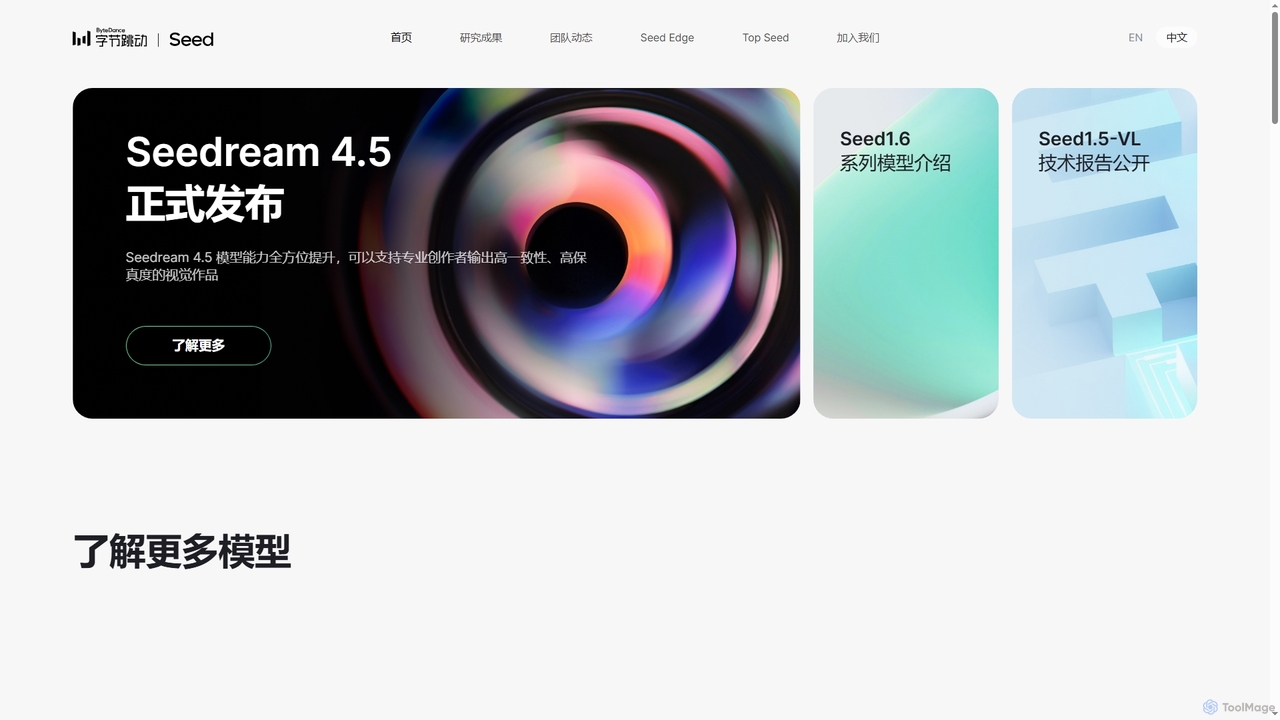
Seed is ByteDance's advanced AI research initiative focused on building general artificial intelligence. They develop foundational models across …
Seed is ByteDance's advanced AI research initiative focused on building general artificial intelligence. They develop foundational models across various domains including multimodal, vision, speech, robotics, and LLMs, driving innovation in both academic research and real-world applications.
Momentum AI
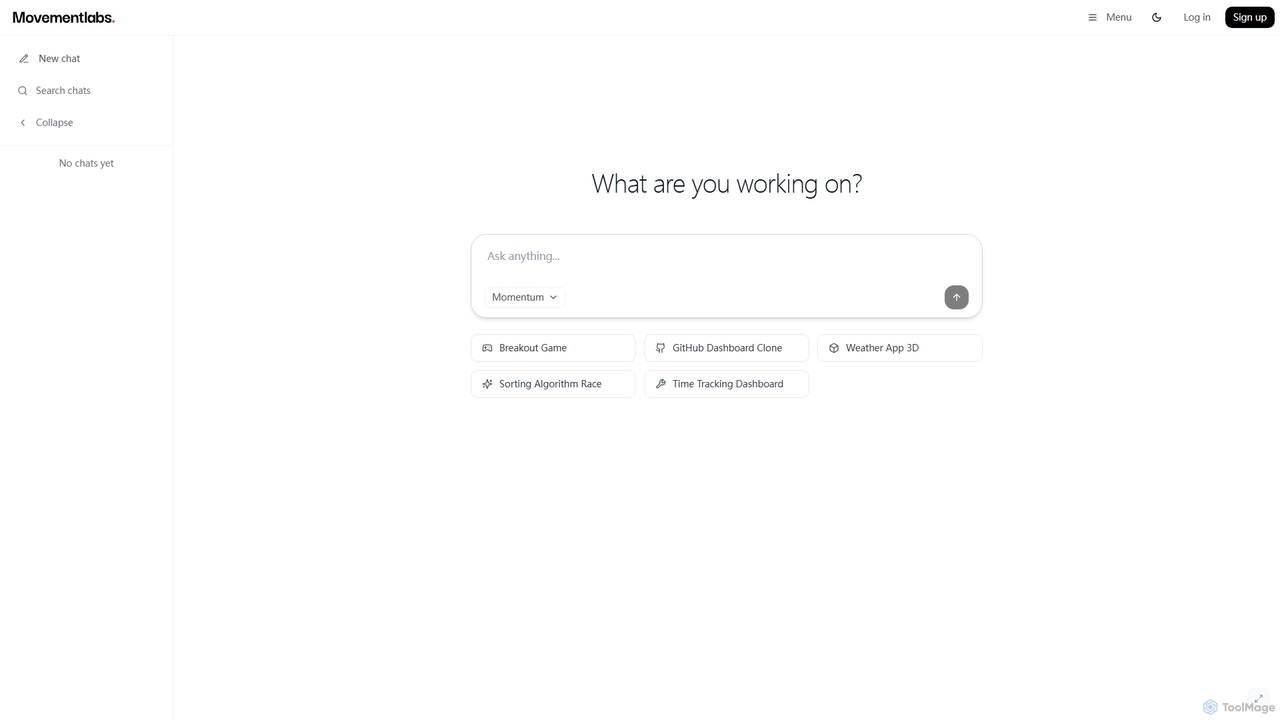
Momentum AI, developed by Movement Labs, is a high-performance artificial intelligence platform renowned for its ultra-fast inference speeds, …
Momentum AI, developed by Movement Labs, is a high-performance artificial intelligence platform renowned for its ultra-fast inference speeds, up to 20 times faster than competitors. Powered by the exclusive Movement Processing Unit (MPU), it delivers benchmark-leading performance for real-time AI applications, including advanced reasoning, code generation, and natural conversations, designed to serve humanity's long-term well-being.
OneNine
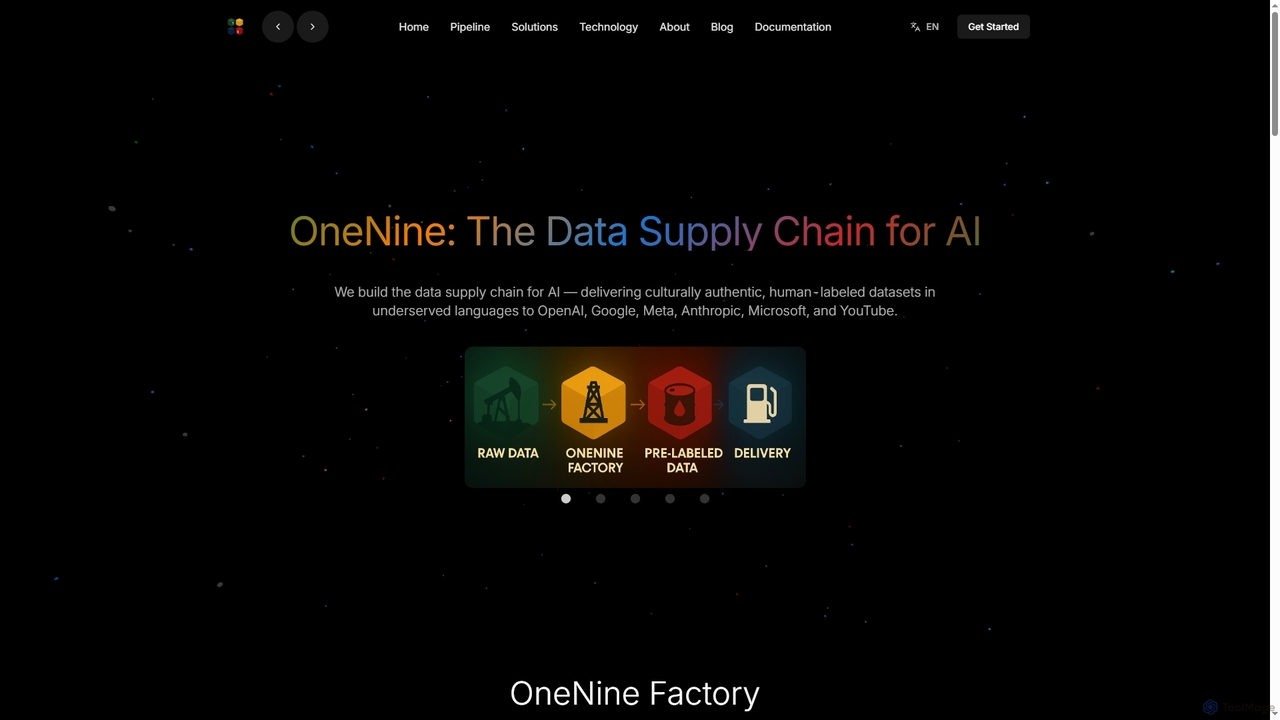
OneNine is the data supply chain for AI, specializing in delivering high-quality, culturally authentic, human-labeled datasets in underserved …
OneNine is the data supply chain for AI, specializing in delivering high-quality, culturally authentic, human-labeled datasets in underserved languages to leading AI companies. It bridges the linguistic gap, enabling more inclusive and accurate AI models globally.
Claribi
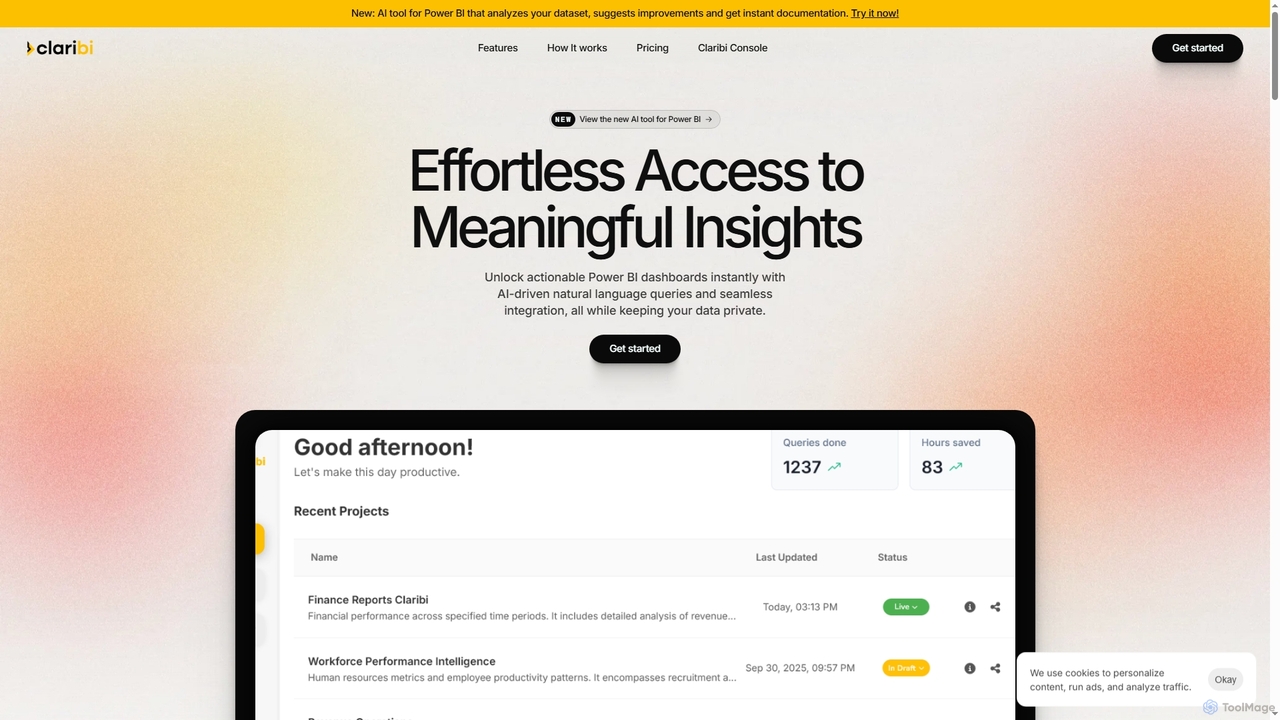
Claribi is an AI-powered tool that transforms Power BI usage by enabling natural language queries, automating documentation, and …
Claribi is an AI-powered tool that transforms Power BI usage by enabling natural language queries, automating documentation, and providing intelligent assistance for report creation and debugging. It offers effortless access to meaningful insights, cross-report discovery, and ensures enterprise-grade data security by working exclusively with metadata.
About Natural Language Processing
Natural Language Processing (NLP) tools are a class of AI software designed to understand, interpret, and generate human language from text or speech data. These tools leverage complex algorithms and machine learning models, such as Large Language Models (LLMs), to perform tasks like sentiment analysis, text summarization, and machine translation. They are essential for businesses and developers looking to automate communication, extract valuable insights from unstructured data like customer reviews or reports, and build more intuitive applications. By bridging the gap between human language and computer comprehension, NLP tools unlock powerful capabilities for data analysis and content automation.
Core Features
- Text Analysis: Extracts key information, including sentiment, topics, and keywords from unstructured text.
- Named Entity Recognition (NER): Identifies and categorizes specific entities such as names, organizations, locations, and dates.
- Machine Translation: Automatically translates text from one language to another while preserving context and nuance.
- Text Generation (NLG): Creates new, coherent, and contextually relevant text for summaries, articles, or chatbot responses.
- Speech-to-Text Conversion: Transcribes spoken audio into written text with high accuracy, supporting various languages and dialects.
Applicable Scenarios
NLP tools are widely used across various sectors. In customer service, they power chatbots and analyze support tickets to identify trends and sentiment. Marketing teams use them to monitor social media mentions and understand brand perception. In finance and legal fields, they accelerate document review by extracting key clauses and data points. Developers also integrate NLP APIs to add language understanding capabilities to their applications.
Selection Criteria
When choosing an NLP tool, first evaluate its core capabilities and accuracy for your specific task, such as translation or sentiment analysis. Consider the range of languages it supports and the quality of its pre-trained models. Assess the ease of integration through APIs and SDKs, as well as its scalability to handle your data volume. Finally, review the pricing model—whether it's based on API calls, data volume, or a subscription—to ensure it aligns with your budget and usage patterns.
Natural Language ProcessingUse Cases
Automate Customer Support Ticket Analysis
A customer support manager for an e-commerce company uses an NLP tool to process thousands of incoming support tickets daily. The tool automatically performs text classification to categorize each ticket by issue (e.g., 'Billing Inquiry', 'Return Request', 'Technical Fault') and sentiment analysis to gauge customer frustration levels. This allows the system to route urgent or highly negative tickets to senior agents immediately, while standard queries are assigned to the appropriate teams. This automation reduces manual sorting time by over 80% and improves response times for critical issues.
Monitor Brand Mentions on Social Media
A digital marketing team leverages an NLP tool to track and analyze brand mentions across social media platforms, forums, and news sites. The tool collects relevant posts in real-time and performs sentiment analysis to classify them as positive, negative, or neutral. It also uses Named Entity Recognition (NER) to identify key topics, products, or public figures associated with the mentions. This provides the team with a clear overview of public perception, helps them quickly address negative feedback, and allows them to identify emerging trends related to their brand without manually sifting through thousands of posts.
Extract Key Information from Legal Documents
A paralegal at a law firm uses an NLP tool to accelerate the contract review process. Instead of manually reading hundreds of pages, they upload a document, and the tool's Named Entity Recognition (NER) feature automatically identifies and extracts critical information such as party names, effective dates, monetary values, and governing law clauses. The text summarization feature then generates a concise summary of the entire document. This process reduces the time required for initial document screening by up to 90%, allowing legal professionals to focus their attention on high-level analysis and negotiation.
Develop a Multilingual Customer Service Chatbot
A developer building a chatbot for a global e-commerce platform integrates an NLP API to handle user interactions. The API's machine translation feature allows the chatbot to communicate with users in over 50 languages. Its Natural Language Understanding (NLU) component accurately identifies user intent, whether they are asking for 'order status', 'shipping costs', or 'product availability', even with varied phrasing. This enables the creation of a single, powerful chatbot that can serve a global customer base, improving user experience and reducing the load on human support agents across different regions.
Generate SEO-Optimized Content Briefs
A content strategist uses an NLP tool to analyze the top-ranking articles for a target keyword. By inputting the keyword, the tool scrapes the content of the top 10 search results and performs a detailed analysis. It extracts common subtopics, frequently used keywords and phrases (LSI keywords), and identifies the structure and word count of high-performing content. The tool then compiles this data into a comprehensive content brief, including a suggested outline, key terms to include, and readability targets. This data-driven approach helps writers create content that is highly relevant to user search intent, increasing its chances of ranking well.
Transcribe and Analyze Patient-Doctor Consultations
A healthcare data analyst uses an NLP tool with advanced speech-to-text capabilities to process audio recordings of patient consultations. The tool accurately transcribes the conversations, distinguishing between the doctor's and patient's speech. Afterward, another NLP model analyzes the transcripts to extract key medical information, such as reported symptoms, prescribed medications, and treatment plans, using Named Entity Recognition (NER). This structured data is then used to update electronic health records (EHR) automatically, reducing administrative work for clinicians and ensuring a more accurate and complete patient history.