Bueno
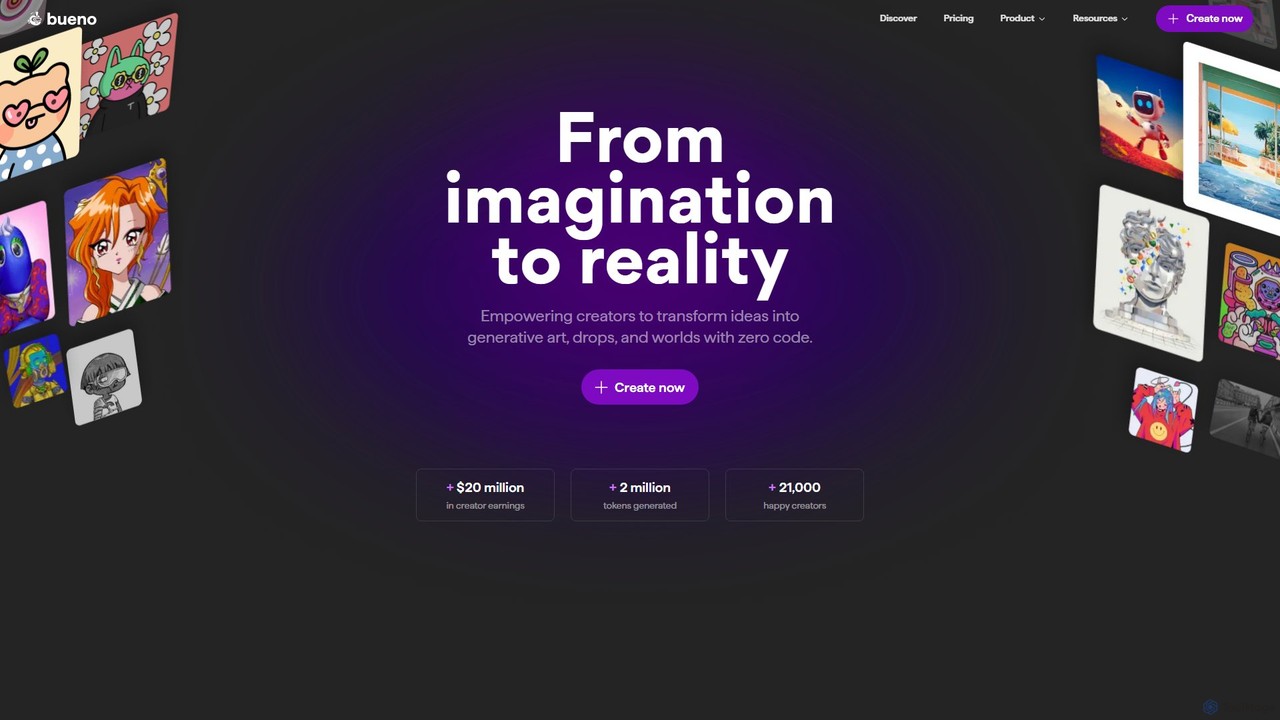
Bueno is a comprehensive no-code toolkit for NFT creators. It empowers artists and builders to generate art collections, …
Bueno is a comprehensive no-code toolkit for NFT creators. It empowers artists and builders to generate art collections, deploy custom smart contracts, and create interactive worlds without writing any code. The platform supports multiple blockchains and offers a full suite of tools for the entire NFT project lifecycle.

aiRight
aiRight is a comprehensive platform merging generative AI with blockchain technology. It offers curated AI models for creating …
aiRight is a comprehensive platform merging generative AI with blockchain technology. It offers curated AI models for creating unique digital art and content, while providing robust tools for copyright protection, NFT minting, and monetization to empower creators.

Prompt Monsters
Prompt Monsters is a generative blockchain game where you create unique monsters using text prompts. These creatures become …
Prompt Monsters is a generative blockchain game where you create unique monsters using text prompts. These creatures become fully on-chain dynamic NFTs that you own. Battle other players in an innovative online arena powered by an AI game engine, and watch your monsters evolve. It merges creativity, true digital ownership, and strategic AI-driven gameplay.
About Nft
NFTs (Non-Fungible Tokens) are unique digital assets that represent ownership of a specific item or piece of content, secured and verified on a blockchain. Unlike cryptocurrencies, each NFT is distinct and cannot be replaced by another, making them ideal for proving authenticity and provenance. These tokens enable new forms of digital ownership, revolutionizing industries like art, gaming, music, and collectibles by providing verifiable scarcity and transferability in the digital realm.
Core Features
- Unique Digital Ownership: Provides verifiable and immutable proof of ownership for digital assets.
- Scarcity and Authenticity: Ensures limited supply and tamper-proof records, preventing counterfeiting.
- Transferability: Allows for easy buying, selling, and trading on various NFT marketplaces.
- Programmability: Can embed smart contract functionalities, such as automatic royalty payments to creators.
- Interoperability: Potential for seamless integration and use across different blockchain platforms and metaverses.
Use Cases
NFTs are widely used in digital art for authenticating and selling unique pieces, in gaming for representing in-game items and virtual land, and in music for managing artist royalties and fan engagement. They also serve as digital collectibles, membership passes, and even for tokenizing real-world assets like real estate or luxury goods.
How to Choose
When engaging with NFTs, consider the underlying blockchain network (e.g., Ethereum, Solana) for transaction fees and speed. Evaluate the marketplace's security, user interface, supported asset types, and community features. For creators, assess royalty structures and smart contract capabilities, while collectors should prioritize authenticity verification and the long-term viability of the project.
NftUse Cases
Creating and Selling Digital Art
Digital artists can mint their unique artworks as NFTs, establishing verifiable ownership and authenticity on the blockchain. This allows them to sell their creations directly to collectors globally, bypassing traditional galleries and intermediaries. Artists can also program smart contracts to receive royalties on all future secondary sales, creating a sustainable income stream and fostering a direct connection with their audience.
Managing In-Game Asset Ownership
Game developers utilize NFTs to represent unique in-game items, characters, or virtual land. Players gain true ownership of these digital assets, which can be bought, sold, or traded on open marketplaces, even outside the game's ecosystem. This fosters player-driven economies, enhances engagement, and allows players to retain value from their gaming efforts, moving beyond traditional in-game purchases.
Trading Virtual Land and Items in Metaverses
In virtual worlds and metaverses like Decentraland or The Sandbox, users can own plots of virtual land, buildings, and unique items as NFTs. This enables a vibrant digital economy where users can develop, monetize, and trade their virtual properties. Businesses and individuals can establish a digital presence, host events, or create experiences, leveraging the verifiable ownership and scarcity provided by NFTs.
Music Rights and Royalty Distribution
Musicians and artists can tokenize their songs, albums, or even fractional ownership of their music rights as NFTs. This allows them to sell direct access, exclusive content, or a share of future royalties to fans, creating a more equitable and transparent distribution model. Fans can directly support artists and gain unique benefits, while artists retain more control over their intellectual property and earnings.
Brand Marketing and Fan Engagement
Brands leverage NFTs to create exclusive digital collectibles, loyalty programs, or unique experiences for their customers. Issuing limited-edition NFTs can drive engagement, build community, and offer a new way for fans to interact with their favorite brands. These NFTs can unlock special access, discounts, or future benefits, fostering a deeper connection and sense of belonging among consumers.
Issuing Digital Identities and Certificates
NFTs can serve as verifiable digital identities, academic certificates, or event tickets, providing tamper-proof proof of authenticity and ownership. For instance, universities can issue diplomas as NFTs, making them easily verifiable and resistant to fraud. This application extends to digital passports, medical records, or membership tokens, enhancing security and streamlining verification processes across various sectors.