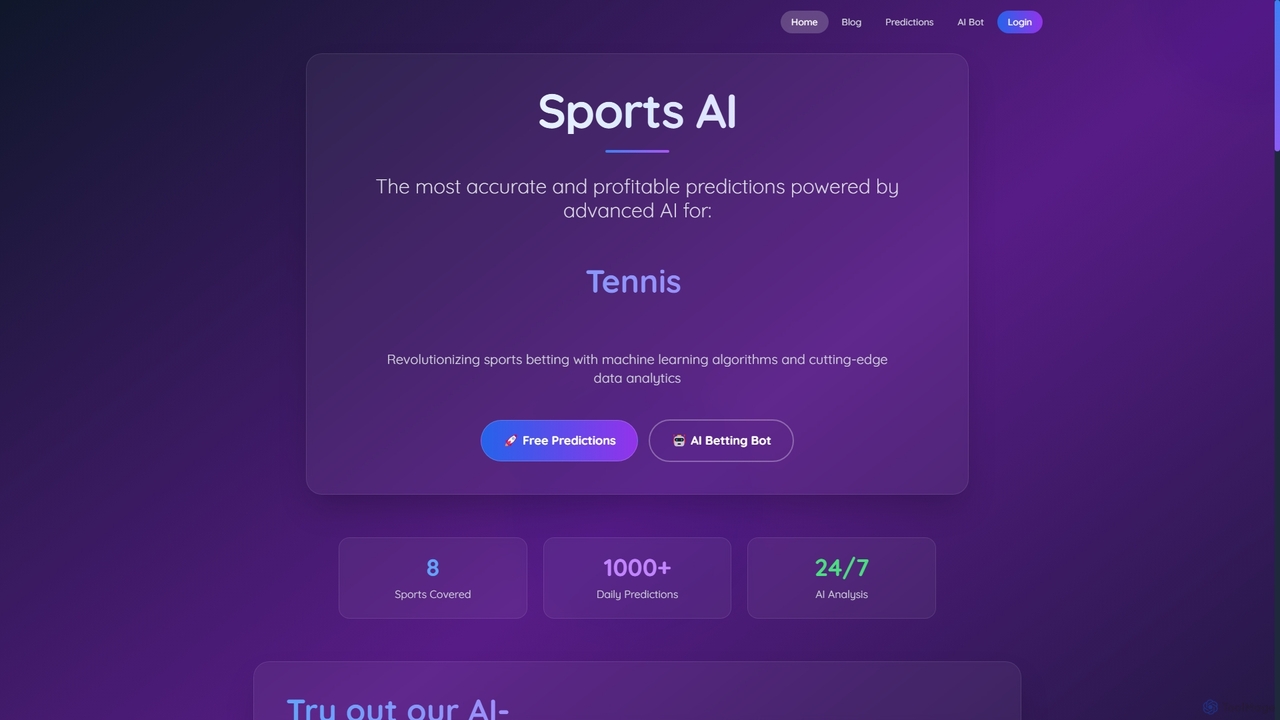
Sports AI
Sports AI provides highly accurate sports predictions using advanced machine learning. It offers a Telegram-based AI Betting Bot …
Sports AI provides highly accurate sports predictions using advanced machine learning. It offers a Telegram-based AI Betting Bot that delivers 100-200 daily value bets across 8+ sports, including football, basketball, and tennis. The platform analyzes millions of data points to identify profitable opportunities, helping both professional and casual bettors make data-driven decisions and improve their return on investment.
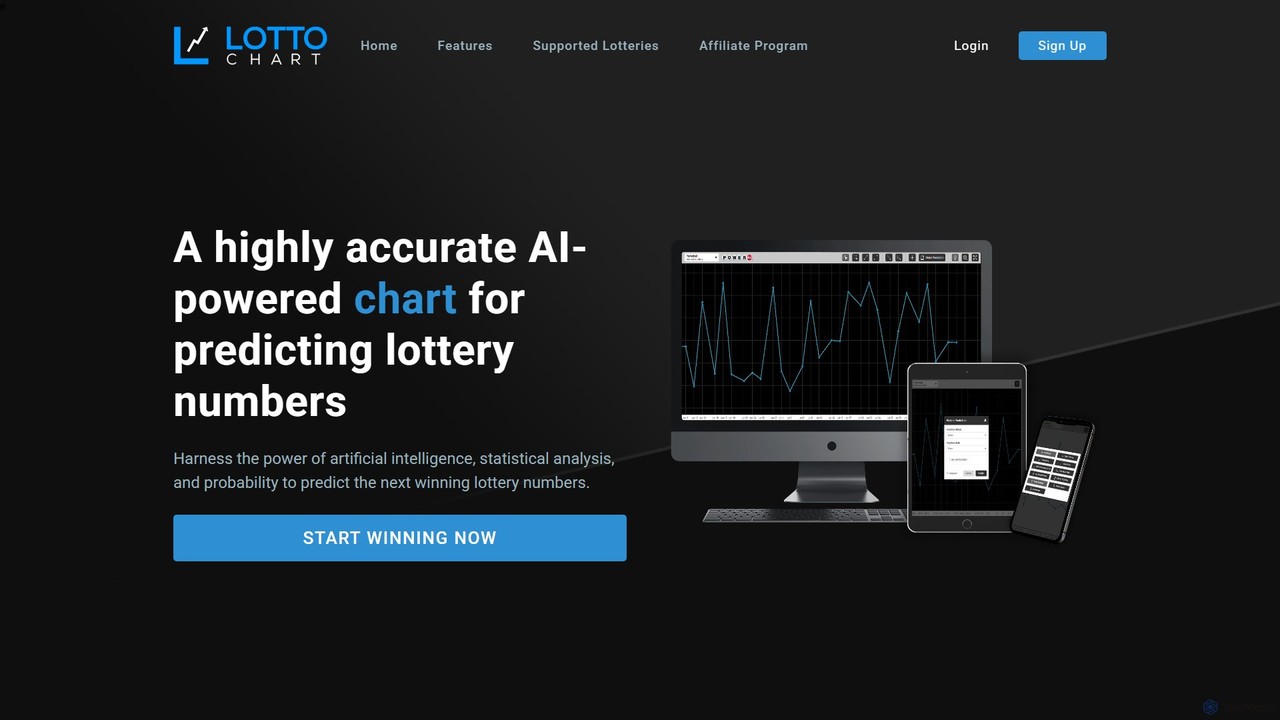
Lotto Chart
Lotto Chart is an AI-powered tool that analyzes historical lottery data to predict potential winning numbers for a …
Lotto Chart is an AI-powered tool that analyzes historical lottery data to predict potential winning numbers for a wide range of lotteries, including Powerball and Mega Millions. It aims to provide players with a data-driven strategy for number selection.
About Prediction
Prediction tools are AI-powered systems that analyze historical data to forecast future outcomes, trends, or events. Leveraging machine learning algorithms, they identify complex patterns and relationships within data, enabling proactive decision-making across various domains. These tools provide valuable insights for strategic planning, risk management, and operational optimization.
Core Features
- Data Analysis & Pattern Recognition: Automatically processes large datasets to uncover hidden trends and correlations.
- Predictive Modeling: Builds and refines statistical or machine learning models to generate accurate forecasts.
- Scenario Simulation: Allows users to test different variables and assumptions to understand potential future impacts.
- Anomaly Detection: Identifies unusual patterns or outliers that may indicate emerging issues or opportunities.
- Confidence Scoring: Provides a measure of certainty for each prediction, aiding in risk assessment.
Use Cases
Businesses across sectors utilize prediction tools for various strategic and operational needs. For instance, retail companies predict future sales demand to optimize inventory, financial institutions forecast market movements for investment strategies, and healthcare providers predict disease outbreaks for resource allocation. These tools empower organizations to move from reactive to proactive strategies, minimizing risks and maximizing opportunities.
How to Choose
When selecting a prediction tool, consider the specific type of data you need to analyze and the accuracy required for your forecasts. Evaluate its integration capabilities with existing systems, the interpretability of its models, and the level of technical expertise needed for operation. Scalability, pricing structure, and the availability of pre-built models for your industry are also crucial factors.

PredictionUse Cases
Forecasting Sales Demand
Retail managers use AI prediction tools to analyze past sales data, seasonality, promotions, and external factors like weather or economic indicators. This helps them accurately forecast future product demand, optimize inventory levels, reduce stockouts, and minimize overstocking, leading to improved supply chain efficiency and reduced waste.
Predicting Customer Churn
Subscription-based businesses or telecom companies employ prediction AI to identify customers at high risk of canceling their service. By analyzing usage patterns, support interactions, and demographic data, the tool flags at-risk customers, allowing marketing and customer service teams to intervene with targeted retention offers or personalized engagement strategies before churn occurs.
Optimizing Predictive Maintenance
Manufacturing plants and industrial operators utilize prediction tools to forecast equipment failures. Sensors on machinery collect data on temperature, vibration, and performance. AI analyzes this data to predict when a component is likely to fail, enabling maintenance teams to schedule proactive repairs during planned downtime, preventing costly breakdowns and extending asset lifespan.
Assessing Credit Risk for Loans
Financial institutions leverage prediction models to evaluate the creditworthiness of loan applicants. By analyzing historical financial data, credit scores, income stability, and other relevant variables, the AI predicts the likelihood of default. This allows lenders to make more informed decisions, mitigate risk, and offer appropriate loan terms to eligible borrowers.
Forecasting Energy Consumption
Utility companies and smart building managers use prediction AI to forecast electricity or gas consumption. By considering historical usage, weather patterns, occupancy rates, and time of day, these tools provide accurate consumption estimates. This enables better energy grid management, optimized resource allocation, and reduced operational costs for large facilities.
Predicting Stock Market Trends
Investment analysts and traders use sophisticated prediction algorithms to analyze vast amounts of financial data, news sentiment, and economic indicators. These tools identify potential market movements, stock price fluctuations, and emerging investment opportunities, assisting in making data-driven trading decisions and optimizing portfolio performance.