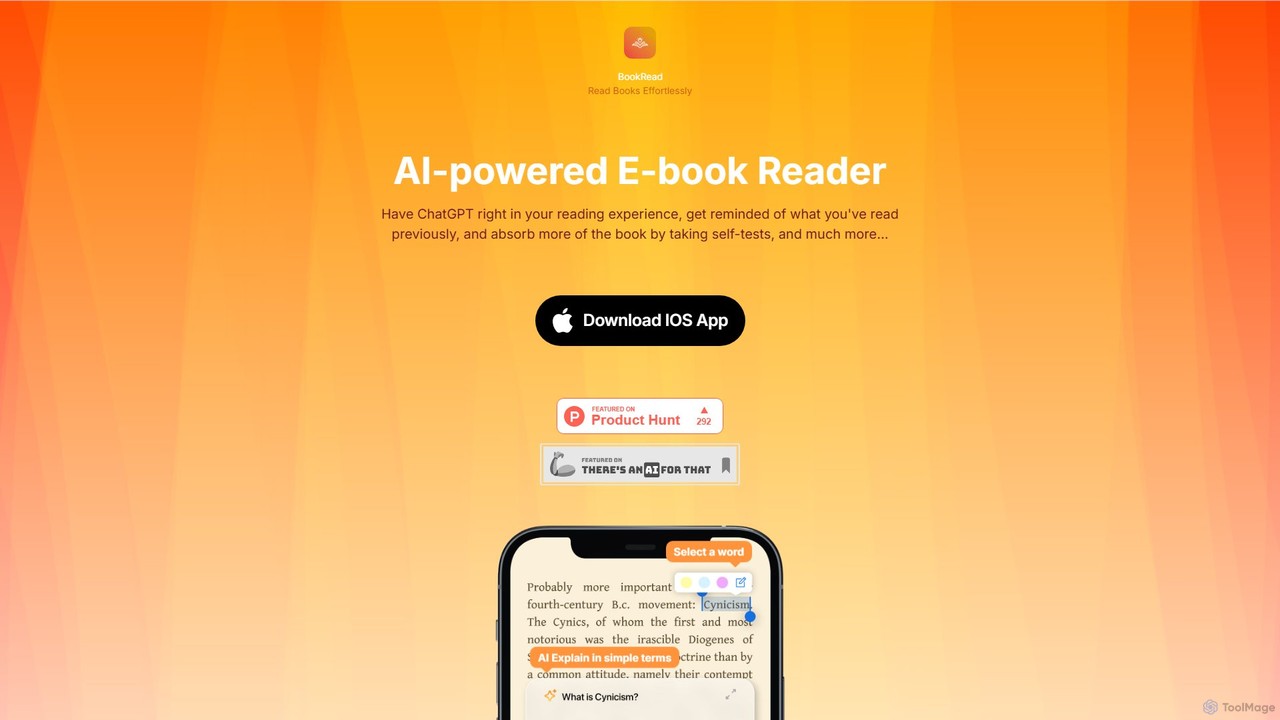
Book Summarizers are AI-powered tools designed to condense long texts, such as books, articles, or reports, into concise summaries. Leveraging advanced natural language processing (NLP) and machine learning algorithms, these tools extract key information and main ideas, providing users with a quick overview of complex content. They are invaluable for rapid learning, research, and staying informed without reading entire volumes, significantly enhancing personal productivity and knowledge acquisition.
Core Features
- Automated Key Point Extraction: Identifies and extracts the most critical sentences and concepts from the original text.
- Customizable Summary Length: Allows users to specify the desired length of the summary, from a few bullet points to a more detailed overview.
- Multi-format Input Support: Accepts various input formats, including plain text, PDFs, web links, and sometimes even audio transcripts.
- Language Agnostic Processing: Capable of summarizing content in multiple languages, broadening its applicability.
Applicable Scenarios
Students and researchers utilize book summarizers to quickly grasp the core arguments of academic papers and textbooks, aiding in literature reviews and study preparation. Professionals in various fields, such as business and law, use them to digest lengthy reports and industry analyses, staying updated on critical information efficiently.
How to Choose
When selecting a book summarizer, consider the accuracy and coherence of its output, especially for complex subjects. Evaluate the range of input formats it supports and its ability to handle different languages. Look for features like customizable summary length and integration options with other reading or research tools. Finally, assess the pricing model and user interface for ease of use and value.