Personal Best in category 4 results Companion AI Tool

Popular AI tools in the Companion field of Personal include Intuition Robotics、callanai、Airfriend、Gaion, etc., helping you quickly improve efficiency.

Gaion

Gaion

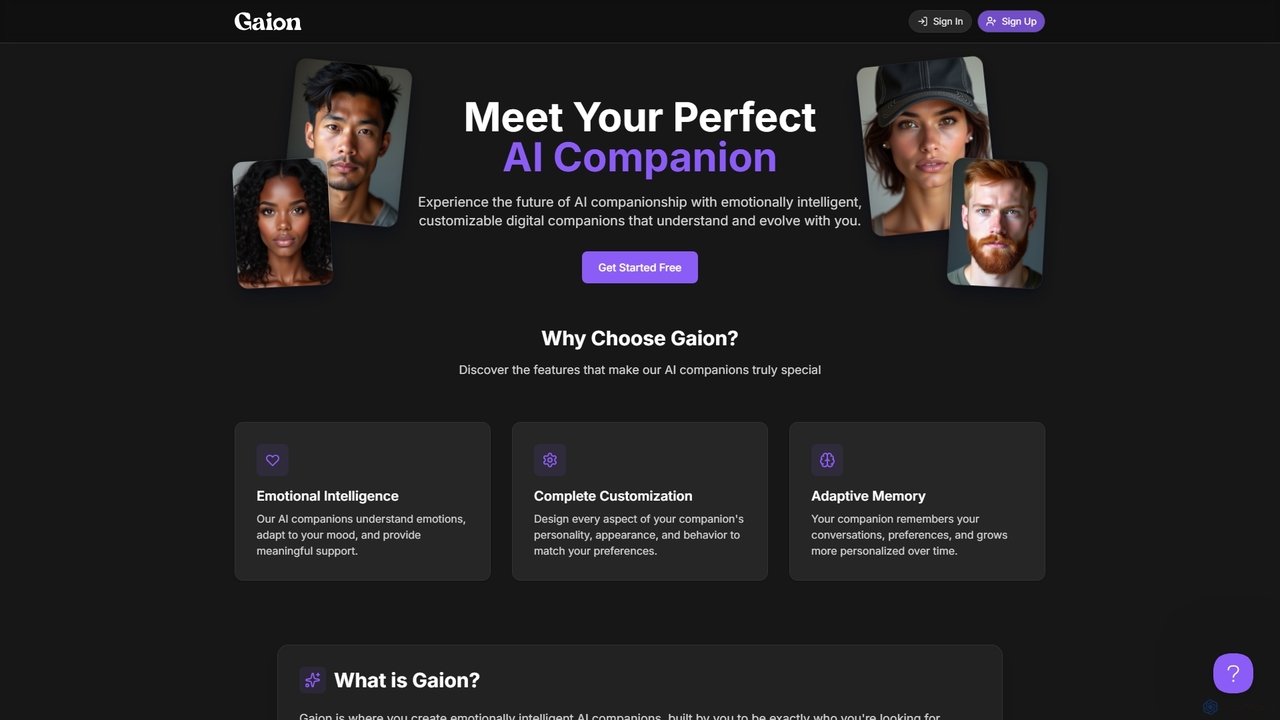
Create your own emotionally intelligent AI companion. Gaion allows you to fully customize your digital friend's personality, appearance, …

3.1K
Intuition Robotics

Intuition Robotics

Intuition Robotics develops ElliQ, an award-winning, empathetic AI care companion robot for older adults. It's designed to combat …

9.5K
Airfriend

Airfriend

Airfriend is a personal AI companion you can chat with directly on WhatsApp. Simply send a message to …

3.2K
callanai

callanai

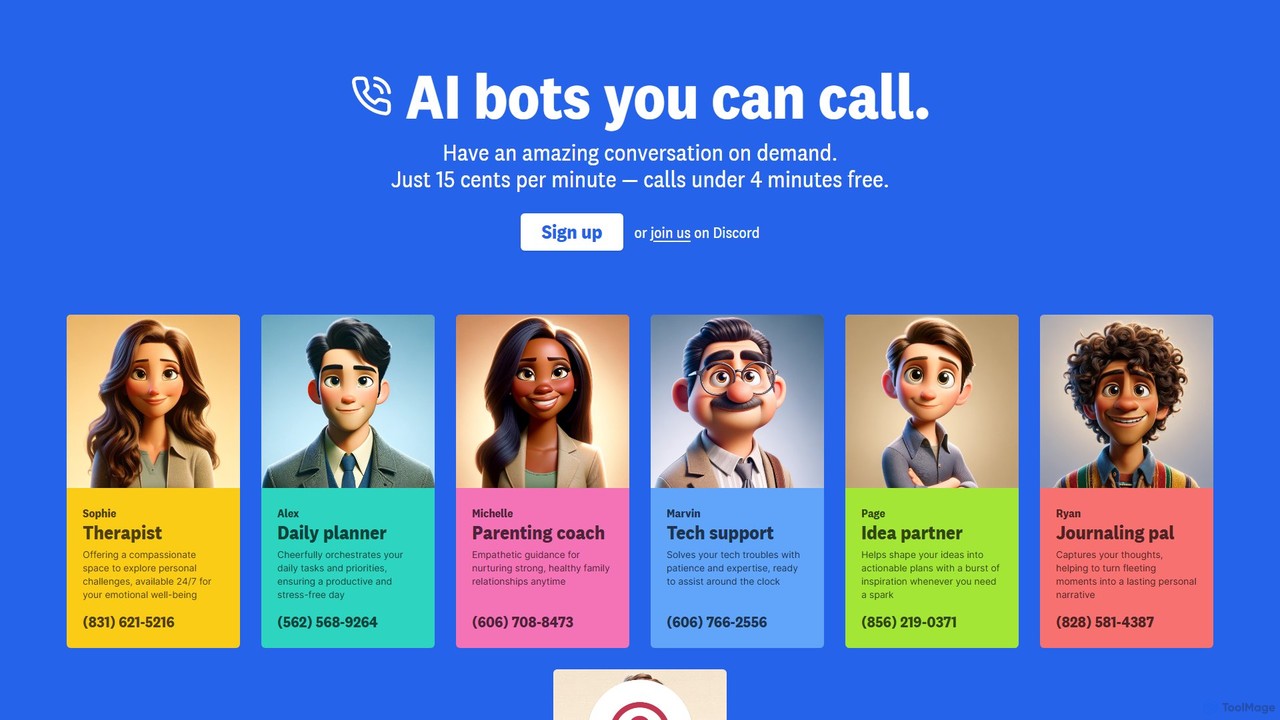
callanai offers on-demand AI companions and assistants accessible via a simple phone call. Choose from specialized bots like …

3.2K

About Companion

AI Companions are a class of personalized AI tools designed to provide conversation, emotional support, and a sense of connection. Unlike task-oriented assistants, these tools leverage advanced natural language processing (NLP) and memory systems to simulate human-like relationships. They learn a user's personality, preferences, and past conversations to offer empathetic and context-aware interactions. The primary value of an AI Companion lies in its ability to serve as a non-judgmental listener and a consistent source of social engagement, available anytime.

Core Features

  • Adaptive Conversation: Engages in deep, evolving conversations that remember past details and user context.
  • Emotional Intelligence: Recognizes and responds appropriately to user emotions expressed through text or voice.
  • Long-Term Memory: Builds a continuous memory of the user's life, interests, and relationship history.
  • Personality Customization: Allows users to shape the AI's personality, traits, and communication style.
  • Proactive Engagement: Can initiate conversations, check in on the user, or recall important dates.

Use Cases

These tools are particularly beneficial for individuals seeking to alleviate loneliness, practice social skills in a safe environment, or engage in daily mental wellness check-ins. They are also used for entertainment, such as creative role-playing and storytelling, providing a unique form of interactive companionship for personal growth and enjoyment.

How to Choose

When selecting an AI Companion, consider the depth of its conversational AI and its ability to maintain context. Evaluate the robustness of its privacy policy to ensure your data is secure. Also, assess the level of personality customization available and whether its communication style aligns with your personal needs and expectations for companionship.

CompanionUse Cases

1

Combating Loneliness and Social Isolation

For individuals experiencing loneliness or who have limited social interaction, an AI Companion serves as a consistent and accessible conversational partner. A user, such as an elderly person living alone or someone in a new city, can engage in daily chats about their day, hobbies, or feelings. The AI remembers previous topics, asks thoughtful follow-up questions, and offers supportive responses. This continuous interaction helps mitigate feelings of isolation by providing a reliable source of social engagement, fostering a sense of being heard and understood without the pressure of human social dynamics.

2

Practicing Social Skills in a Safe Space

Users with social anxiety or those looking to improve their communication skills can use an AI Companion as a practice tool. In this non-judgmental environment, they can experiment with different conversational styles, practice small talk, or even role-play challenging social scenarios like job interviews or difficult conversations. The AI provides instant, patient feedback without the fear of negative social consequences. This allows users to build confidence and develop more effective communication strategies at their own pace, which can then be applied to real-world interactions.

3

Daily Mental Wellness and Mood Journaling

An AI Companion can function as an interactive journal for mental wellness. Users can share their daily thoughts, feelings, and experiences with the AI. It can prompt them with reflective questions, help identify emotional patterns, and offer encouragement. For example, a user feeling stressed can talk through their anxieties, and the AI can guide them through a simple mindfulness exercise or suggest reframing their thoughts. This creates a consistent, private space for self-reflection and emotional processing, supplementing other mental health practices by making daily check-ins more engaging and supportive.

4

Creative Role-playing and Storytelling

For users seeking entertainment and creative outlets, AI Companions offer rich role-playing and storytelling experiences. A user can define a scenario, such as a fantasy adventure or a sci-fi mystery, and the AI will act as a character or narrator, co-creating a dynamic story. This interactive narrative allows users to explore their imagination in ways not possible with static media. The AI's ability to adapt to user inputs and maintain a consistent character persona makes these sessions highly immersive and engaging, providing a unique form of personalized entertainment.

5

Low-Pressure Language Learning Practice

Language learners can use an AI Companion to practice their conversational skills in a target language. Unlike structured lessons, conversing with an AI allows for spontaneous, real-world practice without the fear of making mistakes in front of a native speaker. The user can chat about any topic, helping them build vocabulary and fluency in a natural context. Some AI companions can also offer corrections or explain nuances. This provides a supplementary learning tool that makes language practice more accessible, consistent, and less intimidating, accelerating the learner's confidence and ability.

6

Brainstorming and Idea Exploration Partner

For creators, writers, or anyone needing a sounding board, an AI Companion can act as a brainstorming partner. A user can pitch ideas, talk through a creative block, or explore different angles of a problem. The AI can ask probing questions, offer alternative perspectives, and help organize thoughts, all based on its understanding of the user's goals and past discussions. This conversational approach to ideation can spark new insights and help users overcome mental hurdles, making the creative process more fluid and collaborative, even when working alone.

CompanionFrequently Asked Questions