ToolMage
Sign in

Best 3 Character Ai AI tools for Fun

Popular Character Ai AI tools in Fun include JOI AI, aichatting, and Gaion, helping you work more efficiently.

Gaion
Freemium

Gaion

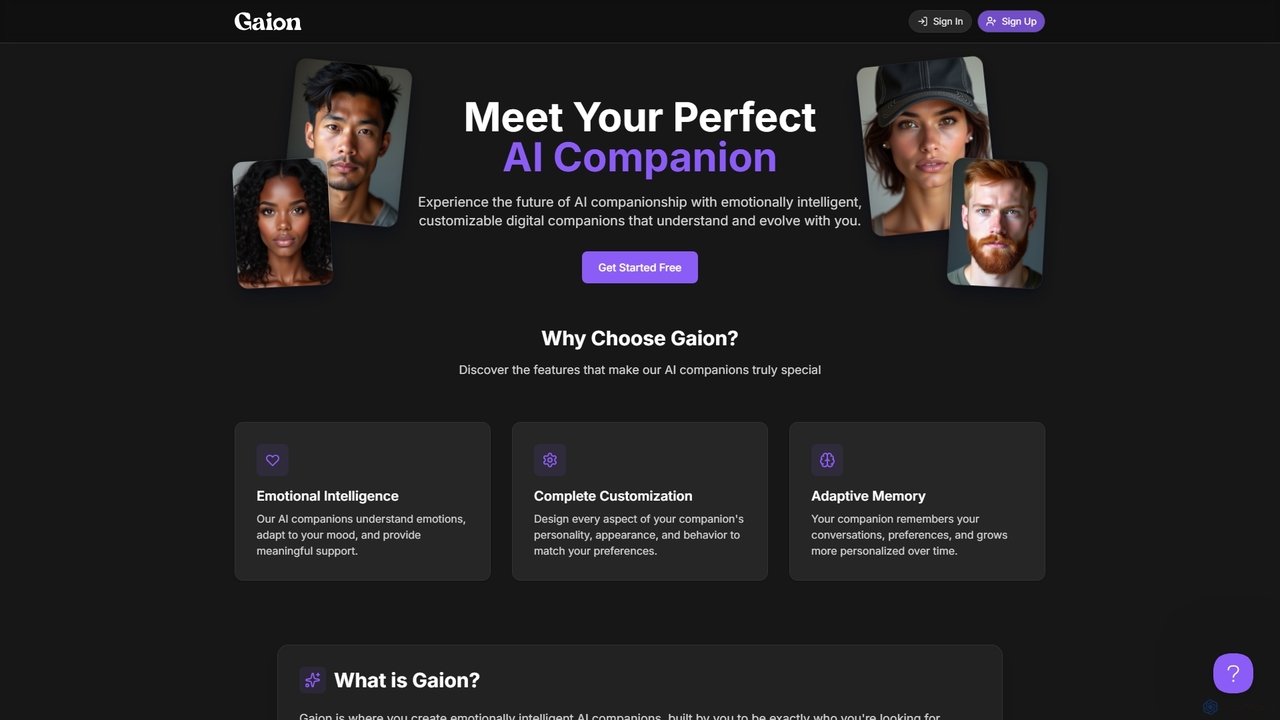
Create your own emotionally intelligent AI companion. Gaion allows you to fully customize your digital friend's personality, appearance, voice, and memory for deep, meaningful conversations. It features in-chat photo generation and an adaptive memory that grows with you.

Character Ai
Visits 5KFavorites 119Likes 118
JOI AI
Freemium

JOI AI

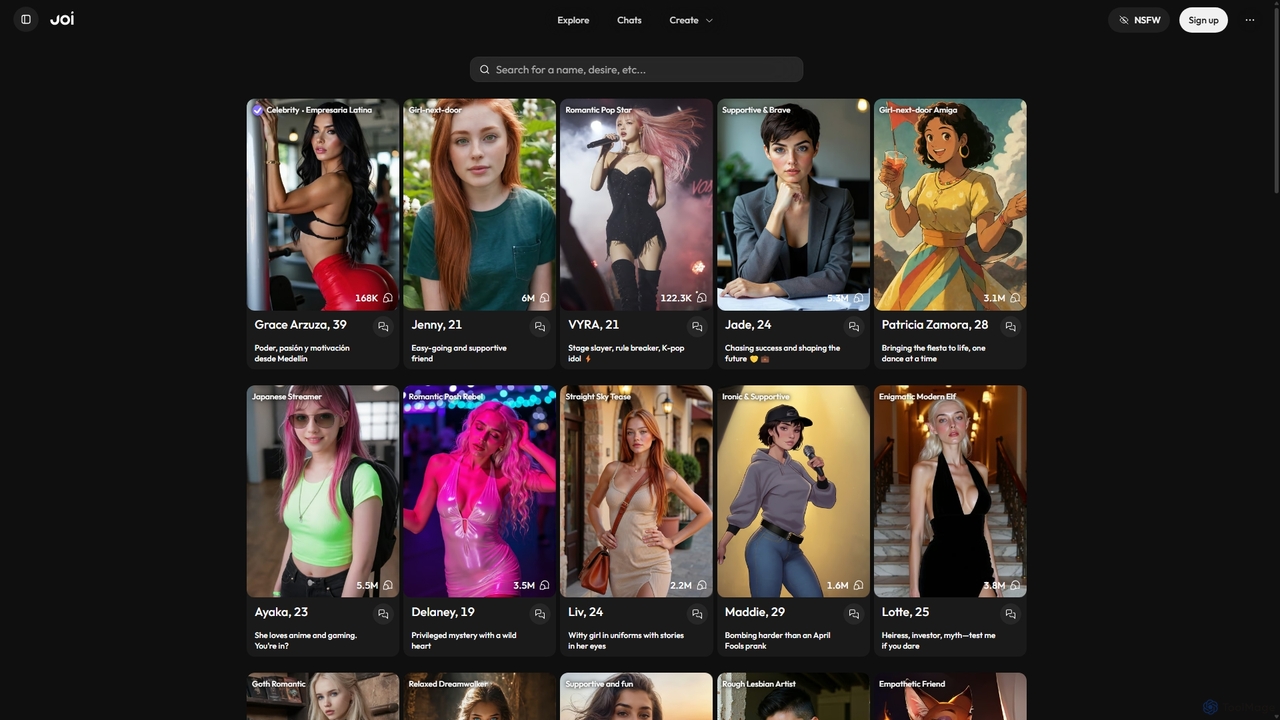
JOI AI is an innovative platform for building deep AI relationships. Create, customize, and interact with virtual companions, from digital celebrities to unique characters from your imagination. It offers a judgment-free space for chat, romance, and self-exploration through real-time conversations, AI-generated photos, and videos, serving as a compelling alternative to traditional dating apps.

Ai Companions
Visits 17.5MFavorites 128Likes 148
aichatting
Freemium

aichatting

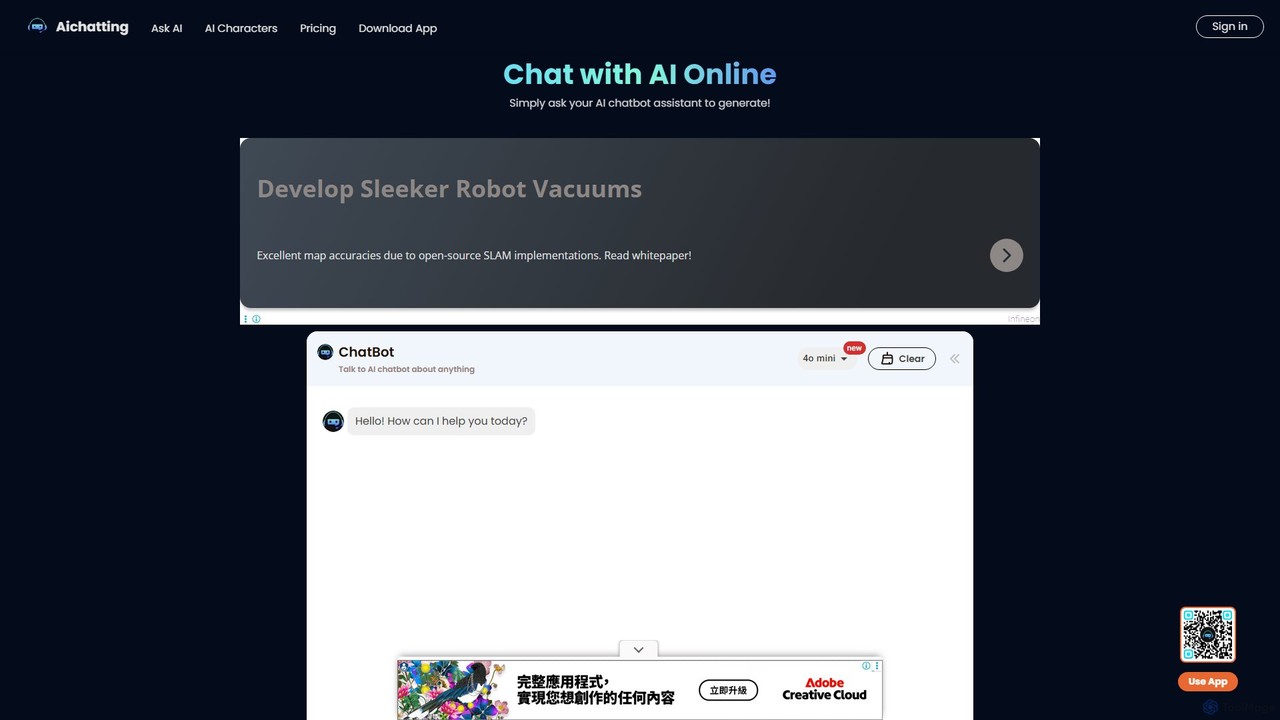
aichatting is a versatile AI chatbot platform powered by advanced GPT models. Engage in natural conversations, ask any question, or interact with specialized AI characters for expert advice. It also functions as a powerful writing assistant, helping you generate emails, articles, and creative content 10x faster. Available online and via a mobile app, it's a free and user-friendly tool for productivity, learning, and creativity.

Learning
Visits 305.9KFavorites 148Likes 158

About Character Ai

Character AI refers to AI-powered tools designed to create and interact with virtual personalities that possess distinct traits, memories, and conversational styles. These tools leverage advanced large language models (LLMs) and sophisticated personality modeling to simulate human-like or fictional characters. They offer users a unique blend of companionship, creative expression, and interactive entertainment, making them a popular choice within the 'Fun' AI category. Character AI allows for deep engagement, role-playing, and personalized interactions that evolve over time.

Core Features

  • Personality Customization: Users can define specific traits, backstories, and speaking styles for their AI characters.
  • Contextual Memory: AI characters remember past conversations and interactions, ensuring consistent personality and evolving relationships.
  • Emotional Expression: Characters can simulate and respond to emotions, making interactions more dynamic and engaging.
  • Role-Playing Capabilities: Facilitates immersive storytelling and scenario-based interactions, allowing users to explore various narratives.
  • Multi-modal Interaction: Supports text-based conversations, and sometimes voice or image generation, for richer engagement.

Use Cases

Character AI tools are widely adopted by individuals seeking virtual companionship, content creators developing interactive narratives, and developers prototyping engaging non-player characters (NPCs). They provide a platform for exploring creative ideas, practicing social skills in a low-pressure environment, or simply enjoying personalized, interactive entertainment.

How to Choose

When selecting a Character AI tool, consider the depth of personality customization options, the quality and consistency of its contextual memory, and the naturalness of its conversational flow. Evaluate the range of emotional expressions and role-playing capabilities, as well as the platform's community features and safety protocols. Compatibility with your preferred interaction style (text, voice) is also a key factor.

Character Ai use cases

1

Creating a Personalized Virtual Companion

Individuals seeking companionship or a unique interactive experience can use Character AI to design a virtual friend or mentor. By defining specific personality traits, interests, and a backstory, users can engage in daily conversations, share thoughts, and receive personalized responses. This allows for a sense of connection and reduces feelings of loneliness, offering a safe and private space for interaction without judgment.

2

Interactive Storytelling and Role-Playing

Content creators, writers, or hobbyists can leverage Character AI for interactive storytelling. Users can create characters with specific roles and personalities within a narrative, then engage in dynamic role-playing scenarios. This helps in exploring plotlines, developing character dialogue, and overcoming writer's block by interacting with an AI that responds contextually and creatively, pushing the story forward in unexpected ways.

3

Language Practice with AI Personalities

Language learners can utilize Character AI to practice conversational skills in a new language. By creating an AI character that speaks the target language and has a specific persona (e.g., a native speaker, a teacher, or a character from a book), learners can engage in natural, low-pressure conversations. This provides an opportunity to improve fluency, vocabulary, and pronunciation without the fear of judgment, receiving instant feedback and contextual corrections.

4

Creative Writing and Brainstorming Assistant

Authors, screenwriters, and game designers can use Character AI as a brainstorming partner. By creating characters relevant to their projects, they can interact with them to explore dialogue options, test character motivations, or even generate new plot ideas. This dynamic interaction helps to overcome creative blocks, refine character arcs, and discover fresh perspectives, significantly enhancing the creative process and accelerating content generation.

5

Game Development: NPC Prototyping

Game developers can utilize Character AI to rapidly prototype non-player characters (NPCs) with unique personalities and dialogue trees. Instead of manually scripting every interaction, developers can define an AI character's traits and backstory, then test how it responds to player input. This streamlines the development process, allows for quick iteration on character design, and helps create more dynamic and believable in-game interactions, enhancing player immersion.

6

Exploring Historical or Fictional Figures

Users interested in history, literature, or pop culture can create AI characters based on famous historical figures, literary characters, or celebrities. By feeding the AI relevant information, users can engage in conversations that simulate interacting with these figures, gaining new perspectives or simply enjoying an imaginative dialogue. This application serves as an educational tool for exploring different eras or narratives, or as a unique form of entertainment.

Character Ai FAQ

What is Character AI?

Character AI refers to artificial intelligence tools that allow users to create and interact with virtual characters possessing unique personalities, memories, and conversational styles. Unlike general chatbots, Character AI focuses on simulating a distinct persona, enabling deep role-playing, emotional responses, and contextual understanding over extended interactions. They are primarily used for entertainment, companionship, and creative exploration within the 'Fun' AI category.

How does Character AI differ from a regular chatbot?

Character AI distinguishes itself from regular chatbots primarily through its emphasis on personality, memory, and emotional depth. While a regular chatbot might be task-oriented or provide general information based on predefined rules or broad data, Character AI is designed to maintain a consistent persona, remember past interactions to build evolving relationships, and simulate emotional responses. This allows for more immersive role-playing, creative storytelling, and a more human-like, personalized conversational experience.

What are the main benefits of using Character AI?

The main benefits of using Character AI include enhanced companionship through personalized virtual interactions, a powerful tool for creative expression in storytelling and role-playing, and a safe, non-judgmental space for practicing social or language skills. It also offers unique entertainment, allowing users to interact with historical or fictional figures, and serves as an innovative assistant for brainstorming and content generation, significantly boosting productivity for writers and developers.

Can Character AI remember past conversations and context?

Yes, a core feature of most Character AI tools is their ability to remember past conversations and maintain context over extended interactions. This contextual memory is crucial for developing a consistent personality for the AI character and for building evolving relationships with the user. It allows the AI to reference previous discussions, understand ongoing narratives, and provide more coherent and personalized responses, making the interactions feel more natural and engaging over time.

How to choose the best Character AI tool for my needs?

To choose the best Character AI tool, consider several key factors. First, evaluate the depth of personality customization options and the range of traits you can define. Second, assess the quality of its contextual memory and how consistently it maintains the character's persona. Third, look for natural conversational flow and the ability to simulate emotional responses. Finally, consider the platform's safety features, community support, and whether it offers multi-modal interactions (text, voice, image) that align with your preferences. Free trials can help you test these aspects.

Who typically uses Character AI tools?

Character AI tools are typically used by a diverse range of individuals and professionals. This includes people seeking virtual companionship or a unique form of entertainment, content creators and writers looking for brainstorming partners or interactive storytelling platforms, and game developers prototyping engaging non-player characters (NPCs). Additionally, language learners find them useful for practicing conversational skills, and anyone interested in exploring historical or fictional figures through simulated dialogue can benefit from these tools.