ToolMage
Sign in

Best 2 Anime AI tools for Fun

Popular Anime AI tools in Fun include chichi-pui and ACGNai, helping you work more efficiently.

chichi-pui
Freemium

chichi-pui

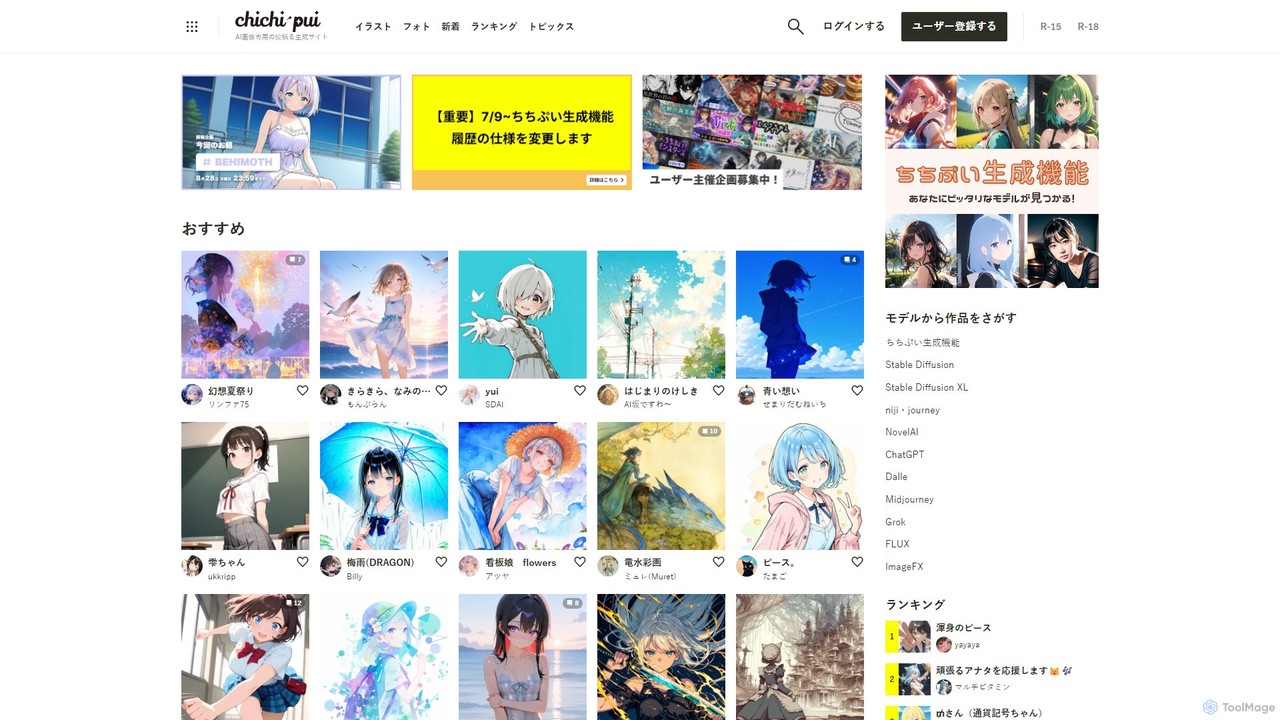
chichi-pui is a dedicated Japanese AI platform for generating and sharing high-quality illustrations, particularly in anime and manga styles. It features a built-in AI image generator with various models, including Stable Diffusion and proprietary ones, and supports image-to-image. It fosters a vibrant community through user-hosted contests, rankings, and social features, allowing creators to connect and showcase their work.

Community Platform
Visits 6.5MFavorites 125Likes 132
ACGNai
Freemium

ACGNai

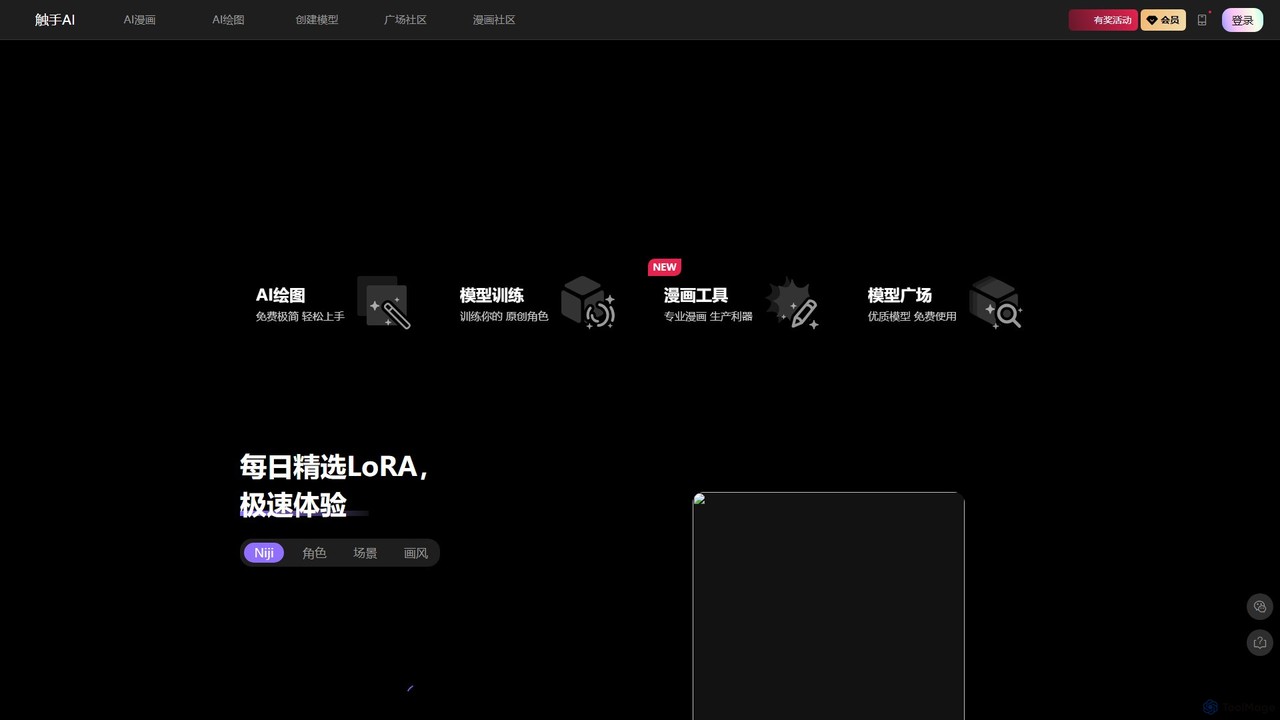
ACGNai is a professional AI art generation platform specializing in ACGN (Anime, Comics, Games, Novels) styles. It's designed for illustrators, comic artists, and designers, offering advanced features like text-to-image, ControlNet, custom model training, and AI video creation.

Anime
Visits 18.9KFavorites 164Likes 152

About Anime

AI Anime generators are specialized tools designed to create high-quality, anime-style artwork from text or image prompts. These tools utilize advanced generative models, such as diffusion models, that have been specifically trained on vast datasets of anime and manga art. This focused training enables them to accurately capture the unique aesthetics, character archetypes, and stylistic nuances of the anime genre. Users can generate original characters, fan art, backgrounds, and illustrations with a high degree of stylistic control, making it a powerful resource for artists, writers, and enthusiasts.

Core Features

  • Style-Specific Generation: Produces images in various anime sub-styles, from modern Shōnen to classic Shōjo or painterly Ghibli-esque aesthetics.
  • Character Consistency Control: Employs techniques like LoRA or ControlNet to maintain a character's appearance and features across multiple generated images.
  • Anime-Trope Recognition: Understands and accurately renders specific anime-related keywords and concepts, such as 'ahoge' (cowlick) or 'yandere eyes'.
  • Image-to-Anime Conversion: Transforms existing photos, sketches, or 3D models into a polished anime art style.
  • Negative Prompting: Allows users to specify elements to exclude from the final image, refining the output and avoiding common artifacts.

Use Cases

These tools are widely used by indie game developers for rapid character concepting and asset creation. Hobbyists and fan artists use them to bring their original characters (OCs) to life or create new scenarios for existing characters. Additionally, writers and light novelists leverage them to visualize scenes and create promotional illustrations for their stories.

How to Choose

When selecting an AI Anime generator, consider the variety of pre-trained styles and models available. Evaluate the level of control offered, such as support for detailed prompting, negative prompts, and character consistency features. Assess the user interface's complexity—some tools are beginner-friendly, while others offer advanced settings for professionals. Finally, review the tool's usage rights and commercial licensing terms if you plan to use the art for projects.

Anime use cases

1

Creating Original Characters (OCs)

For writers, role-players, and artists, visualizing a new character is a crucial creative step. AI Anime generators streamline this process. A user can input a detailed text description, including personality traits ('cheerful smile'), physical features ('long silver hair', 'heterochromia eyes'), clothing ('steampunk attire'), and even background elements. The AI then generates multiple visual interpretations, allowing the creator to rapidly iterate on designs, select a definitive look, or combine elements from different results. This saves hours of sketching and provides a high-quality visual reference for stories, games, or further artwork.

2

Generating High-Quality Fan Art

Fan artists often want to depict their favorite characters in new situations or styles. AI Anime generators excel at this. By providing the character's name and series (e.g., 'Goku from Dragon Ball Z'), combined with a scenario ('eating ramen in a cyberpunk city'), the AI can produce unique compositions. Users can further refine the output by specifying an art style ('in the style of Makoto Shinkai') or a mood ('dramatic lighting'). This allows fans to explore creative 'what-if' scenarios and produce polished artwork for social media or personal collections, bypassing the technical challenges of drawing complex characters and backgrounds from scratch.

3

Designing Indie Game Assets

For independent game developers operating on a tight budget, creating art assets can be a major bottleneck. AI Anime generators serve as a powerful concepting and production tool. A developer can generate character portraits, sprites, item icons, and background art by describing the game's aesthetic ('pixel art JRPG', 'visual novel with watercolor backgrounds'). Using features for character consistency, they can produce multiple expressions and poses for the same character. This dramatically accelerates the art production pipeline, allowing small teams or solo developers to create visually rich games without needing extensive artistic skills or a large art budget.

4

Creating Custom Avatars and Profile Pictures

In the digital world, a unique avatar is a key part of online identity. Instead of using generic images or presets from games, users can employ AI Anime generators to create a truly personal profile picture. They can describe themselves or an idealized persona ('a girl with glasses and a cat on her shoulder, reading a book, cozy atmosphere') to generate an avatar that reflects their personality and interests. This allows for a high degree of customization that is often not possible with standard avatar creators, resulting in a unique and artistically appealing online presence on platforms like Discord, Twitter, or VRChat.

5

Visualizing Manga and Light Novel Scenes

Authors of manga, webtoons, or light novels often have vivid scenes in their minds that are difficult to convey with words alone. AI Anime generators act as a rapid visualization tool. An author can input a prompt describing a key scene ('a swordsman facing a dragon on a snowy mountain peak, dynamic angle'), generating concept art that helps establish the mood, composition, and character designs. These images can be used as a reference for a human artist, included as illustrations in the novel, or shared on social media to promote the story and engage with readers, providing a visual hook that complements the text.

6

Transforming Photos into Anime-Style Art

A popular and fun application is converting real-world photos into anime art. Users can upload a selfie, a picture of a pet, or a landscape photo and use an image-to-image function to reinterpret it in an anime style. Advanced tools allow users to control the strength of the transformation, preserving more of the original photo's composition or leaning heavily into the anime aesthetic. This is used for creating unique social media posts, personalized gifts, or simply for entertainment, allowing people to see themselves and their world through the lens of their favorite art style without any drawing skills.

Anime FAQ

What are AI Anime generators?

AI Anime generators are a specialized category of AI image generators specifically trained to create artwork in the style of Japanese anime and manga. Unlike general models, their datasets are curated with millions of anime-style images, allowing them to understand and replicate the specific visual language of the genre, including character proportions, eye styles, hair physics, and color palettes. They translate text prompts into high-quality illustrations that capture the anime aesthetic with remarkable accuracy.

How do AI Anime generators differ from general AI image generators?

The primary difference lies in their training data and specialization. While a general AI image generator (like Midjourney or DALL-E's base models) is trained on a diverse range of images including photos, paintings, and 3D renders, an AI Anime generator is fine-tuned specifically on anime and manga art. This specialization results in:

  • Better Stylistic Cohesion: They produce results that are more consistently 'anime' without needing extensive style prompting.
  • Understanding of Tropes: They have a better grasp of anime-specific concepts, characters, and aesthetics.
  • Fewer Artifacts: They are less likely to produce distorted or semi-realistic results when an anime style is requested.
In short, a general generator can attempt an anime style, but a specialized anime generator achieves it with greater fidelity and reliability.

How can I create a consistent character with AI Anime tools?

Achieving character consistency is a common challenge, but many advanced AI Anime tools offer specific features to help. Key methods include:

  • Using Seeds: Reusing the same 'seed' number with a similar prompt can produce closely related images, though it's not a perfect guarantee of consistency.
  • Character LoRA Models: Training or using a pre-trained LoRA (Low-Rank Adaptation) model on images of a specific character is the most effective method. This teaches the AI the character's specific appearance.
  • Image-to-Image and ControlNet: Generating a base image of your character and then using it as a reference in image-to-image mode, often combined with ControlNet to preserve the pose or composition, can help maintain consistency across different scenes.
  • Detailed Prompting: Consistently using a very specific and detailed description of the character in every prompt helps guide the AI.

What kind of prompts work best for AI Anime generation?

Effective prompts for AI Anime generators are often very detailed and structured. Best practices include:

  • Subject First: Start with the main subject (e.g., '1girl, solo').
  • Quality Tags: Include tags like 'masterpiece', 'best quality', 'high resolution' at the beginning.
  • Detailed Appearance: Specify hair color and style, eye color, clothing, and accessories (e.g., 'long blonde hair, blue eyes, wearing a red dress, silver necklace').
  • Setting and Mood: Describe the background and atmosphere ('in a fantasy forest, cinematic lighting, night').
  • Style Descriptors: Mention specific artists, studios ('style of Studio Ghibli'), or art styles ('watercolor style', 'retro anime style').
  • Negative Prompts: Use negative prompts to exclude unwanted elements like 'low quality, blurry, extra limbs, text, watermark'.
Combining these elements gives the AI a clear and comprehensive guide to create the desired image.

Is it legal to use AI-generated anime art?

The legal landscape for AI-generated art is complex and evolving. The legality depends on several factors, including the tool's terms of service, the data it was trained on, and how you intend to use the art. For personal, non-commercial use, it is generally considered acceptable. For commercial use, it is crucial to check the specific license granted by the AI tool. Some tools grant full commercial rights, while others may have restrictions. Copyright protection for purely AI-generated works is currently not granted in some jurisdictions like the United States, which can affect your ability to defend your rights to the image. Always review the terms of service and consult legal advice for commercial projects.