abeiai
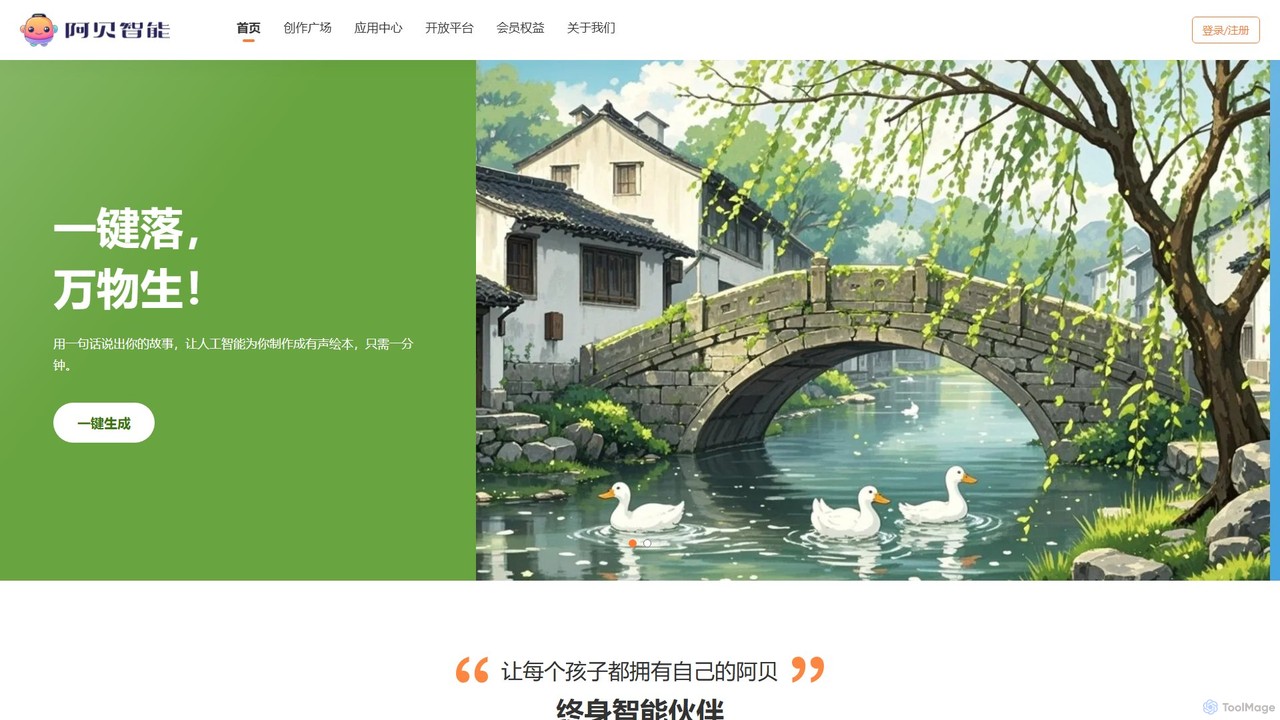
Abeiai is an AI-powered creative platform designed for children, parents, and educators. It specializes in generating personalized audio …
Abeiai is an AI-powered creative platform designed for children, parents, and educators. It specializes in generating personalized audio picture books, bedtime stories, and a wide range of educational content, turning simple ideas into rich, multimedia experiences in minutes.
About Ai For Kids
AI for Kids tools are a category of educational software designed to introduce artificial intelligence concepts to children in an engaging, safe, and age-appropriate manner. These platforms often utilize gamification and visual, block-based interfaces to simplify complex topics like machine learning, neural networks, and data analysis. They provide a hands-on environment where children can train simple AI models, create interactive stories, or generate art, fostering critical thinking, creativity, and foundational STEM skills. The primary goal is to demystify AI and empower the next generation of innovators.
Core Features
- Visual Programming Interface: Utilizes drag-and-drop blocks to teach coding logic and AI principles without complex syntax.
- Gamified Learning Modules: Presents AI concepts through interactive games, puzzles, and challenges to maintain engagement.
- Safe and Curated Environments: Operates within a closed system with content filters and age-appropriate datasets to ensure child safety.
- Interactive AI Model Training: Allows children to train simple models (e.g., image or sound recognition) with visual feedback.
- AI-Powered Creativity Tools: Provides guided tools for generating stories, music, or art with AI assistance.
Use Cases
These tools are widely used in K-12 education, coding clubs, and after-school programs to supplement STEM curricula. At home, parents use them as a productive and educational form of screen time, helping children develop problem-solving skills. They are also valuable for young creators and hobbyists who want to experiment with AI in their personal projects, such as building simple games or creating unique digital art.
How to Choose
When selecting an AI tool for kids, prioritize age appropriateness and check the recommended age range. Evaluate the safety features, such as parental controls, data privacy policies, and content moderation. Consider the educational approach—does it focus on foundational concepts or creative application? Finally, assess the user interface for intuitiveness and its ability to keep a child engaged without being overly complex.

Ai For KidsUse Cases
Training a Simple Game AI Character
A middle school student participating in a coding club uses a block-based AI platform to create a character for their game. The task is to teach the AI character to differentiate between 'friendly' and 'enemy' sprites. The student feeds the model dozens of labeled images. Through a visual interface, they initiate the training process and watch the model's accuracy improve. The result is a functional game character that autonomously reacts to different elements on the screen, providing the student with a tangible understanding of supervised machine learning and data sets.
Creating AI-Generated Art for a School Project
An elementary school student needs to create a cover for their science report on 'Life on Mars'. Using a child-safe AI art generator, they type in simple prompts like 'friendly red alien on a rocky planet with two suns'. The tool, equipped with strong content filters, generates several visual options. The student can then select their favorite, make minor adjustments using built-in editing tools, and use it for their project. This process introduces them to generative AI in a controlled, creative context, showing how AI can be a partner in artistic expression.
Developing an Interactive AI Story
A child uses an AI storytelling platform to create a choose-your-own-adventure story. They define the main character, setting, and initial plot point. The AI then generates branching narrative paths and dialogue options. The child acts as the director, selecting the most interesting paths and editing the AI-generated text to fit their vision. This collaborative process helps develop literacy, narrative structure, and decision-making skills, while also providing a basic understanding of how natural language generation (NLG) models work to create coherent text.
Learning Basic Coding with an AI Tutor
A 10-year-old is learning Python for the first time using an educational platform with an integrated AI tutor. When they get stuck on a coding challenge, instead of just getting the answer, they can ask the AI tutor for a hint. The AI analyzes their code, identifies the error, and provides a Socratic-style question to guide them to the solution, like 'What happens if the variable is a number instead of a string?'. This personalized, on-demand support helps build resilience and a deeper understanding of programming concepts compared to traditional learning methods.
Composing Music with AI Assistance
A young music enthusiast with no formal training wants to compose a short melody. They use an AI music tool designed for kids, selecting a 'happy' mood and a 'piano' instrument. The AI generates a few melodic patterns based on these inputs. The child can then rearrange the musical blocks, change the tempo, or add simple AI-generated drum beats. This allows them to experiment with musical composition in an accessible way, learning about concepts like mood, tempo, and instrumentation without needing to master complex music theory first.
Understanding Data Bias in a Classroom Setting
In a classroom, a teacher uses an AI tool to demonstrate data bias. Students are tasked with training a model to recognize 'healthy food'. They provide images of apples, bananas, and salads. When they test the model with a picture of carrots, it fails, because carrots were not in the training data. The teacher then leads a discussion on why the AI made this mistake, introducing concepts of incomplete datasets and bias in a simple, visual way. This hands-on experiment provides a memorable lesson in data literacy and the importance of diverse data for building fair AI systems.