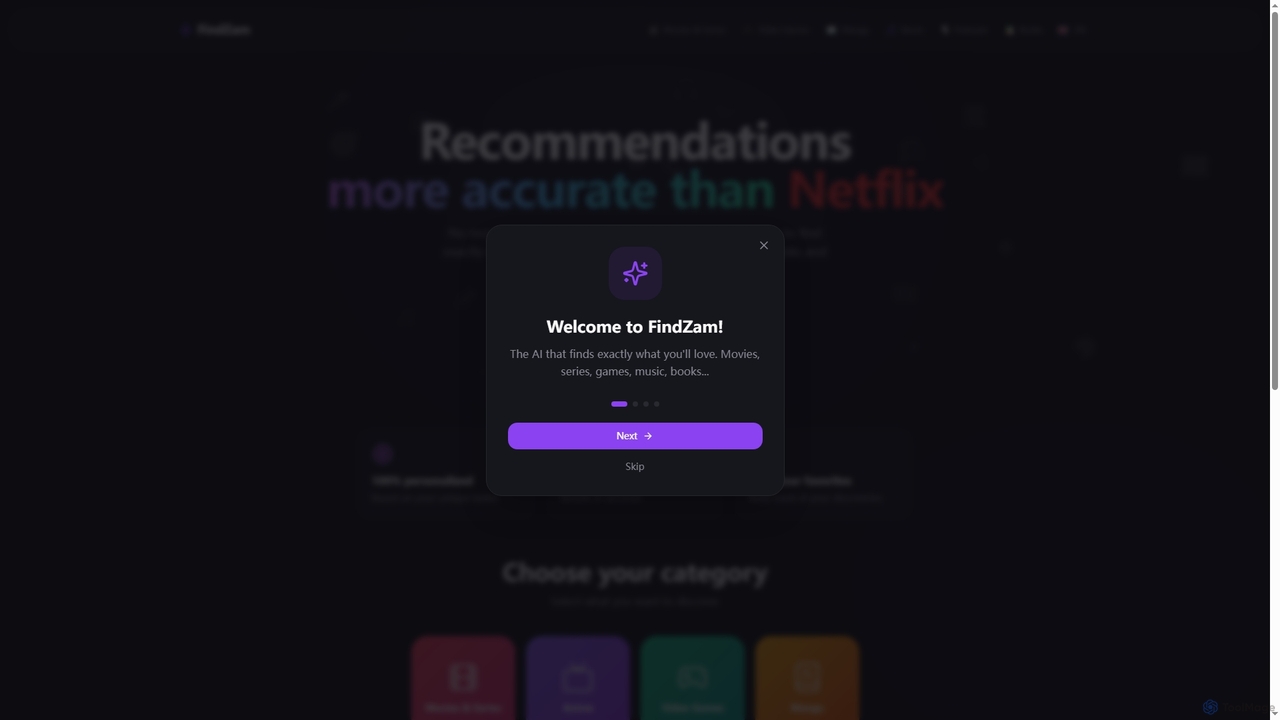
Recommendation Engines are AI-powered tools that analyze user data and behavior to suggest relevant items, content, or services. They leverage machine learning algorithms to identify patterns and predict user preferences, significantly enhancing personalization within various digital platforms. These systems aim to improve user experience, drive engagement, and increase conversion rates by delivering highly tailored recommendations.
Core Features
- Collaborative Filtering: Identifies users with similar tastes to recommend items liked by others in that group.
- Content-Based Filtering: Recommends items similar to those a user has previously liked, based on item attributes.
- Hybrid Recommendation: Combines multiple approaches (e.g., collaborative and content-based) for more robust and accurate suggestions.
- Real-time Personalization: Adapts recommendations instantly based on a user's current interactions and evolving preferences.
- Explainable AI (XAI): Provides transparency into why a particular recommendation was made, building user trust.
Use Cases
Businesses across e-commerce, media, and service industries utilize recommendation engines to personalize user journeys. For instance, streaming platforms suggest movies based on viewing history, online retailers recommend products complementary to past purchases, and news sites curate articles tailored to individual interests, all aiming to keep users engaged and satisfied.
How to Choose
When selecting a recommendation engine, consider the complexity of your data, the desired level of personalization, and integration capabilities with existing systems. Evaluate the accuracy and diversity of recommendation algorithms, scalability for future growth, and the availability of A/B testing features to optimize performance. Also, assess the cost model and support for various data sources.