ToolMage
Sign in

Best 3 Customization AI tools for Personalization

Popular Customization AI tools in Personalization include Wallpapers by AI, Iconlab, and Wallpaper Generate, helping you work more efficiently.

Wallpaper Generate
Freemium

Wallpaper Generate

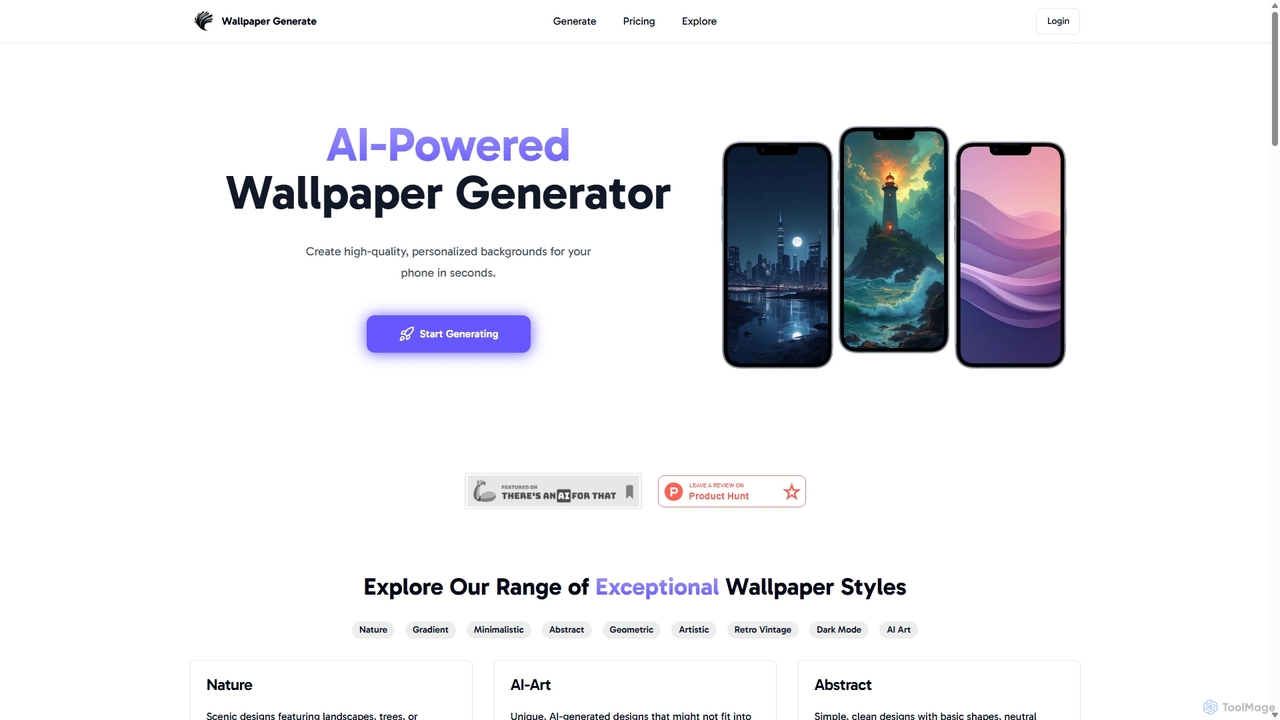
Wallpaper Generate is an AI-powered tool that allows users to create high-quality, personalized wallpapers for their phones in seconds. Simply describe your vision, choose a style and color, and let the AI craft unique backgrounds tailored to your taste, from serene landscapes to vibrant abstract art.

Graphics
Visits 6.4KFavorites 138Likes 153
Iconlab
Freemium

Iconlab

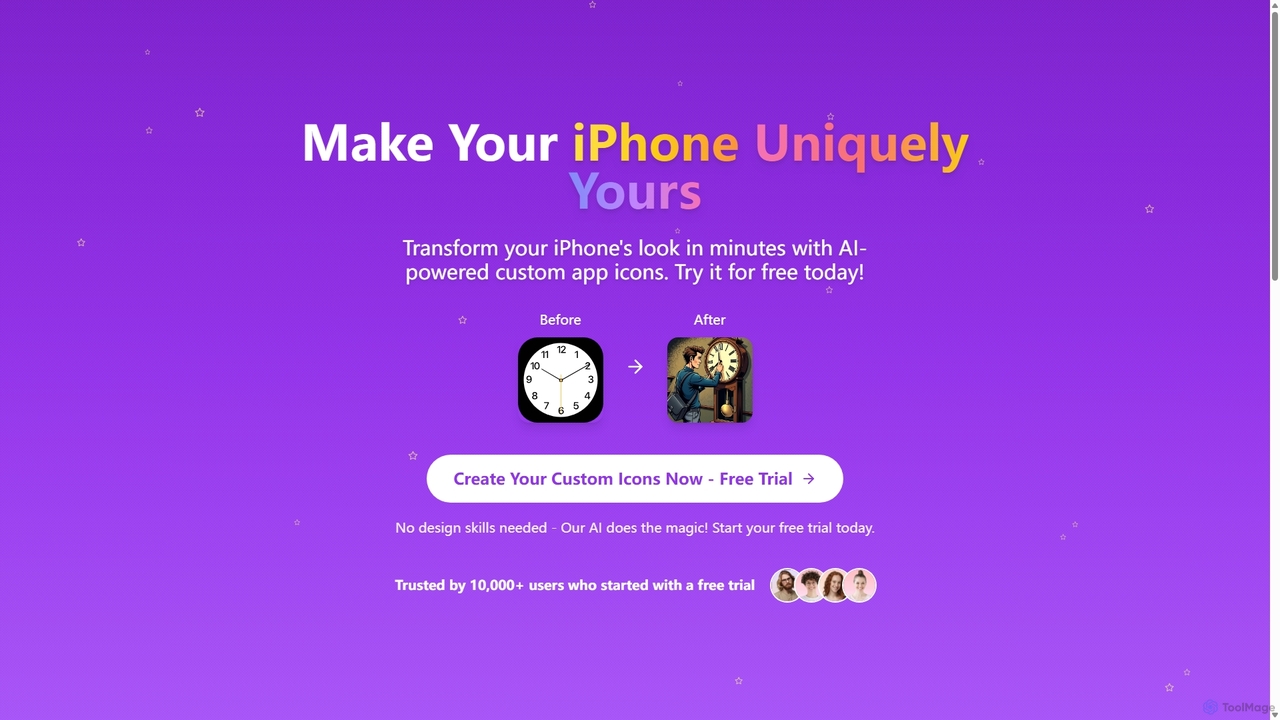
iconlab is an AI-powered tool that allows users to create unique, custom app icons for their iPhones in minutes. With no design skills required, you can choose a style, describe your vision, and let the AI generate a complete set of personalized icons to transform your home screen aesthetic.

Icon Generator
Visits 6.6KFavorites 158Likes 171
Wallpapers by AI
Freemium

Wallpapers by AI

Wallpapers by AI is an AI-powered platform for creating unique, high-resolution wallpapers. Simply describe your desired image, and the AI will generate custom backgrounds for your desktop, mobile, and tablet devices. Explore various artistic styles and create personalized visuals in seconds.

Graphics
Visits 6.9KFavorites 166Likes 152

About Customization

Customization AI tools empower users to actively tailor AI models, outputs, or interfaces to their specific needs and preferences, moving beyond generic solutions. These advanced tools leverage sophisticated AI algorithms, often within the broader field of personalization, to enable deep configuration and fine-tuning. They provide granular control over various aspects of AI behavior and output, allowing individuals and businesses to ensure AI applications align precisely with unique operational requirements, creative visions, or brand guidelines, fostering greater relevance, efficiency, and competitive advantage.

Core Features

  • Model Fine-tuning: This feature allows users to adapt pre-trained AI models by feeding them proprietary datasets, significantly improving their accuracy, domain-specific understanding, and relevance for highly specialized tasks or industry applications.
  • Parameter Control: Users gain granular adjustment capabilities over various AI generation parameters, such as tone, style, length, creativity level, specific keywords to include or exclude, or adherence to particular structural constraints, enabling precise output generation.
  • Interface Personalization: Enables users to modify the visual appearance, layout, and workflow of AI tool dashboards and interfaces. This includes custom themes, shortcut configurations, and personalized data displays, optimizing the user experience for individual preferences or team operational efficiency.
  • Custom Agent Creation: Facilitates the building of AI assistants, chatbots, or virtual agents with unique personalities, specialized knowledge bases derived from user-provided content, and predefined interaction rules tailored to specific roles, customer segments, or internal processes.
  • Output Styling & Branding: This function ensures that all AI-generated content, whether text, images, or code, adheres to specific visual or textual styles, brand guidelines, and formatting requirements, maintaining consistency and reinforcing corporate identity across all outputs.

Applicable Scenarios

Customization AI tools are invaluable for content creators needing to maintain a specific brand voice and style across diverse marketing outputs, developers fine-tuning large language models for niche industry applications like legal tech or healthcare, and businesses creating bespoke customer service AI agents that reflect their unique brand persona and knowledge base. They enable a level of precision and relevance unattainable with off-the-shelf AI solutions, driving innovation in product design, targeted marketing campaigns, and optimized internal operations.

How to Choose

When selecting Customization AI tools, consider the depth of control offered over AI parameters and models, assessing how extensively you can modify behavior and outputs to meet your exact specifications. Evaluate the ease of integration with your existing software ecosystem and data infrastructure, and ensure the platform offers robust scalability to accommodate future growth and evolving needs. Additionally, examine the learning curve for advanced customization features, the vendor's data privacy and security policies, and the availability of comprehensive support for complex fine-tuning tasks to maximize your investment and ensure long-term success.

Customization use cases

1

Tailoring AI Chatbot Persona for Brand Voice

A marketing team uses Customization AI tools to fine-tune their customer service chatbot. By uploading brand guidelines, tone-of-voice documents, and specific product FAQs, they configure the AI to respond with a consistent, friendly, and knowledgeable persona. This ensures every customer interaction reflects the company's brand identity, improving user satisfaction and reducing the need for human intervention in routine queries.

2

Fine-tuning Generative AI for Niche Content Creation

An independent game developer leverages Customization AI to generate unique lore and character backstories. Instead of generic fantasy elements, they feed the AI specific world-building documents and stylistic preferences. The tool then produces highly original and consistent narrative elements that seamlessly integrate into their game's universe, accelerating content creation while maintaining creative control.

3

Customizing AI Model for Industry-Specific Data Analysis

A financial analyst employs Customization AI to adapt a general-purpose predictive model for specific market trends. By training the AI with proprietary historical data, unique economic indicators, and internal risk assessment criteria, the analyst gains a highly accurate and tailored forecasting tool. This allows for more precise investment decisions and risk management strategies, outperforming generic models.

4

Personalizing AI-Generated Marketing Copy for Campaigns

An e-commerce manager utilizes Customization AI to generate personalized product descriptions and ad copy for diverse customer segments. By defining target audience demographics, preferred keywords, and specific call-to-actions, the AI produces multiple copy variations. This ensures each campaign resonates deeply with its intended audience, leading to higher conversion rates and reduced manual copywriting effort.

5

Adapting AI for Bespoke UI/UX Design Elements

A product designer uses Customization AI to generate unique UI components and design variations based on specific brand aesthetics and user interaction patterns. By inputting design system guidelines, color palettes, and desired user flows, the AI suggests and creates tailored buttons, icons, and layout options. This accelerates the design process while ensuring consistency and adherence to the brand's visual language.

6

Configuring AI for Automated Legal Document Drafting

A legal firm implements Customization AI to automate the drafting of specific contract types. By uploading their standard clauses, legal precedents, and client-specific requirements, they train the AI to generate highly accurate and compliant legal documents. This significantly reduces drafting time, minimizes human error, and ensures all documents adhere to the firm's established legal standards and client needs.

Customization FAQ

What are Customization AI tools?

Customization AI tools are software applications that enable users to actively modify, fine-tune, or configure AI models, their behaviors, or their outputs to meet specific requirements. Unlike general AI tools, they provide granular control, allowing users to inject their own data, preferences, or rules to achieve highly personalized and relevant results. They are essential for tailoring AI to unique business processes, brand identities, or creative visions.

How do Customization AI tools differ from general Personalization AI?

While both aim to tailor experiences, Personalization AI often automatically adapts based on user data and behavior (e.g., recommendation engines). Customization AI, however, puts the control directly in the user's hands, allowing them to actively define parameters, fine-tune models with proprietary data, or design specific AI agents. It's about user-driven configuration versus AI-driven adaptation, offering a deeper level of bespoke control.

What are the key benefits of using Customization AI tools?

The primary benefits include achieving highly relevant and accurate AI outputs that align perfectly with specific needs, which off-the-shelf solutions cannot provide. This leads to increased efficiency, improved brand consistency, enhanced user satisfaction, and a competitive advantage through unique AI applications. Users gain greater control over AI behavior, reducing generic or irrelevant results.

What types of AI can be customized using these tools?

Customization AI tools can be applied to a wide range of AI types. This includes large language models (LLMs) for text generation, image generation models for visual content, predictive analytics models for data forecasting, and conversational AI for chatbots and virtual assistants. Essentially, any AI model or application where specific outputs, behaviors, or interfaces are desired can benefit from customization.

What should I consider when fine-tuning an AI model with Customization tools?

When fine-tuning an AI model, consider the quality and relevance of your proprietary dataset – 'garbage in, garbage out' applies here. Ensure your data is clean, diverse, and representative of the specific task. Also, evaluate the computational resources required, the cost implications, and the expertise needed to effectively manage the fine-tuning process. Start with clear objectives and iterate based on performance metrics.