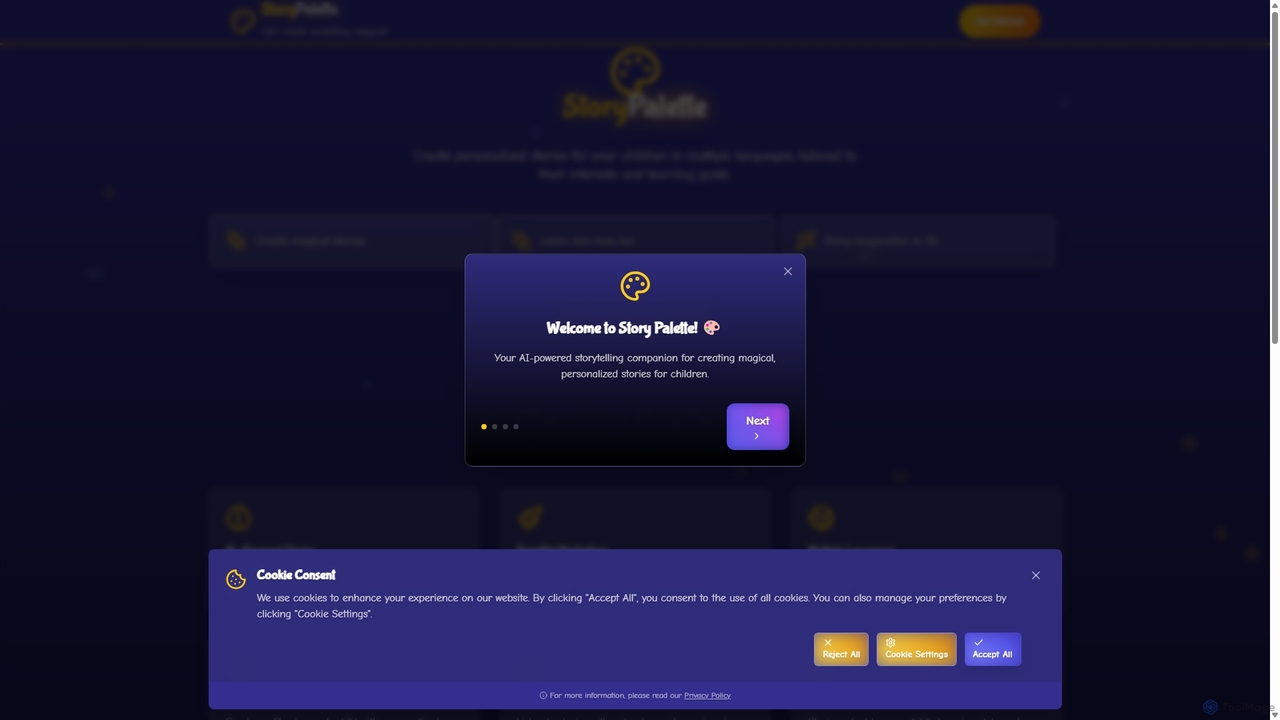
Story Palette
Story Palette is an AI-powered platform for creating personalized children's stories. It generates unique tales with beautiful illustrations, …
Story Palette is an AI-powered platform for creating personalized children's stories. It generates unique tales with beautiful illustrations, tailored to a child's interests and learning goals. Available in multiple languages with audio narration, it's a magical tool for parents and educators to foster imagination and learning.
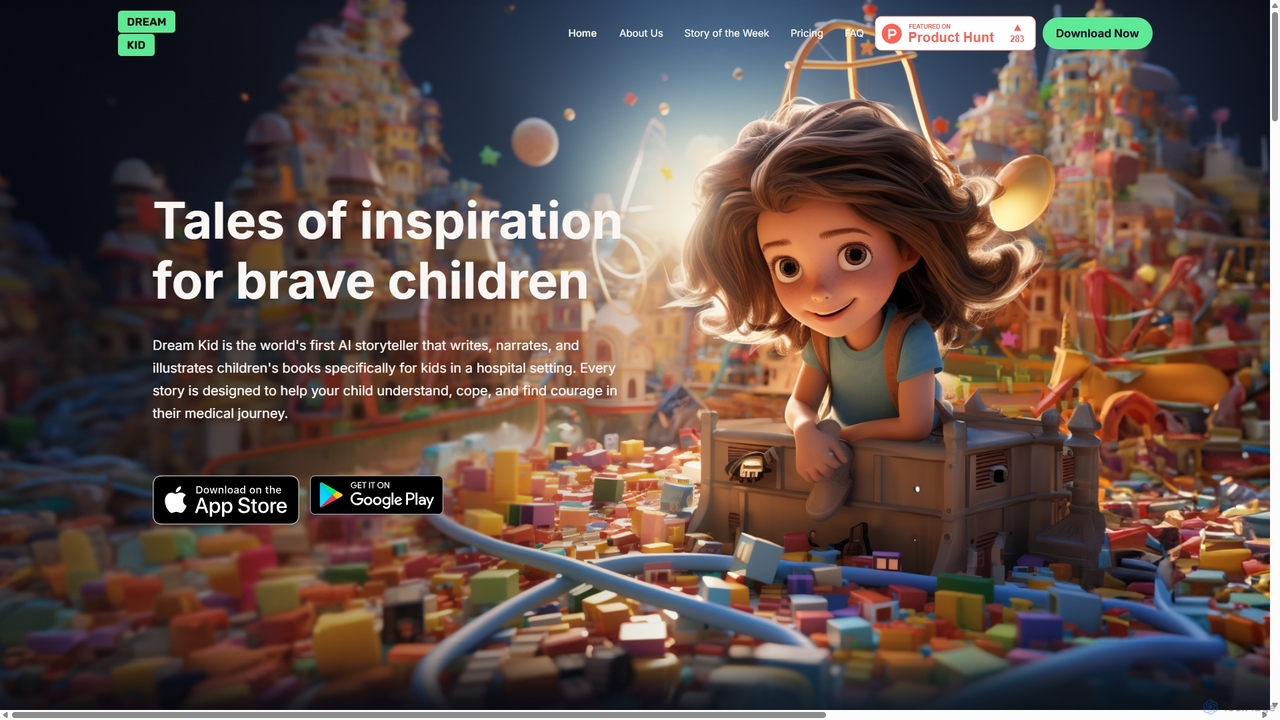
Dream Kid AI
Dream Kid AI is a pioneering AI storyteller that generates personalized, narrated, and illustrated books for children, with …
Dream Kid AI is a pioneering AI storyteller that generates personalized, narrated, and illustrated books for children, with a special focus on those in hospital settings. It transforms medical journeys and personal challenges into empowering adventures, helping kids understand, cope, and find courage through therapeutic storytelling.
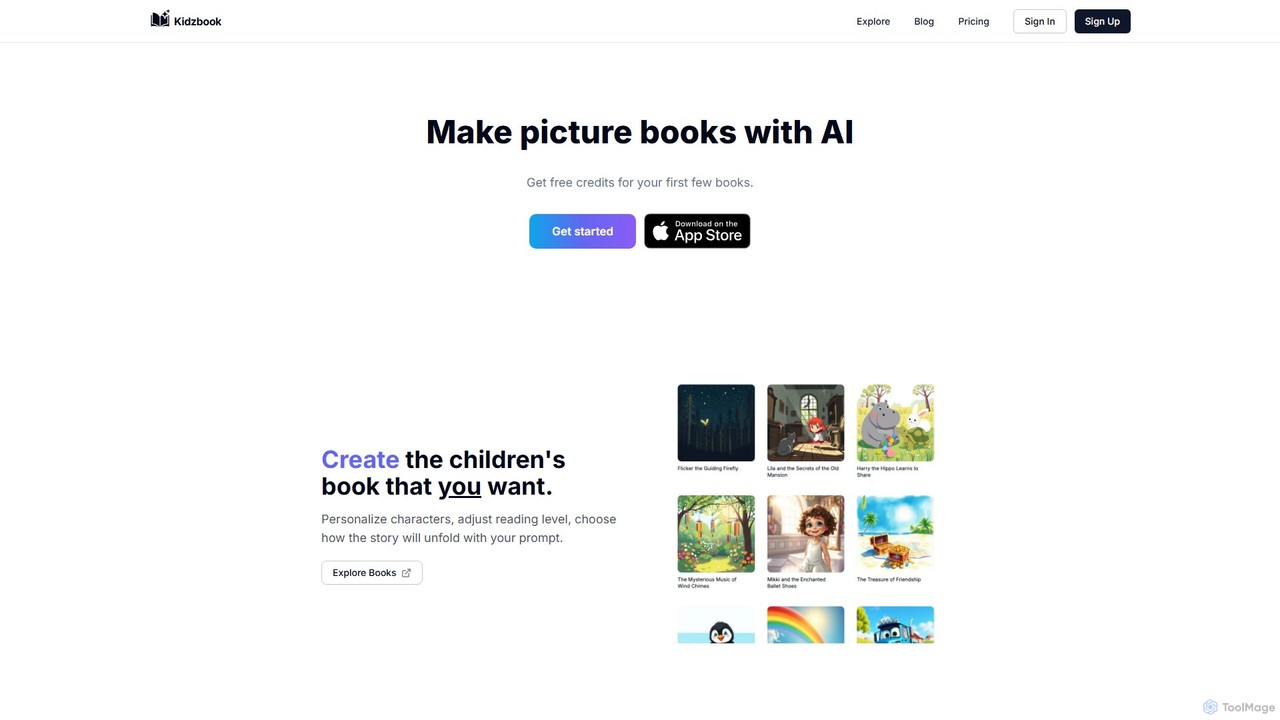
Kidzbook
Kidzbook is an AI-powered platform for creating personalized children's picture books. Generate unique stories and illustrations, customize characters, …
Kidzbook is an AI-powered platform for creating personalized children's picture books. Generate unique stories and illustrations, customize characters, translate into over 20 languages, create bilingual versions, and even produce audiobooks. Perfect for parents, educators, and anyone wanting to create a unique story.

EnchantedPages.Ai
EnchantedPages.Ai is an AI-powered platform that allows parents to create personalized, beautifully illustrated stories for their children. By …
EnchantedPages.Ai is an AI-powered platform that allows parents to create personalized, beautifully illustrated stories for their children. By providing simple details like your child's appearance and a story prompt, you can generate unique tales where your child is the hero. It's designed to make storytime more engaging, educational, and a special bonding experience, transforming bedtime into a magical adventure.
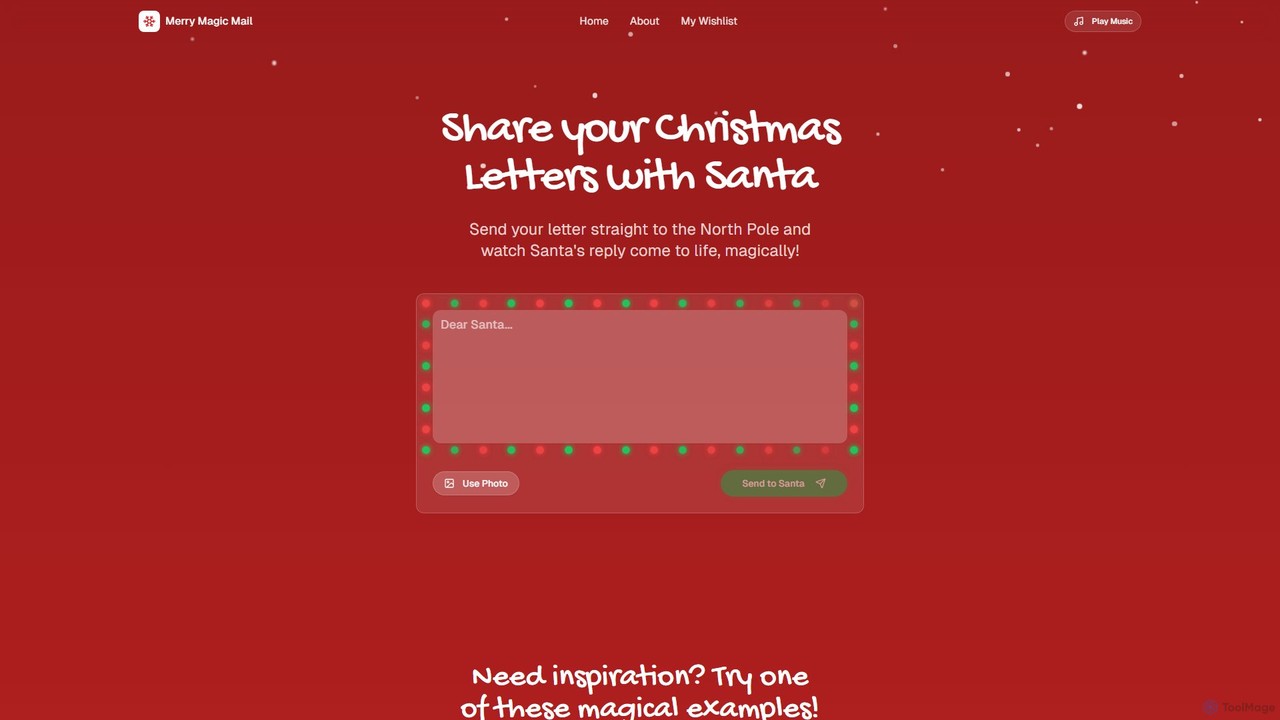
merrymagicmail
Merry Magic Mail uses AI to bring the joy of Christmas to life. Children can write or upload …
Merry Magic Mail uses AI to bring the joy of Christmas to life. Children can write or upload letters to Santa Claus and receive an instant, personalized, and magical reply. The platform offers templates to inspire creativity, options to share the experience with family, and the ability to order beautifully printed keepsakes. It's a modern, interactive way to cherish the holiday tradition and create lasting memories.
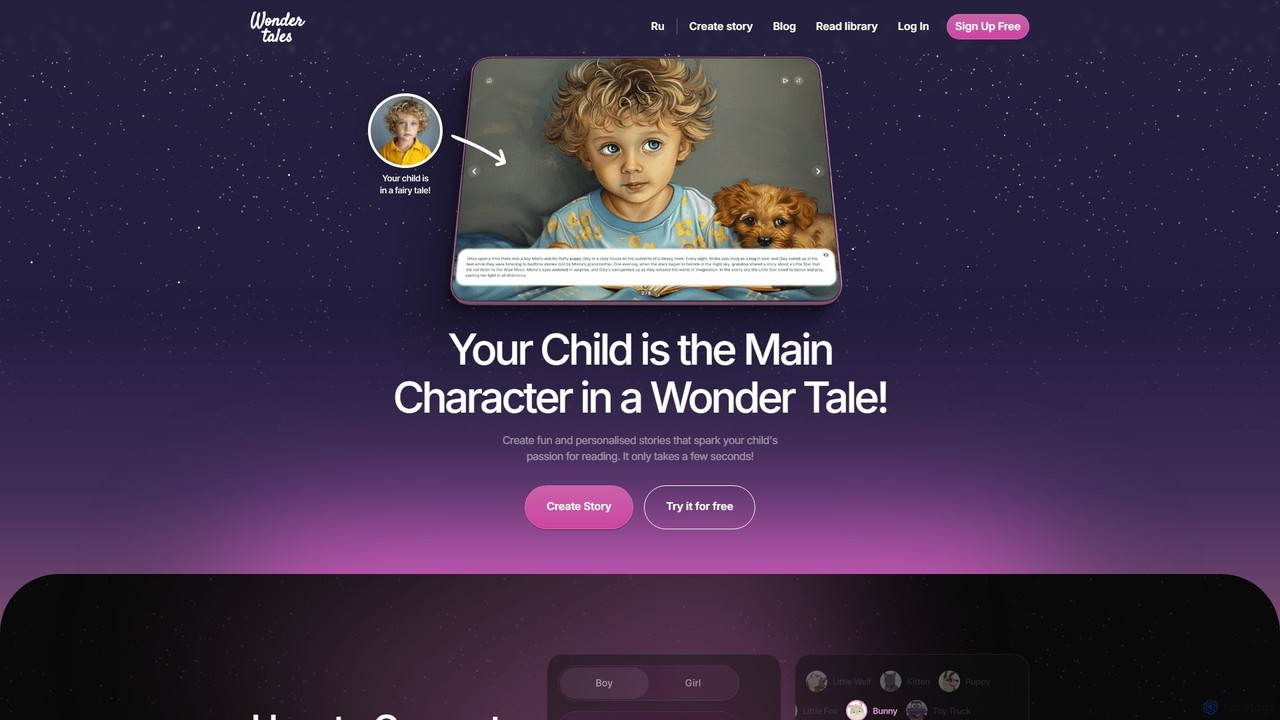
wondertales
Wondertales is an AI-powered platform that creates personalized fairy tales where your child is the hero. Generate unique …
Wondertales is an AI-powered platform that creates personalized fairy tales where your child is the hero. Generate unique stories on any topic, complete with illustrations, to boost literacy, spark imagination, and create cherished family moments. You can even record your own voice to narrate the story, making it a truly special keepsake.
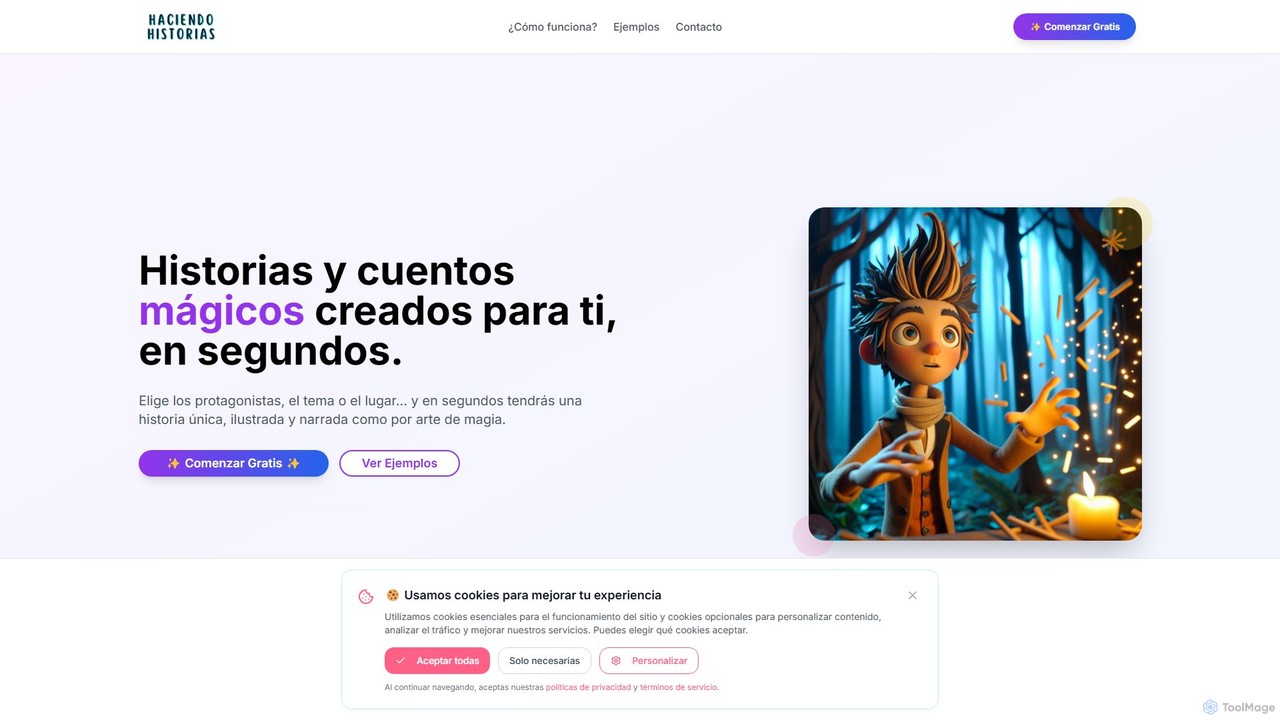
haciendohistorias
An AI-powered platform that creates unique, personalized stories with custom illustrations and audio narration in seconds. Perfect for …
An AI-powered platform that creates unique, personalized stories with custom illustrations and audio narration in seconds. Perfect for children's bedtime stories, educational purposes, and creating heartfelt gifts for any occasion.
About Personalized
Personalized AI tools are a class of applications that leverage artificial intelligence to create unique experiences, content, and recommendations for individual users. These tools analyze vast amounts of user data, including browsing history, purchase behavior, and demographic information, to predict preferences and intent. By dynamically adapting content, product suggestions, and user interfaces in real-time, they enable businesses to deliver highly relevant and engaging interactions. This approach moves beyond one-size-fits-all strategies to foster customer loyalty and increase conversion rates.
Core Features
- User Profiling: Automatically builds and updates detailed user profiles based on behavioral and transactional data.
- Recommendation Engines: Suggests relevant products, articles, or media content based on individual user preferences and similar user behavior.
- Dynamic Content Adaptation: Modifies website elements, email content, or advertisements in real-time to match the user's context and profile.
- Predictive Targeting: Uses machine learning models to identify which users are most likely to convert, churn, or respond to a specific offer.
- A/B/n Testing Automation: Continuously tests and optimizes different personalized variations to identify the most effective strategies.
Use Cases
Personalized AI tools are widely used across various sectors. In e-commerce, they power product recommendation carousels and personalized promotions. Media and streaming platforms use them to curate content feeds and suggest movies or songs. In digital marketing, these tools enable targeted advertising and personalized email campaigns that resonate with specific audience segments.
How to Choose
When selecting a Personalized AI tool, consider its data integration capabilities; it should seamlessly connect with your existing CRM, analytics, and e-commerce platforms. Evaluate the scalability of the solution to ensure it can handle your user traffic growth. Assess the level of control and transparency of the AI models, and prioritize tools that offer robust privacy features and compliance with regulations like GDPR and CCPA.
PersonalizedUse Cases
Personalized E-commerce Product Recommendations
An e-commerce manager uses a personalization tool to analyze a customer's real-time browsing behavior, past purchases, and items added to their cart. The AI engine then dynamically populates sections like 'Recommended for You' and 'Frequently Bought Together' with products that have a high probability of purchase. This not only improves the user experience by making discovery easier but also directly increases the average order value and customer lifetime value.
Dynamic Website Content for Lead Nurturing
A digital marketer for a B2B software company uses a personalization platform to alter the website's homepage for returning visitors. Based on the visitor's industry (inferred from their IP address or previous form fills), the tool swaps the generic headline, customer logos, and case studies with content relevant to their specific sector, such as finance or healthcare. This tailored experience makes the value proposition more immediate and compelling, increasing the likelihood of demo requests and lead conversion.
Personalized News and Media Feeds
A content platform or news aggregator implements a personalization engine to curate a unique feed for each user. The AI tracks which articles a user reads, videos they watch, and topics they follow. It then prioritizes similar content in their feed, while also introducing new, related topics to encourage discovery. This keeps users engaged for longer, increases daily active user metrics, and provides a better alternative to a chronologically or generically sorted feed.
Adaptive Learning Paths in E-Learning
An online education platform uses a personalization AI to create unique learning journeys. After a student completes an initial assessment or a module, the system analyzes their performance to identify strengths and weaknesses. It then automatically recommends the next piece of content, which could be a remedial video for a struggling student or an advanced project for a high-performer. This ensures each student learns at their own pace, maximizing comprehension and course completion rates.
Automating Personalized Email Marketing
A marketing team uses a personalization tool integrated with their email service provider. The tool analyzes customer segments and individual behavior to dynamically insert content blocks into email templates. For example, an email to a customer who recently viewed hiking boots might feature a block with those specific boots and related gear. Another customer might see a block about running shoes. This level of personalization goes far beyond using a first name, leading to significantly higher engagement and conversion rates for email campaigns.
Tailoring In-App User Onboarding
A mobile app developer for a project management tool uses a personalization engine to customize the onboarding experience. When a new user signs up, they are asked for their role (e.g., 'Manager', 'Developer', 'Designer'). Based on their answer, the AI-driven onboarding flow highlights the most relevant features first. A manager sees reporting and team oversight features, while a developer is guided towards task tracking and code repository integrations. This role-based guidance accelerates user activation and helps them realize the app's value faster, reducing churn.