ToolMage
Sign in

Best 1 Story Generation AI tools for Education

Popular Story Generation AI tools in Education include Story Palette, helping you work more efficiently.

Story Palette
Freemium

Story Palette

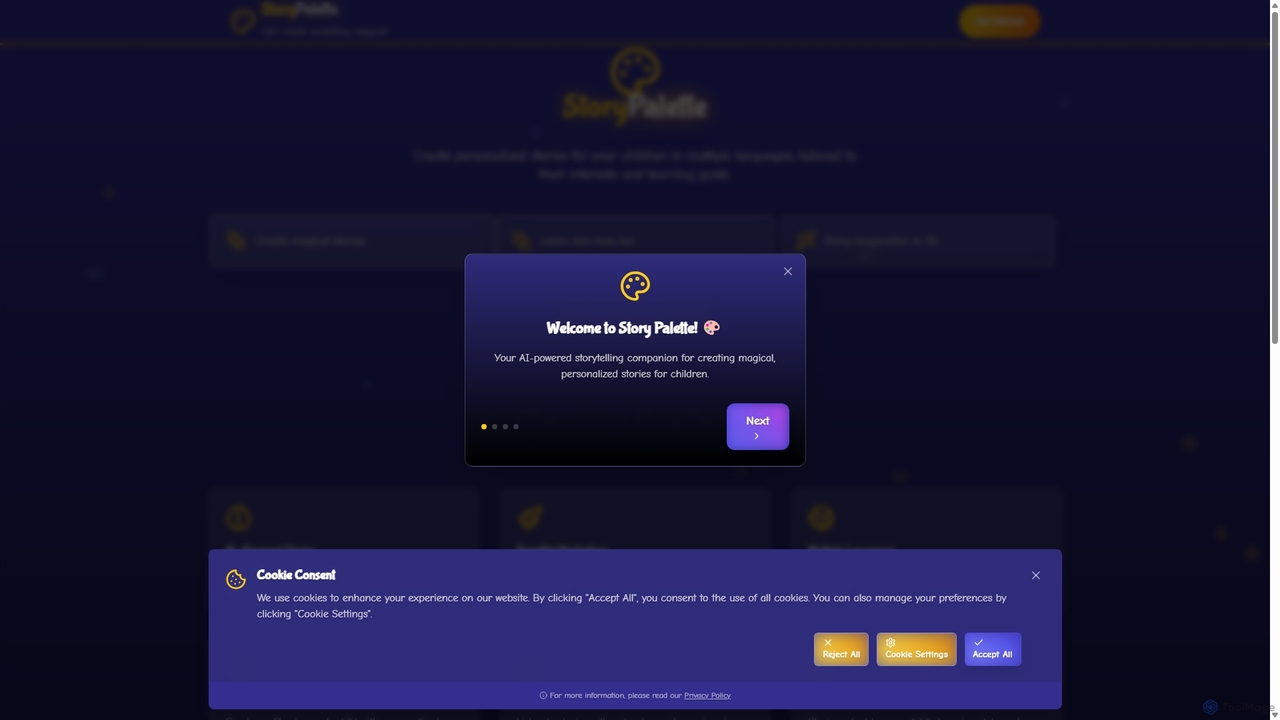
Story Palette is an AI-powered platform for creating personalized children's stories. It generates unique tales with beautiful illustrations, tailored to a child's interests and learning goals. Available in multiple languages with audio narration, it's a magical tool for parents and educators to foster imagination and learning.

Writing
Visits 5.7KFavorites 157Likes 149

About Story Generation

Story Generation tools are a specialized category of AI designed to automatically create narratives, plots, and character arcs from user prompts. These tools leverage large language models (LLMs) trained on vast literary datasets to understand story structure, pacing, and genre conventions. They serve as powerful assistants for writers seeking inspiration, educators creating engaging learning materials, and developers building narrative-driven experiences. Unlike general text generators, they often include specific features for controlling plot points, character development, and dialogue style.

Core Features

  • Plot & Outline Generation: Creates structured story outlines, including acts, scenes, and key turning points.
  • Character Development: Generates detailed character profiles with backstories, motivations, and personality traits.
  • Dialogue & Scene Writing: Writes specific scenes or dialogue exchanges based on context and character voices.
  • Genre & Style Adaptation: Allows users to specify a genre (e.g., fantasy, sci-fi, mystery) and writing style to guide the output.
  • Interactive Narrative Creation: Supports the generation of branching storylines for games or interactive fiction.

Use Cases

These tools are widely used by creative writers to overcome writer's block and explore plot possibilities. In the education sector, teachers use them to generate custom fables and educational stories. Game developers and narrative designers also rely on them to quickly create questlines, NPC backstories, and in-game lore, significantly speeding up the world-building process.

How to Choose

When selecting a Story Generation tool, consider the level of narrative control it offers—can you guide the plot and characters precisely? Evaluate its strength in your preferred genres. Assess the coherence and quality of its long-form output. Finally, check for integration options with writing software or other creative tools to ensure a smooth workflow.

Story Generation use cases

1

Overcoming Writer's Block with Plot Ideas

A novelist struggling with the midpoint of their story can use a Story Generation tool to break through creative hurdles. By inputting their existing premise, key characters, and the last major plot point, the AI can generate several potential continuations. This might include unexpected plot twists, new subplots, or compelling character conflicts. The writer receives not just a block of text, but a set of structured ideas that can be refined and integrated into their manuscript, saving hours of frustrating brainstorming and keeping the narrative momentum going.

2

Creating Custom Fables for Classroom Learning

An elementary school teacher wants to teach a lesson about teamwork using a memorable story. Instead of searching for an existing fable, they use a Story Generation tool. They input the moral 'working together achieves more', specify characters like 'a strong bear' and 'a clever rabbit', and set the scene in a forest. The tool generates a short, age-appropriate story where the characters must cooperate to reach a goal. This provides a unique, tailored educational resource that directly supports the lesson plan and engages students more effectively than a generic story.

3

Generating Questlines and NPC Backstories for Games

A narrative designer for an RPG needs to populate a new town with interesting characters and side quests. Using a Story Generation tool, they can rapidly prototype content. For an NPC, they input a role ('blacksmith') and a personality trait ('grumpy but kind'). The AI generates a backstory explaining why they are that way, complete with family history and a secret ambition. For a quest, they can input a goal ('find a rare ore') and the tool will outline steps, potential obstacles, and dialogue with key characters. This accelerates world-building, ensuring consistency and depth across the game's narrative.

4

Developing Brand Storytelling Content

A content marketer is tasked with creating a campaign that connects with customers on an emotional level. They use a Story Generation tool to explore narrative concepts. By providing the brand's core values (e.g., 'sustainability', 'community') and a target audience persona, the AI generates several short story ideas. One concept, about a small community coming together to clean a local park, perfectly aligns with the brand's message. The marketer can then use this AI-generated story as a foundation for a video script, a series of blog posts, or social media content, creating a more engaging and memorable brand narrative.

5

Crafting Personalized Bedtime Stories

A parent wants to create a unique bedtime story for their child. Using a simple Story Generation app on their phone, they can input key elements: their child's name as the hero, their favorite animal as a sidekick, and a setting like 'a castle in the clouds'. In seconds, the tool weaves these elements into a short, magical adventure. This not only provides endless new stories every night but also makes the child feel special and involved in the creative process. It transforms story time into an interactive and personalized experience, fostering a love for reading and imagination.

6

Rapidly Prototyping Scene Variations for Scripts

A screenwriter is working on a critical dialogue scene but is unsure of the best emotional tone. They use a Story Generation tool to explore options. They provide the scene context, character motivations, and the scene's objective. Then, they ask the AI to generate the dialogue in three different styles: 'tense and confrontational', 'sad and regretful', and 'comedic and witty'. By comparing the AI-generated drafts side-by-side, the writer can quickly identify which approach serves the story best, saving significant time compared to manually writing and rewriting multiple full versions of the scene.

Story Generation FAQ

What is an AI Story Generation tool?

An AI Story Generation tool is a specialized software that uses artificial intelligence, particularly large language models, to create narrative content. Unlike general-purpose AI writers, these tools are specifically designed to understand and generate elements of storytelling such as plot structures, character development, dialogue, and scene descriptions. They act as creative partners, helping users generate ideas, build outlines, or write entire passages of a story based on initial prompts and parameters.

How do I choose the right AI Story Generator?

To choose the right tool, consider these factors:

  • Creative Control: Look for tools that allow you to specify genre, tone, characters, and plot points. The more control you have, the better you can guide the story.
  • Output Quality: Test different tools to see which one produces the most coherent, creative, and well-written prose for your needs.
  • Use Case: Some tools excel at creating outlines and ideas, while others are better at writing full scenes. Choose one that matches your primary goal.
  • Ease of Use: A good tool should have an intuitive interface that makes it easy to input your ideas and generate content without a steep learning curve.
What's the difference between a Story Generator and a general AI writer?

The main difference lies in specialization. A general AI writer (like a generic chatbot) is a versatile tool for many text-based tasks, such as summarizing articles, writing emails, or answering questions. A Story Generator, however, is specifically fine-tuned for creative writing. It has built-in knowledge of narrative structures, character archetypes, and genre conventions. This often results in more coherent and compelling stories, with features tailored to writers, such as plot outlining and character profile creation.

Can AI Story Generators write a complete novel?

Currently, AI story generators are best used as collaborative tools rather than autonomous novelists. While they can generate long passages of text, maintaining long-term coherence, consistent character voice, and complex thematic development throughout an entire novel remains a significant challenge. They are exceptionally useful for brainstorming ideas, drafting scenes, overcoming writer's block, and exploring different narrative paths. However, a human author is still essential for weaving these elements into a polished, emotionally resonant final manuscript.

Who can benefit from using Story Generation tools?

A wide range of creators and professionals can benefit from these tools. This includes:

  • Authors and Screenwriters: For generating plot ideas, developing characters, and drafting scenes.
  • Game Developers: For creating rich backstories for characters, designing quests, and writing in-game dialogue.
  • Educators and Teachers: For producing custom educational stories, fables, and learning scenarios.
  • Marketers: For crafting compelling brand narratives and storytelling content for campaigns.
  • Parents and Hobbyists: For creating personalized bedtime stories or simply exploring creative writing as a hobby.