ToolMage
Sign in

Best 1 Camera AI tools for Photo

Popular Camera AI tools in Photo include Insta360, helping you work more efficiently.

Insta360
Paid

Insta360

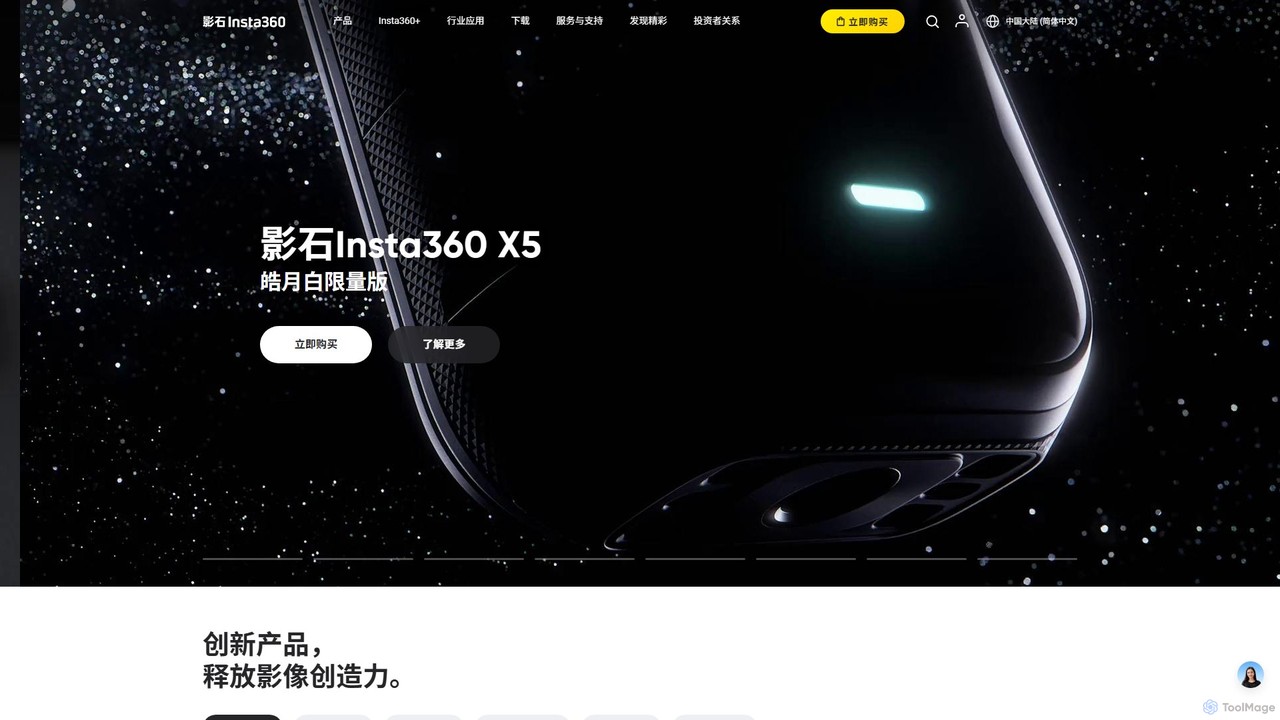
Insta360 is a global leader in AI-powered cameras, offering a range of 360° and action cameras. Its ecosystem combines innovative hardware with intelligent software, featuring AI-driven functions like FlowState stabilization, AI reframing, and one-tap editing templates. This empowers creators of all levels to effortlessly capture and share stunning, dynamic video content.

Camera
Visits 5MFavorites 112Likes 135

About Camera

AI Camera tools are systems or software that integrate artificial intelligence directly into the image and video capture process. These tools leverage computer vision, machine learning, and deep learning to analyze, interpret, and enhance visual data in real-time or near real-time. They are used for smart surveillance, automated inspection, advanced content creation, and enhancing device camera capabilities beyond traditional optics. AI Cameras go beyond simple image capture to intelligent understanding and interaction with the visual environment.

Core Features

  • Real-time Object Recognition: Identify and classify objects, people, or scenes instantly within the camera's field of view.
  • Intelligent Tracking: Automatically follow moving subjects, maintaining focus and optimal framing without manual intervention.
  • Computational Photography: Apply AI algorithms to enhance image quality, depth, lighting, and dynamic range, often creating effects impossible with traditional lenses.
  • Anomaly Detection: Automatically identify unusual events, behaviors, or defects in live video feeds or captured images.
  • Automated Scene Analysis: Understand the context of a scene to make smart adjustments to camera settings or trigger specific actions.

Use Cases

AI Camera tools are vital in sectors requiring intelligent visual data processing, from enhancing consumer devices to critical industrial applications. They empower smart cities with traffic monitoring, assist in retail analytics by tracking customer flow, and provide advanced security solutions. These tools are also increasingly used in creative fields for automated cinematography and advanced visual effects.

How to Choose

When selecting an AI Camera solution, consider the specific application's requirements for real-time processing speed and accuracy. Evaluate the integration capabilities with existing systems, the robustness of its computer vision models, and the level of customization offered. Data privacy and security features are paramount, especially for surveillance or sensitive data applications, alongside the overall cost-effectiveness and scalability for future needs.

Featured tool rankings

Camera use cases

1

Enhance Smart Security and Surveillance

Security professionals and homeowners utilize AI Camera tools for advanced monitoring. These cameras can automatically detect intruders, identify suspicious activities, and send real-time alerts, significantly reducing false alarms. For instance, an AI camera can differentiate between a pet and a human, or a falling leaf and a person, providing more accurate threat detection and improving overall security efficiency.

2

Automate Industrial Quality Control

Manufacturers deploy AI Camera systems for automated visual inspection on assembly lines. These tools can quickly identify defects, inconsistencies, or missing components in products with high precision, far exceeding human capabilities. This leads to improved product quality, reduced waste, and increased production efficiency by catching errors early in the manufacturing process.

3

Enhance Retail Analytics and Customer Experience

Retailers leverage AI Camera solutions to gain insights into customer behavior and store operations. These cameras can track customer movement patterns, analyze dwell times in specific areas, and monitor shelf inventory. This data helps optimize store layouts, personalize marketing efforts, and improve the overall shopping experience, leading to increased sales and operational efficiency.

4

Support Autonomous Vehicles and Robotics

Engineers and developers integrate AI Camera systems into autonomous vehicles, drones, and robots for real-time environmental perception. These cameras provide crucial data for navigation, obstacle detection, lane keeping, and object recognition, enabling these machines to operate safely and efficiently in complex environments. This is fundamental for advancements in self-driving cars and automated logistics.

5

Revolutionize Content Creation and Filmmaking

Content creators and filmmakers utilize AI Camera features for advanced cinematography and visual effects. AI-powered cameras can automatically frame shots, track subjects with cinematic precision, and even generate complex visual effects or enhance lighting in real-time. This significantly reduces post-production time and allows for more creative freedom, making professional-grade content more accessible.

6

Aid Healthcare Diagnostics and Monitoring

Medical professionals employ AI Camera systems for enhanced diagnostics and patient monitoring. These cameras can assist in analyzing medical images (e.g., detecting anomalies in X-rays or MRIs), monitor patient vital signs remotely, or provide real-time guidance during surgical procedures. This technology improves diagnostic accuracy, enables proactive care, and supports safer medical interventions.

Camera FAQ

What are AI Camera tools?

AI Camera tools are advanced imaging systems that embed artificial intelligence capabilities directly into the camera hardware or its accompanying software. They go beyond traditional image capture by using computer vision and machine learning to interpret, analyze, and react to visual data in real-time. Key characteristics include real-time object recognition, intelligent tracking, and computational photography, enabling applications from smart surveillance to automated industrial inspection.

How do AI Camera tools differ from traditional cameras?

Traditional cameras primarily capture visual data, relying on optics and sensors. AI Camera tools, however, integrate processing intelligence directly into the capture process. This means they can not only record but also understand and analyze what they see in real-time. Key differences include the ability to perform real-time object recognition, intelligent tracking, anomaly detection, and computational photography, which traditional cameras lack without external processing.

What are the main applications of AI Camera technology?

AI Camera technology has diverse applications across various industries. In security, it enables smart surveillance and access control. For manufacturing, it powers automated quality inspection. In retail, it provides valuable insights into customer behavior and inventory management. Furthermore, AI Cameras are crucial for environmental perception in autonomous vehicles and robotics, and they are transforming content creation with intelligent cinematography and real-time visual effects.

What should I consider when choosing an AI Camera solution?

When selecting an AI Camera solution, several factors are crucial. First, assess the required processing speed and accuracy for your specific application, especially for real-time tasks. Consider its integration capabilities with your existing infrastructure and software. Evaluate the robustness and reliability of its AI models, and the level of customization or training options available. Finally, prioritize data privacy and security features, along with the overall cost-effectiveness and scalability for future needs.

How does AI enhance image quality in cameras?

AI significantly enhances image quality in cameras through various computational photography techniques. This includes advanced noise reduction, where AI algorithms intelligently remove grain while preserving detail, and improved dynamic range optimization, balancing highlights and shadows more effectively. AI also powers smart focusing, superior color correction, and sophisticated portrait modes that can accurately separate subjects from backgrounds, resulting in clearer, more vibrant, and professionally refined images directly from the camera.

Who benefits most from AI Camera tools?

A wide range of users benefits from AI Camera tools. Security personnel and homeowners gain enhanced protection through intelligent surveillance. Manufacturers achieve higher product quality and efficiency with automated inspection. Retailers acquire valuable insights into customer behavior for optimized store operations. Additionally, developers of autonomous vehicles and robotics rely on AI Cameras for environmental perception, while content creators and filmmakers leverage them for advanced cinematography and streamlined production workflows.