
Product & Development Best in category 1 results Analytics AI Tool

Popular AI tools in the Analytics field of Product & Development include PostHog, etc., helping you quickly improve efficiency.

PostHog

PostHog

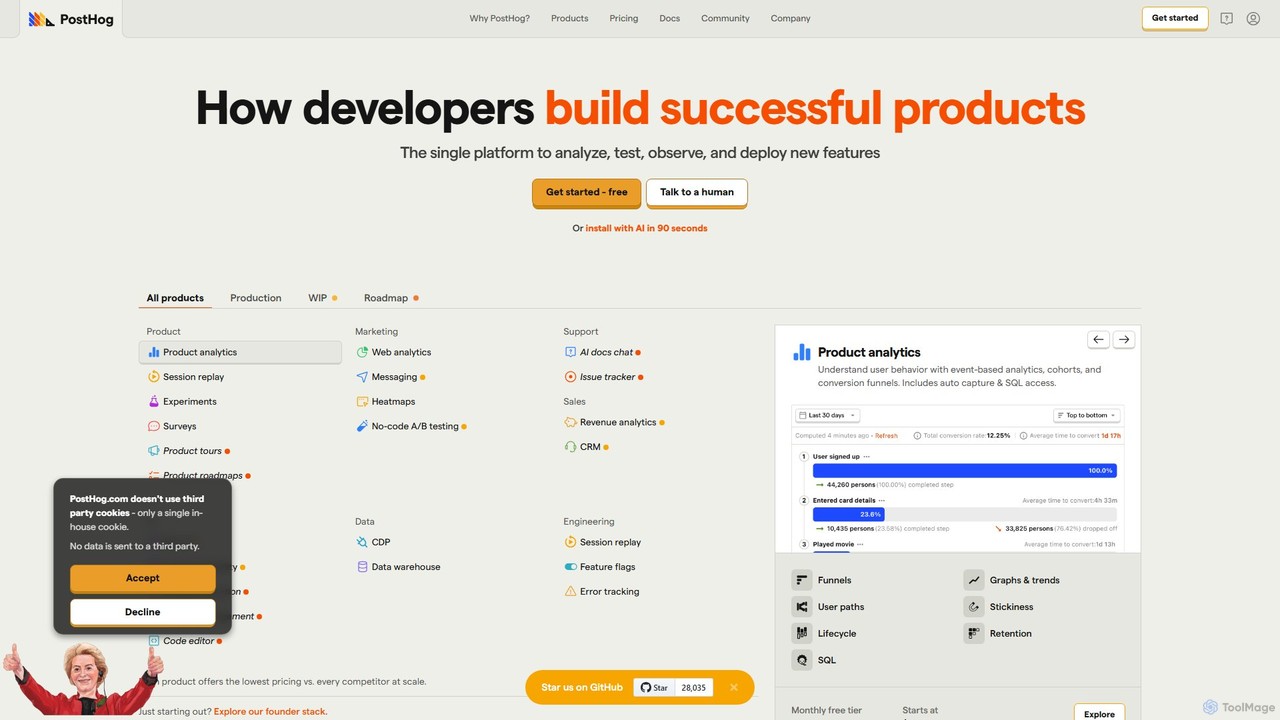
PostHog is an all-in-one, open-source product analytics platform for developers. It combines product analytics, session replay, feature flags, …

2.6M

About Analytics

Analytics are AI-powered tools that transform raw data into actionable insights, enabling smarter decision-making across various business functions. These tools leverage advanced machine learning algorithms to identify complex patterns, predict future outcomes, and automate data interpretation from vast datasets. They provide a deeper understanding of user behavior, market trends, and operational performance, which is crucial for informed product development, marketing optimization, and strategic business growth. By automating the analysis process, AI analytics empower organizations to react quickly to changes and proactively optimize their offerings.

Core Features

  • Predictive Modeling: Forecast future trends, user churn, or sales performance based on historical data.
  • Anomaly Detection: Automatically identify unusual patterns or outliers in data that might indicate issues or opportunities.
  • Natural Language Processing (NLP) for Text Analysis: Extract sentiment, topics, and entities from unstructured text data like reviews or social media.
  • Automated Reporting & Visualization: Generate dynamic dashboards and reports with key insights, reducing manual effort.
  • Prescriptive Analytics: Recommend specific actions to achieve desired outcomes, moving beyond just predictions.

Applicable Scenarios

AI analytics are indispensable for product managers optimizing features based on user engagement, marketing teams personalizing campaigns, and finance departments detecting fraud. They also support supply chain managers in forecasting demand and HR professionals in analyzing employee sentiment, driving data-driven improvements across the enterprise.

How to Choose

When selecting an AI analytics tool, prioritize its compatibility with your existing data infrastructure and its scalability to handle growing data volumes. Evaluate the customization options for models and dashboards, and assess the accuracy and explainability of its AI algorithms. Consider the user-friendliness for diverse team members and the robustness of its security features to ensure reliable and insightful data processing.

AnalyticsUse Cases

1

Predicting Customer Churn for Retention Strategies

Marketing teams use AI analytics to identify customers at high risk of churning by analyzing historical behavior, engagement patterns, and demographic data. The tool flags these customers, allowing proactive intervention with targeted retention campaigns, special offers, or personalized support. This significantly reduces customer attrition rates and improves customer lifetime value by focusing resources where they are most needed.

2

Optimizing E-commerce Product Recommendations

E-commerce platforms deploy AI analytics to personalize product recommendations for individual shoppers. By analyzing browsing history, purchase patterns, and real-time interactions, the AI suggests highly relevant products, enhancing the shopping experience and driving increased conversion rates and average order value. This dynamic personalization adapts as user preferences evolve, ensuring maximum relevance and engagement.

3

Automating Anomaly Detection in Financial Transactions

Financial institutions leverage AI analytics to automatically detect fraudulent transactions. The system continuously monitors transaction data, identifying unusual spending patterns, locations, or amounts that deviate from a customer's typical behavior. This real-time anomaly detection enables immediate flagging and investigation, minimizing financial losses and enhancing security without requiring constant manual oversight, thereby improving compliance and trust.

4

Analyzing Customer Feedback for Product Improvement

Product development teams utilize AI analytics with NLP capabilities to process vast amounts of unstructured customer feedback from reviews, surveys, and support tickets. The AI identifies recurring themes, sentiment, and pain points, providing actionable insights into desired features or areas for improvement. This data-driven approach ensures product enhancements directly address user needs, leading to higher satisfaction and market relevance.

5

Forecasting Sales and Inventory Demand

Retail and supply chain managers employ AI analytics to accurately forecast future sales and inventory demand. By analyzing historical sales data, seasonality, promotional impacts, and external factors, the AI generates precise predictions. This enables optimized inventory levels, reduced stockouts, minimized waste, and improved supply chain efficiency, leading to better resource allocation and significant cost savings across operations.

6

Personalizing Content Delivery for Media Platforms

Media and streaming platforms use AI analytics to personalize content recommendations and delivery for individual users. Based on viewing history, genre preferences, interaction data, and demographic information, the AI curates tailored content feeds. This increases user engagement, extends viewing times, and improves subscription retention by ensuring users always find relevant and appealing content, thereby maximizing platform value.

AnalyticsFrequently Asked Questions