Business Best in category 1 results Customer Data Platform AI Tool

Popular AI tools in the Customer Data Platform field of Business include PostHog, etc., helping you quickly improve efficiency.

PostHog

PostHog

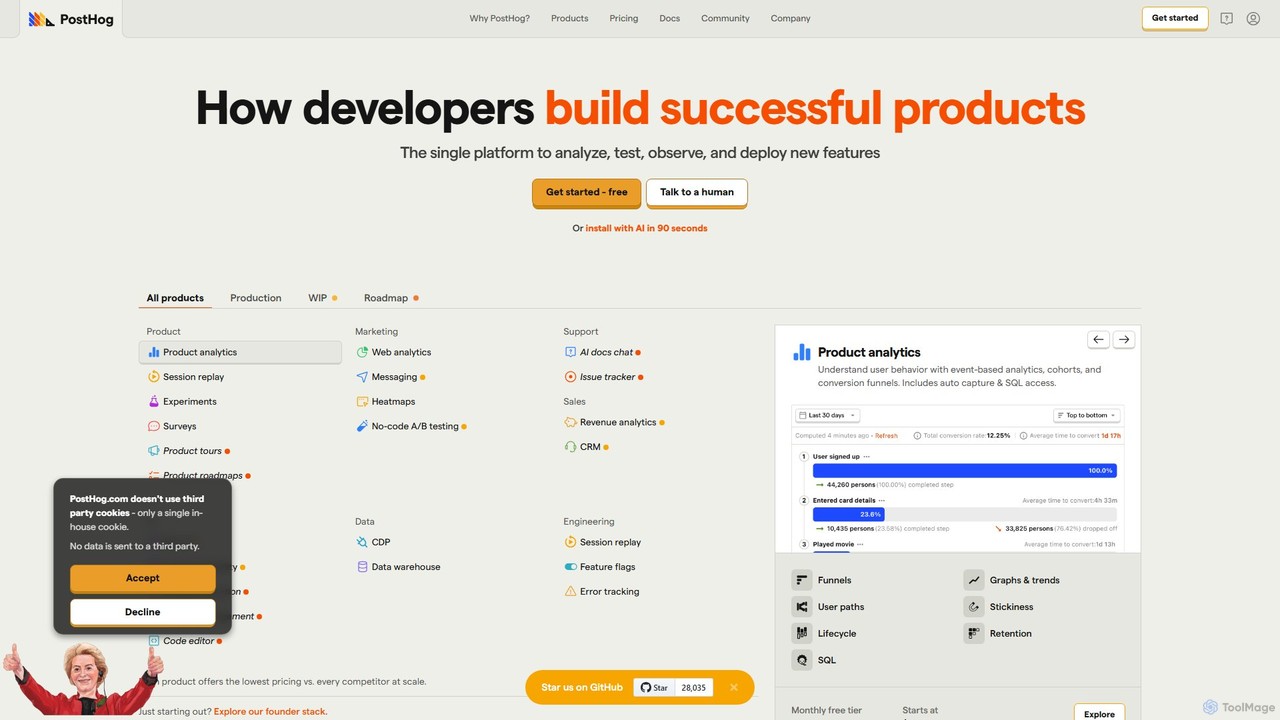
PostHog is an all-in-one, open-source product analytics platform for developers. It combines product analytics, session replay, feature flags, …

2.2M

About Customer Data Platform

A Customer Data Platform (CDP) is a type of software that creates a persistent, unified customer database that is accessible to other systems. It aggregates and organizes real-time data from multiple sources, such as websites, mobile apps, and CRM systems, to build a comprehensive, single view of each customer. This unified profile enables businesses to execute highly personalized marketing campaigns, improve customer service interactions, and make informed, data-driven decisions. Unlike traditional data management systems, CDPs are specifically designed to handle first-party data and provide a complete, chronological history of customer interactions across all touchpoints.

Core Features

  • Data Collection & Ingestion: Gathers customer data from various online and offline sources, including behavioral, transactional, and demographic information.
  • Identity Resolution: Stitches together data fragments from different devices and channels to create a stable, unified profile for each individual customer.
  • Audience Segmentation: Allows for the creation of dynamic and complex customer segments based on any attribute or behavior stored in the profile.
  • Data Activation: Pushes unified profiles and audience segments to other tools in the tech stack, such as email marketing platforms, ad networks, and analytics tools.

Use Cases

CDPs are widely used by marketing, sales, and customer service teams in industries like e-commerce, SaaS, finance, and travel. For example, an e-commerce company can use a CDP to deliver real-time personalized product recommendations, while a SaaS business can identify at-risk users for churn prevention campaigns based on product usage data.

How to Choose

When selecting a Customer Data Platform, consider its integration capabilities with your existing technology stack. Evaluate the sophistication of its identity resolution algorithms and whether it supports real-time data processing. Also, assess its scalability to handle your data volume and its compliance with data privacy regulations like GDPR and CCPA.

Customer Data PlatformUse Cases

1

Create Personalized E-commerce Journeys

An e-commerce marketing manager uses a Customer Data Platform to unify customer data from their website, mobile app, and email platform. The CDP tracks a user's browsing history, items added to the cart, and past purchases in real-time. This unified profile is then used to create a dynamic segment of 'high-intent shoppers'. The CDP activates this segment by sending the data to the email marketing tool to trigger an abandoned cart email and to the ad network to run personalized retargeting ads, significantly increasing conversion rates.

2

Enable Omnichannel Customer Support

A customer service manager for a retail brand integrates their CDP with their help desk software. When a customer contacts support, the agent instantly sees a unified profile fed by the CDP. This profile includes recent online purchases, in-store visit history, and previous support interactions. Instead of asking repetitive questions, the agent has full context, allowing them to resolve issues faster and offer relevant solutions, such as suggesting an exchange at a nearby store. This improves first-contact resolution rates and customer satisfaction.

3

Predict and Prevent Customer Churn for SaaS

A customer success team at a SaaS company uses their CDP to track product usage signals, such as login frequency, feature adoption, and support ticket volume. They create a 'health score' for each account within the CDP. By setting up a rule, the platform automatically identifies accounts whose health score drops below a certain threshold, flagging them as 'at-risk'. This triggers an automated workflow: a notification is sent to the account manager, and the customer is enrolled in a targeted re-engagement email sequence offering training resources, which helps proactively reduce churn.

4

Enhance B2B Lead Scoring and Nurturing

A B2B marketing operations specialist connects their CDP with their marketing automation platform and CRM. The CDP captures anonymous website behavior, such as content downloads and pricing page visits, and uses identity resolution to link this activity to known leads once they fill out a form. It combines this behavioral data with firmographic data from the CRM to create a dynamic lead score. This score is pushed back to the CRM, allowing the sales team to prioritize follow-ups with the most engaged and qualified leads, improving sales efficiency.

5

Manage Loyalty Programs with Precision

A marketing director for a hotel chain uses a CDP to centralize guest data from property management systems, booking engines, and marketing communications. The platform tracks stays, dining preferences, and engagement with promotional offers. This allows the creation of precise loyalty tiers, such as 'Gold Members who prefer spa services'. The CDP then sends this segment to the email platform to deliver a targeted offer for a discounted spa package on their next stay, fostering loyalty and increasing ancillary revenue.

6

Streamline Data Privacy and Compliance

A data privacy officer uses the Customer Data Platform as a central command center for managing consent and data requests. When a user submits a 'right to be forgotten' request via a website form, the request is routed to the CDP. The officer can then execute the deletion from the CDP's interface. The platform propagates this deletion request to all connected downstream systems, such as the CRM and analytics tools, creating an auditable trail and ensuring the company complies with regulations like GDPR and CCPA efficiently.

Customer Data PlatformFrequently Asked Questions