ToolMage
Sign in

Best 4 Automated Writing AI tools for Productivity

Popular Automated Writing AI tools in Productivity include harborseo, Hypertxt, ContentCrafter, and reportcardcomments, helping you work more efficiently.

ContentCrafter
Paid

ContentCrafter

ContentCrafter is an AI-powered content engine meticulously designed for European professionals to generate compliant, culturally adapted, and thought-leading LinkedIn content. It ensures precision, authenticity, and saves significant billable hours for experts in regulated industries.

Social Media Content
Visits 6.2KFavorites 32Likes 35
reportcardcomments
Freemium

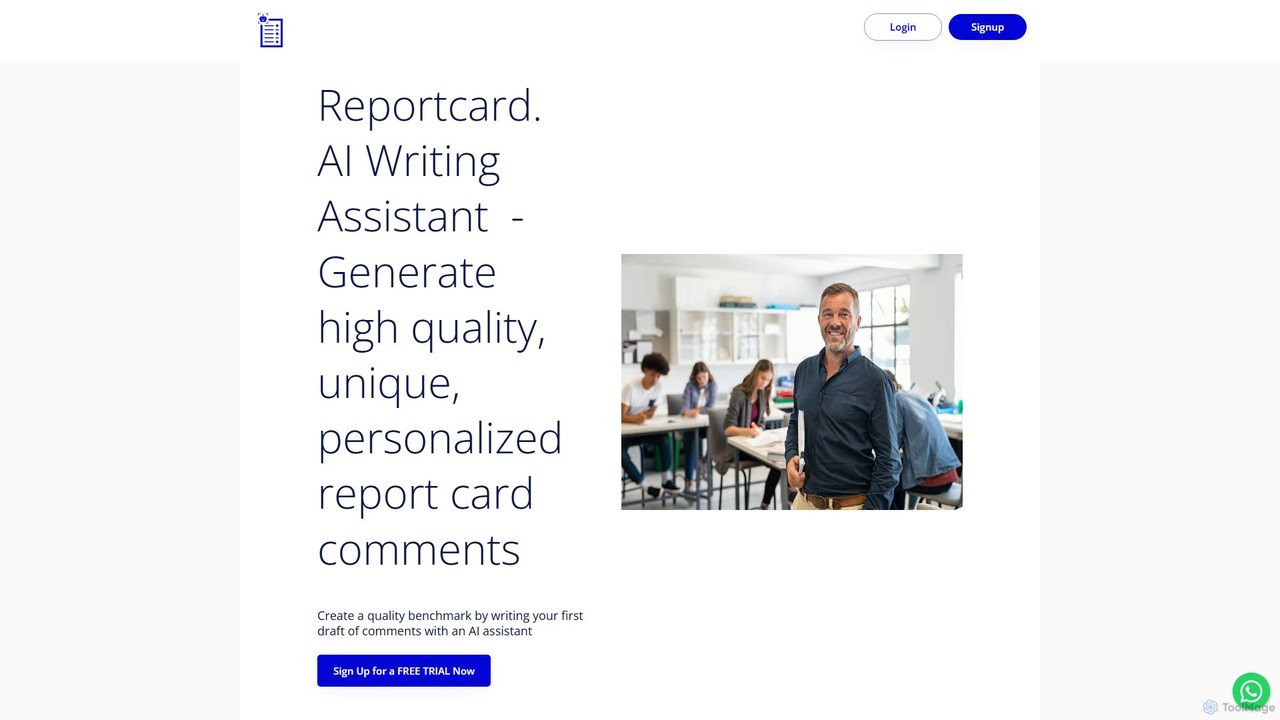
reportcardcomments

An AI-powered writing assistant designed for teachers to generate high-quality, personalized, and error-free report card comments. It streamlines the writing process, saving valuable time and reducing stress during reporting periods.

Teaching Assistant
Visits 5.6KFavorites 145Likes 133
harborseo
Paid

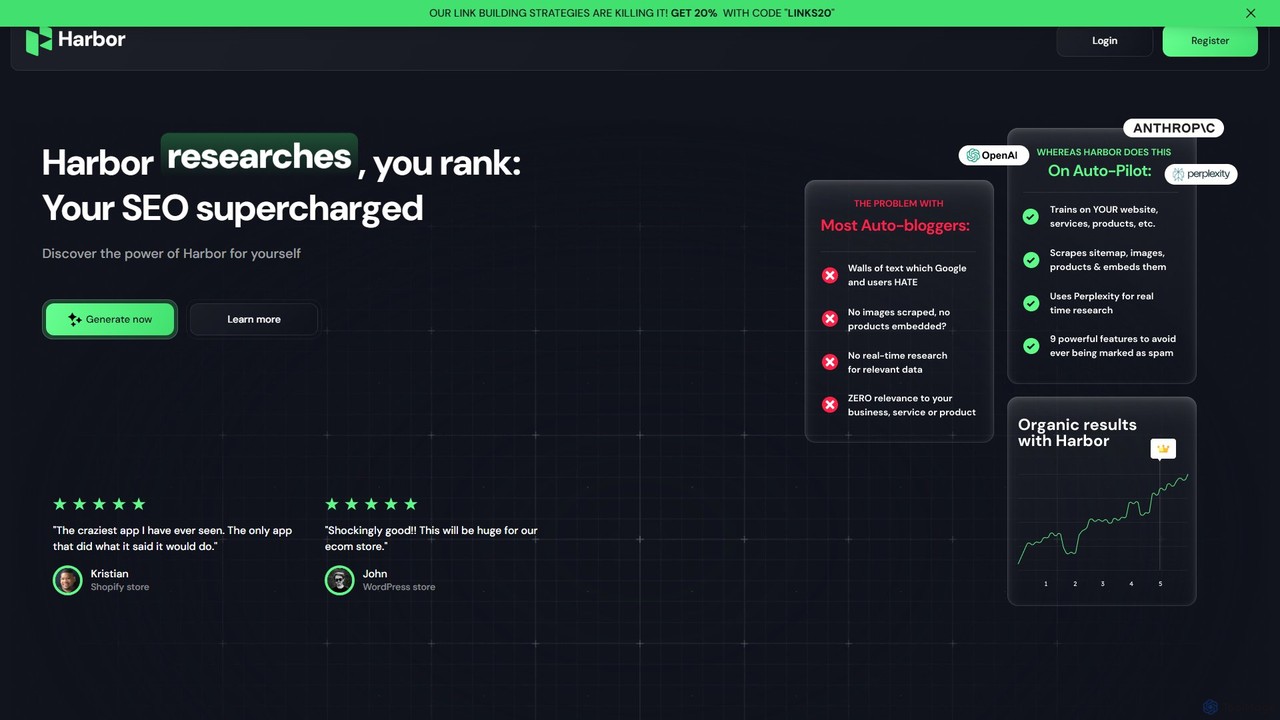
harborseo

HarborSEO is a context-aware AI SEO suite designed to automate and supercharge content creation. It analyzes your website's context, performs in-depth keyword research, and generates various types of high-ranking articles. Key features include automatic internal linking, interactive data visualizations, and embedding relevant products and images, making it ideal for e-commerce, agencies, and bloggers.

Content Marketing
Visits 14.6KFavorites 121Likes 131
Hypertxt
Paid

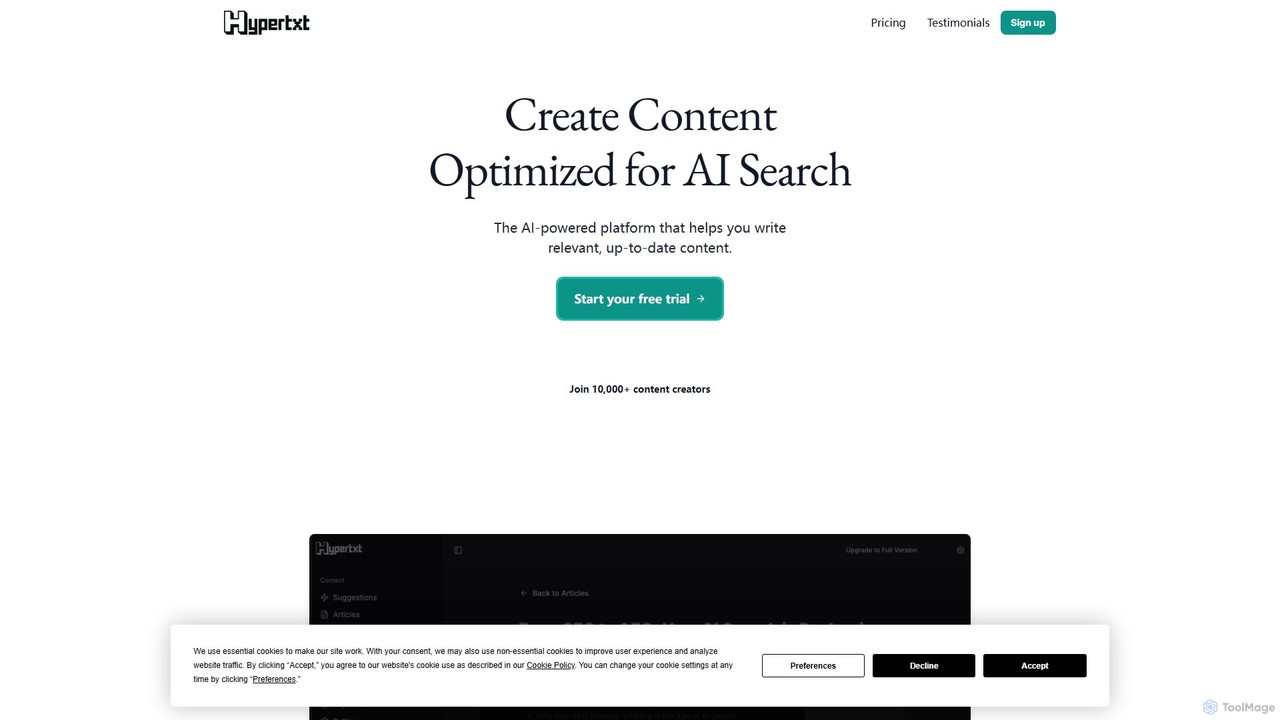
Hypertxt

Hypertxt is an AI-powered writing platform designed to create content optimized for the new era of AI search engines like ChatGPT and Perplexity. It focuses on generating relevant, up-to-date, and context-rich articles with proper source citations, moving beyond traditional keyword-based SEO. The platform offers unlimited article generation, brand voice consistency, and automated workflows to streamline content creation.

Content Creation
Visits 12.3KFavorites 125Likes 135

About Automated Writing

Automated Writing tools are AI-powered applications designed to generate various forms of text content with minimal human input. Leveraging advanced natural language processing (NLP) and large language models (LLMs), these tools can produce articles, marketing copy, social media posts, and more. They significantly boost content creation efficiency, helping users overcome writer's block and scale their content output rapidly, making content production more accessible and consistent.

Core Features

  • Content Generation: Automatically create articles, blog posts, product descriptions, ad copy, and social media updates based on prompts.
  • Text Summarization: Condense long documents, reports, or articles into concise, key-point summaries.
  • Paraphrasing & Rewriting: Rephrase existing text to improve clarity, avoid plagiarism, or adapt the tone and style.
  • Idea & Outline Generation: Assist in brainstorming topics, generating creative ideas, and structuring content with detailed outlines.
  • SEO Optimization: Integrate relevant keywords and optimize generated content for better search engine visibility.

Applicable Scenarios

Content marketers use these tools to maintain a consistent publishing schedule across blogs and social media. E-commerce businesses leverage them for generating unique product descriptions at scale. Journalists and researchers can quickly draft initial reports or summarize extensive literature, streamlining their information processing. This automation frees up valuable time for strategic planning and creative refinement.

How to Choose

When selecting an Automated Writing tool, consider its versatility in generating different content types and its language support. Evaluate the level of customization offered for tone, style, and target audience. Check for integration capabilities with existing content management systems or marketing platforms. Finally, assess the pricing model and the quality of output for your specific needs, ensuring it aligns with your brand voice and accuracy requirements.

Automated Writing use cases

1

Generate SEO-Optimized Blog Posts

Content marketers and bloggers utilize automated writing tools to quickly draft SEO-optimized articles on various topics. By inputting keywords and a brief outline, they can generate initial drafts that save hours on research and writing, allowing them to focus on editing, fact-checking, and adding unique insights. This significantly accelerates content pipelines and improves publishing frequency.

2

Craft Engaging Marketing & Ad Copy

Marketing teams leverage automated writing tools to create compelling ad copy for platforms like Google Ads and social media, email newsletters, and landing page content. They can rapidly generate multiple variations of headlines and body text, enabling A/B testing to identify the most effective messaging and improve campaign performance without extensive manual copywriting.

3

Produce E-commerce Product Descriptions at Scale

Online retailers and e-commerce managers use automated writing to generate unique and persuasive descriptions for hundreds or thousands of products. By feeding product specifications and key features, the tools produce engaging text that enhances SEO, informs customers, and drives conversion rates, eliminating the tedious task of manual description writing.

4

Automate Social Media Content Creation

Social media managers employ AI writing tools to generate daily posts, captions, and relevant hashtags across various platforms like Instagram, Twitter, and LinkedIn. This ensures a consistent and engaging online presence, helps maintain brand voice, and frees up time for community engagement and strategy, rather than constant manual content drafting.

5

Assist Academic & Research Writing

Students, researchers, and academics utilize automated writing tools for tasks such as summarizing complex scientific papers, generating initial drafts of literature reviews, or rephrasing technical content for broader accessibility. These tools help in organizing thoughts, overcoming writer's block, and accelerating the initial stages of academic document preparation.

6

Draft Internal Communications & Reports

HR departments, internal communications teams, and project managers use automated writing for drafting company announcements, policy updates, training materials, or project reports. This ensures clarity, consistency, and efficiency in disseminating information across the organization, reducing the time spent on routine document creation and ensuring professional tone.

Automated Writing FAQ

What are Automated Writing tools?

Automated Writing tools are software applications that use artificial intelligence, primarily large language models (LLMs) and natural language processing (NLP), to generate human-like text content. They can produce a wide range of written materials, from marketing copy and blog posts to summaries and creative stories, based on user prompts and parameters. Their core purpose is to streamline and accelerate the content creation process.

How do Automated Writing tools work?

Automated Writing tools function by leveraging sophisticated AI models trained on vast datasets of text. When a user provides a prompt or specific instructions, the AI analyzes the input, understands the context and desired output, and then generates new text by predicting the most probable sequence of words. This process involves pattern recognition, semantic understanding, and stylistic adaptation, allowing the tool to create coherent and contextually relevant content.

What are the main benefits of using Automated Writing tools?

The primary benefits of Automated Writing tools include significant time savings in content creation, the ability to scale content production rapidly, and overcoming writer's block. They help maintain content consistency, improve SEO by generating keyword-rich text, and allow human writers to focus on strategic thinking, editing, and adding unique insights rather than repetitive drafting. This leads to increased productivity and efficiency in content workflows.

How do I choose the best Automated Writing tool for my needs?

To choose the best Automated Writing tool, consider several factors. First, evaluate the types of content you need to generate (e.g., blog posts, ad copy, emails) and ensure the tool specializes in those. Second, assess the quality and naturalness of its output, often through free trials. Third, check for customization options for tone, style, and target audience. Finally, consider its integration capabilities with your existing workflows and its pricing model relative to your budget and usage volume.

What is the difference between Automated Writing and traditional human content creation?

Automated Writing primarily focuses on generating initial drafts, scaling content volume, and accelerating the writing process, often excelling in repetitive or data-driven content. It leverages AI algorithms for speed and efficiency. Traditional human content creation, conversely, relies on human creativity, critical thinking, deep research, nuanced understanding of complex topics, and emotional intelligence. While AI can assist, human writers bring unique perspectives, brand voice, and the ability to handle highly sensitive or subjective topics that AI may struggle with, making the two approaches often complementary within the broader productivity landscape.