ToolMage
Sign in

Best 6 Ai Search Optimization AI tools for Seo

Popular Ai Search Optimization AI tools in Seo include Trakkr, Hypertxt, Kommi, DoraRank, PrivateHub, and Unifr, helping you work more efficiently.

DoraRank
Freemium

DoraRank

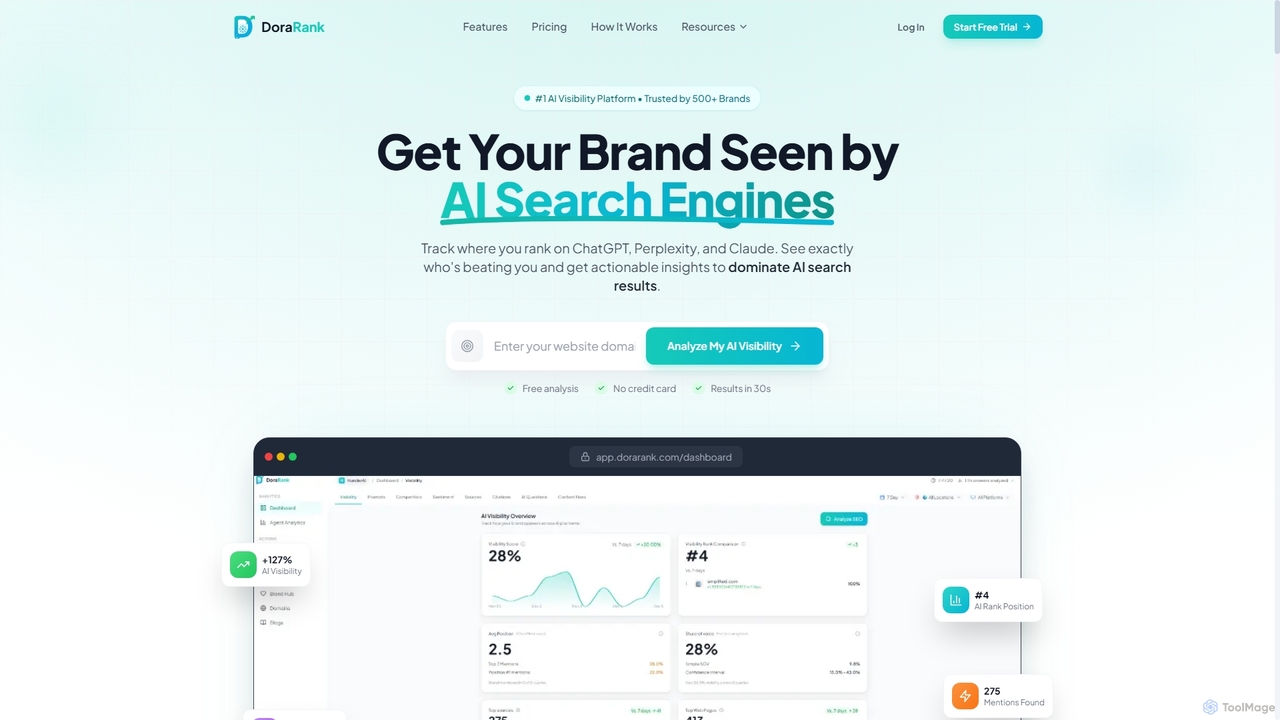
DoraRank is the #1 AI visibility platform designed to help brands rank higher in AI search engines like ChatGPT, Perplexity, and Claude. It offers tools to track AI search rankings, optimize for LLM citations, and gain AI-era SEO intelligence, enabling businesses to capture lost revenue and dominate the new AI search landscape.

Performance Tracking
Visits 5KFavorites 79Likes 75
Trakkr
Freemium

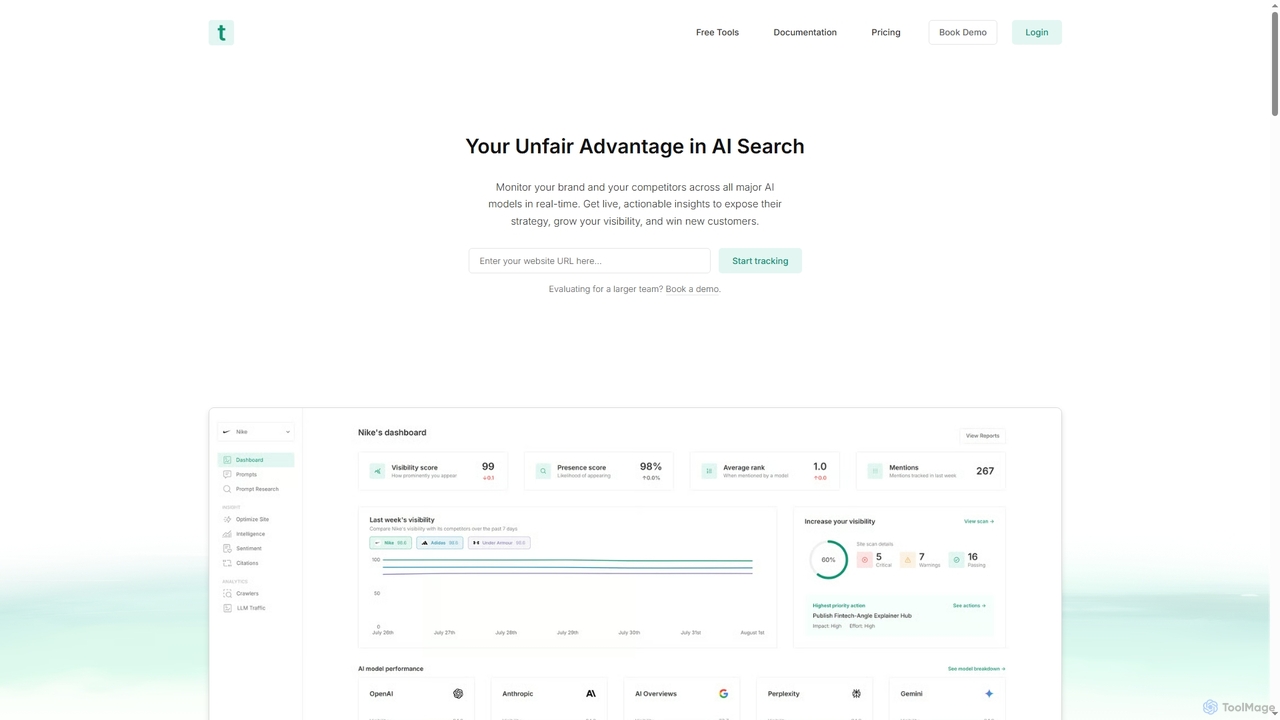
Trakkr

Trakkr is a real-time AI visibility platform that monitors your brand and competitors across major LLMs like ChatGPT, Gemini, and Claude. It provides actionable insights on rankings, mentions, citations, and sentiment to help you optimize your content and win in AI search.

Competitive Intelligence
Visits 34.4KFavorites 84Likes 92
Unifr
Paid

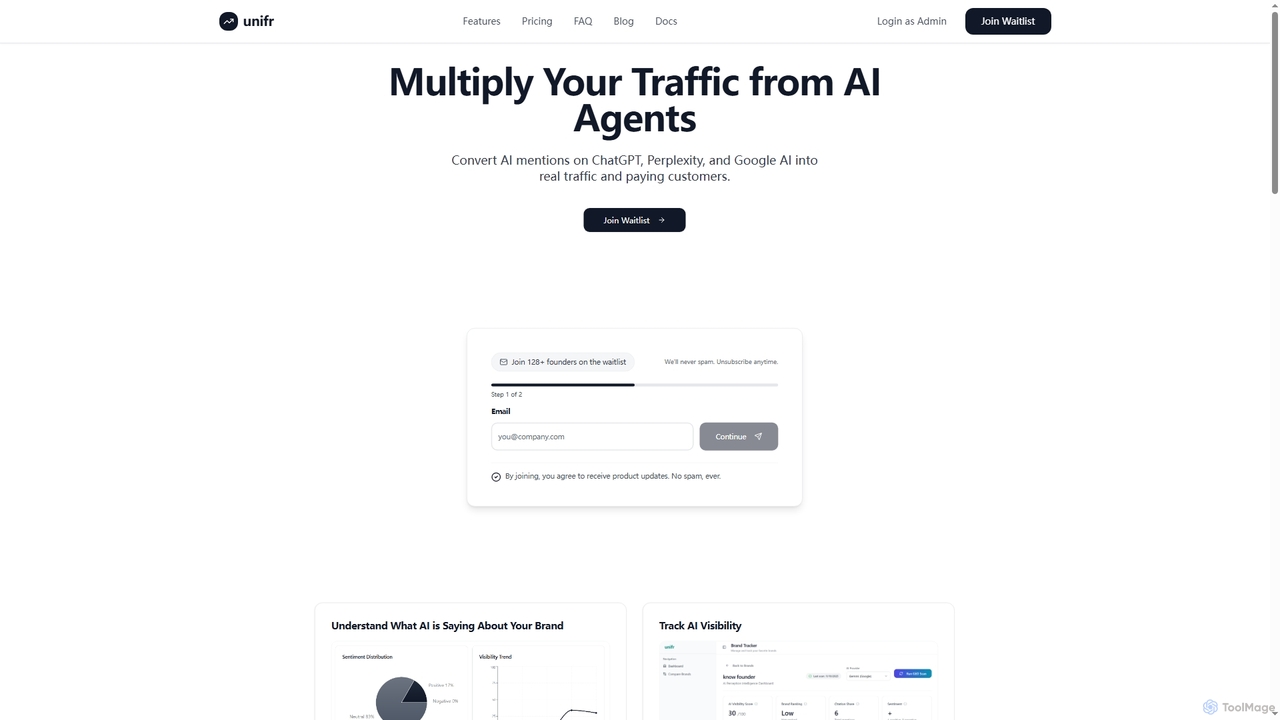
Unifr

Unifr is an AI visibility tracking tool designed to help businesses and individuals understand, monitor, and optimize their brand's presence across major AI platforms like ChatGPT, Perplexity, and Google AI. It converts AI mentions into actionable insights, driving traffic and customer acquisition by revealing how AI agents perceive your brand and the sources they reference.

Brand Monitoring
Visits 4.8KFavorites 132Likes 125
Kommi
Freemium

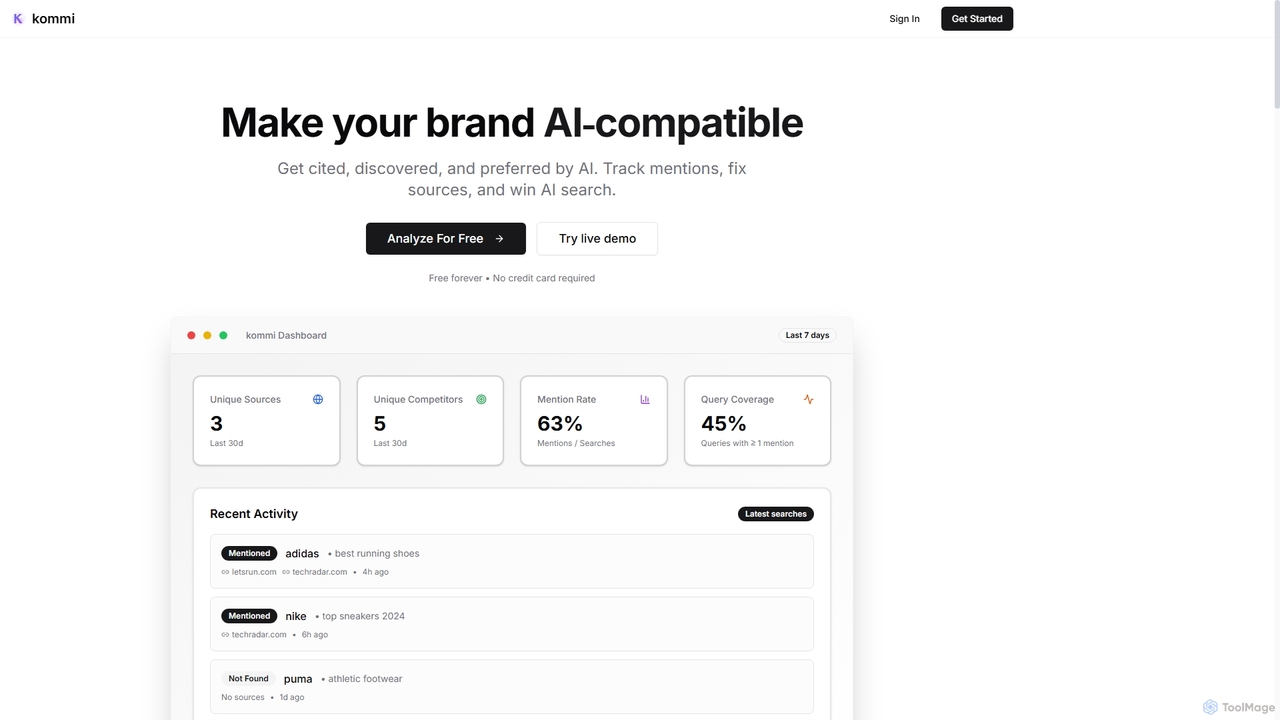
Kommi

Kommi is an AI-powered brand visibility and reputation management tool that helps businesses track how often their brand is mentioned and cited by major AI models like ChatGPT, Claude, and Gemini. It provides comprehensive analytics, competitive insights, and source identification to optimize brand presence in AI-driven search results.

Competitive Intelligence
Visits 7.6KFavorites 114Likes 92
PrivateHub
Paid

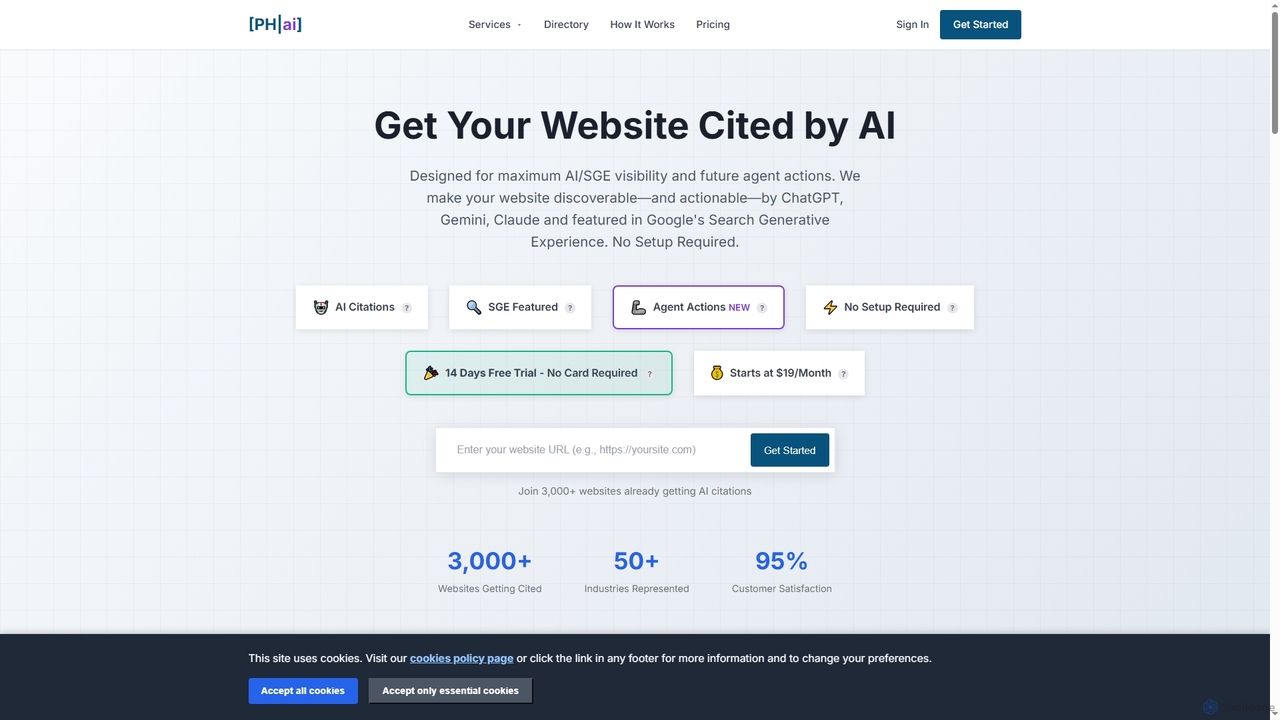
PrivateHub

PrivateHub is an AI optimization service that makes your website discoverable, understandable, and citable by AI models like ChatGPT, Gemini, and Google's SGE. It automatically creates a structured, machine-readable profile for your business, enhancing AI visibility and preparing it for future AI agent actions without requiring any technical skills. It's designed to be a simple, 'set it and forget it' solution for business owners.

Online Presence
Visits 4.9KFavorites 107Likes 119
Hypertxt
Paid

Hypertxt

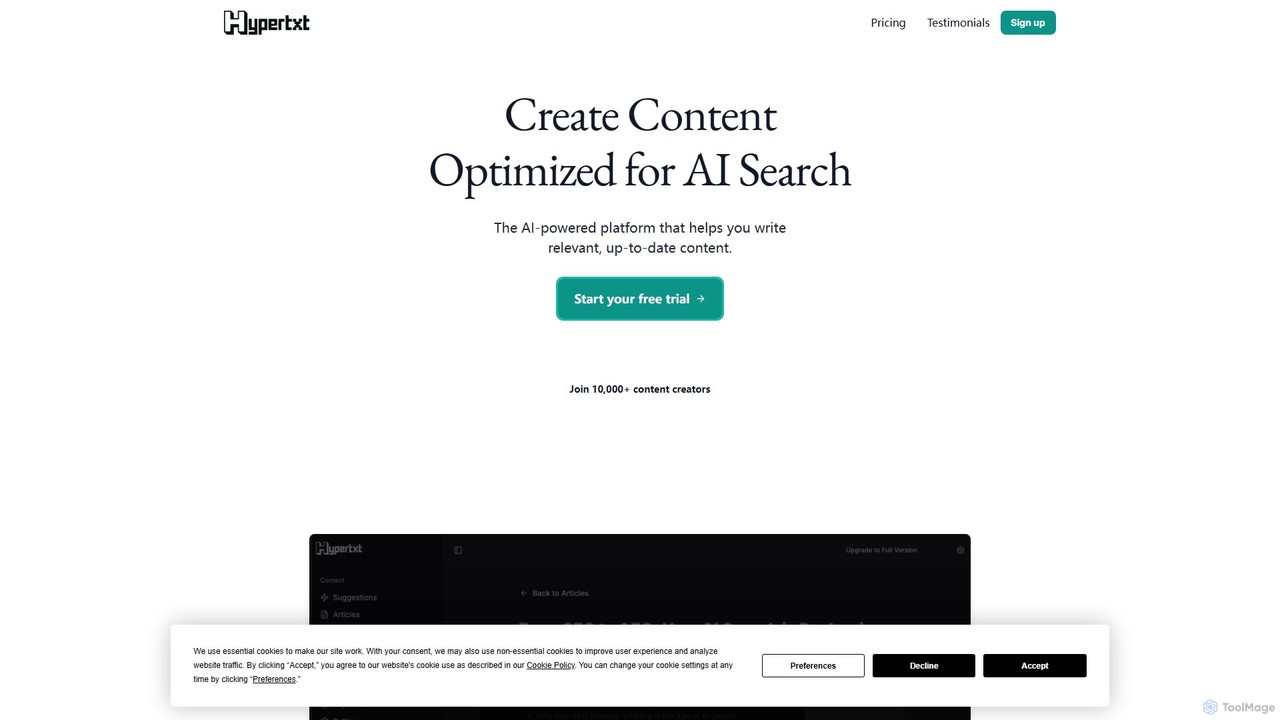
Hypertxt is an AI-powered writing platform designed to create content optimized for the new era of AI search engines like ChatGPT and Perplexity. It focuses on generating relevant, up-to-date, and context-rich articles with proper source citations, moving beyond traditional keyword-based SEO. The platform offers unlimited article generation, brand voice consistency, and automated workflows to streamline content creation.

Content Creation
Visits 11.6KFavorites 120Likes 133

About Ai Search Optimization

AI Search Optimization tools are a specialized category within SEO that leverage artificial intelligence to enhance and automate various aspects of search engine optimization. These tools utilize advanced machine learning algorithms, natural language processing, and predictive analytics to uncover deeper insights, optimize content, and streamline complex SEO tasks. Their primary value lies in transforming raw data into actionable strategies, enabling marketers and businesses to achieve higher rankings, better visibility, and more targeted organic traffic.

Core Features

  • AI-Driven Keyword Discovery: Identifies long-tail keywords, semantic clusters, and user intent beyond traditional methods.
  • Content Generation & Optimization: Provides AI-powered suggestions for creating new content or enhancing existing articles for relevance and readability.
  • Predictive Ranking Analysis: Forecasts potential ranking changes and identifies emerging search trends based on algorithm patterns.
  • Technical SEO Auditing: Automatically detects and prioritizes complex technical issues like crawl budget, broken links, and schema markup errors.
  • Competitor Strategy Analysis: Analyzes competitor content, backlink profiles, and on-page tactics using AI to reveal strategic advantages.

Use Cases

Content marketers use AI Search Optimization tools to refine their content strategies, ensuring articles are highly relevant and optimized for user intent. SEO agencies leverage these tools to automate routine audits and generate data-driven recommendations for clients, significantly reducing manual effort. E-commerce businesses apply AI to optimize product descriptions and category pages, improving their visibility for specific product searches and enhancing the personalized shopping experience.

How to Choose

When selecting an AI Search Optimization tool, consider its AI model sophistication and the accuracy of its insights. Evaluate its integration capabilities with your existing SEO platforms and content management systems. Assess the breadth of its data sources and the customization options available for specific industry needs. Finally, compare pricing models and ensure the tool offers clear, actionable reporting that aligns with your team's technical expertise.

Ai Search Optimization use cases

1

AI-Driven Content Strategy for Niche Markets

Content strategists in niche industries utilize AI Search Optimization tools to identify underserved keyword gaps and semantic topics that traditional research might miss. By analyzing vast datasets of search queries and competitor content, AI helps pinpoint precise user intent, allowing for the creation of highly targeted articles and landing pages that resonate deeply with specific audiences, leading to increased organic traffic and conversion rates.

2

Automating On-Page SEO for Large E-commerce Catalogs

E-commerce managers with extensive product catalogs employ AI Search Optimization to automate the optimization of product titles, descriptions, and meta tags. The AI analyzes product attributes, competitor listings, and search query patterns to suggest or even generate optimized content at scale, ensuring each product page is search-engine friendly, improves visibility, and reduces the manual effort required for thousands of SKUs.

3

Predictive Analysis for Algorithm Updates

SEO consultants use AI Search Optimization platforms to anticipate the impact of upcoming search engine algorithm updates. By analyzing historical data, identifying patterns in past updates, and simulating potential ranking shifts, AI provides early warnings and actionable recommendations. This allows consultants to proactively adjust client strategies, mitigating negative impacts and capitalizing on new opportunities before competitors react.

4

Enhancing Local SEO with AI-Powered Insights

Local businesses and multi-location enterprises leverage AI Search Optimization to gain deeper insights into local search behavior and competitor performance. AI analyzes local reviews, business listings, and geo-specific search queries to optimize Google My Business profiles, local landing pages, and content for local intent, driving more foot traffic and local online conversions.

5

Identifying Content Gaps and Opportunities

Digital marketing teams use AI Search Optimization to conduct comprehensive content gap analyses. The AI scans existing website content, compares it against top-ranking competitors, and identifies topics, sub-topics, and questions that are currently unaddressed or poorly covered. This enables teams to prioritize content creation efforts on high-impact areas, ensuring a more complete and authoritative online presence.

6

Streamlining Technical SEO Audits and Fixes

Webmasters and technical SEO specialists deploy AI Search Optimization tools to perform rapid and in-depth technical audits. The AI can quickly identify complex issues such as crawl budget inefficiencies, broken internal links, duplicate content, and incorrect schema markup across large sites. It then provides prioritized, step-by-step recommendations for remediation, significantly accelerating the technical optimization process.

Ai Search Optimization FAQ

What is AI Search Optimization?

AI Search Optimization refers to the application of artificial intelligence technologies, such as machine learning and natural language processing, to enhance and automate various aspects of search engine optimization. It goes beyond traditional SEO by providing deeper insights into user intent, automating content creation and optimization, predicting search trends, and streamlining technical audits. The goal is to improve organic visibility and drive more targeted traffic efficiently.

How does AI Search Optimization differ from traditional SEO?

Traditional SEO relies heavily on manual analysis, keyword research tools, and best practices. AI Search Optimization, however, uses algorithms to process vast amounts of data, identify complex patterns, and make predictive recommendations that human analysts might miss. While traditional SEO focuses on current best practices, AI SEO can anticipate future trends, personalize content at scale, and automate tasks like content generation and technical issue detection, offering a more dynamic and data-driven approach.

What are the key benefits of using AI for SEO?

The key benefits of using AI for SEO include enhanced efficiency through automation of repetitive tasks like keyword research and content auditing. AI provides deeper, more accurate insights into user intent and search trends, leading to more effective content strategies. It enables predictive analysis for algorithm changes, allowing proactive adjustments. Furthermore, AI can personalize content at scale and identify complex technical issues rapidly, ultimately leading to improved rankings, increased organic traffic, and a better return on investment for SEO efforts.

What types of AI technologies are used in AI Search Optimization tools?

AI Search Optimization tools primarily utilize several core AI technologies. Machine Learning (ML) algorithms are fundamental for pattern recognition, predictive analytics, and data analysis, helping to identify trends and optimize strategies. Natural Language Processing (NLP) is crucial for understanding user intent, analyzing content quality, and generating human-like text. Computer Vision (CV) might be used for image optimization. Additionally, deep learning models are often employed for more complex tasks like semantic search analysis and advanced content generation.

How can I choose the best AI Search Optimization tool for my needs?

To choose the best AI Search Optimization tool, first assess your specific SEO goals and budget. Look for tools that offer strong capabilities in areas most critical to you, such as AI-driven keyword research, content optimization, or technical SEO auditing. Consider the tool's integration with your existing marketing stack, its ease of use, and the quality of its reporting. Evaluate the accuracy and depth of its AI models, and read reviews to gauge user satisfaction and support quality before making a decision.