ToolMage
Sign in

Best 2 Auditing AI tools for Seo

Popular Auditing AI tools in Seo include Llmclicks and Frictionless, helping you work more efficiently.

Llmclicks
Freemium

Llmclicks

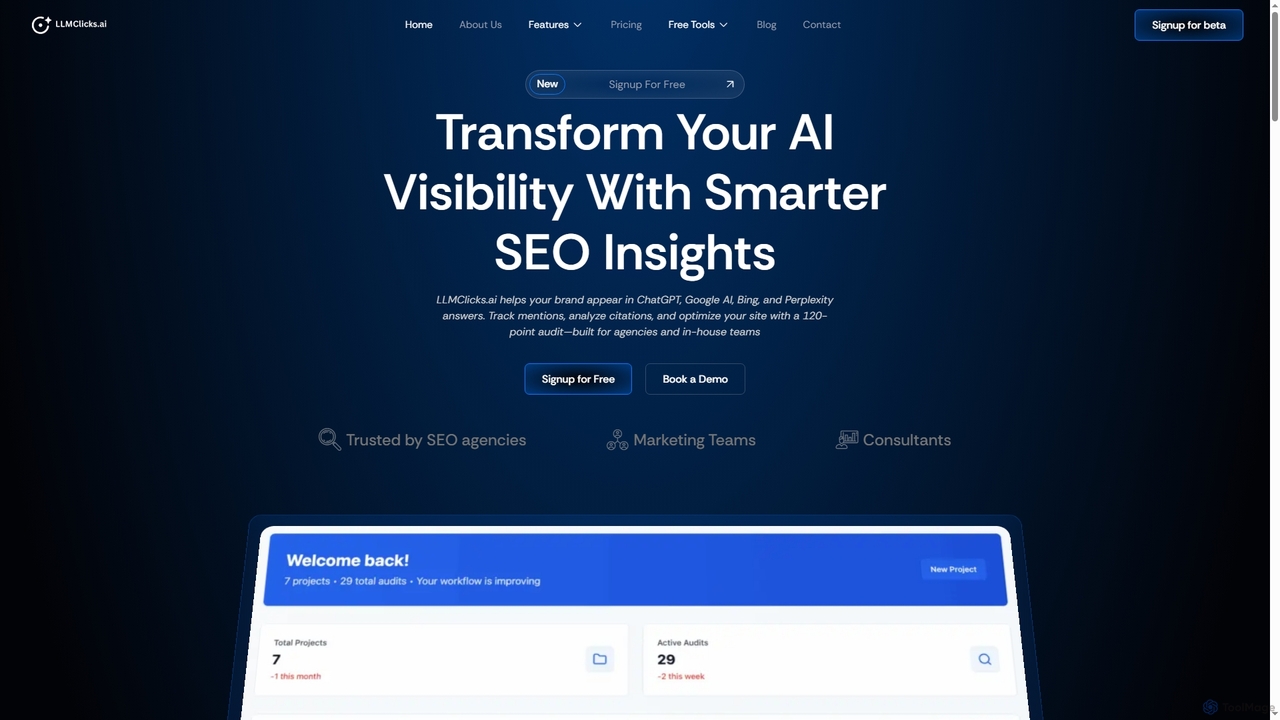
Llmclicks is an AI-powered SEO platform designed to audit, track, and optimize your brand's visibility within AI search engines like ChatGPT, Google AI, and Perplexity. It provides actionable insights through comprehensive audits and daily monitoring, helping agencies and marketing teams improve their presence in AI-generated answers.

Analytics
Visits 34.8KFavorites 138Likes 144
Frictionless
Freemium

Frictionless

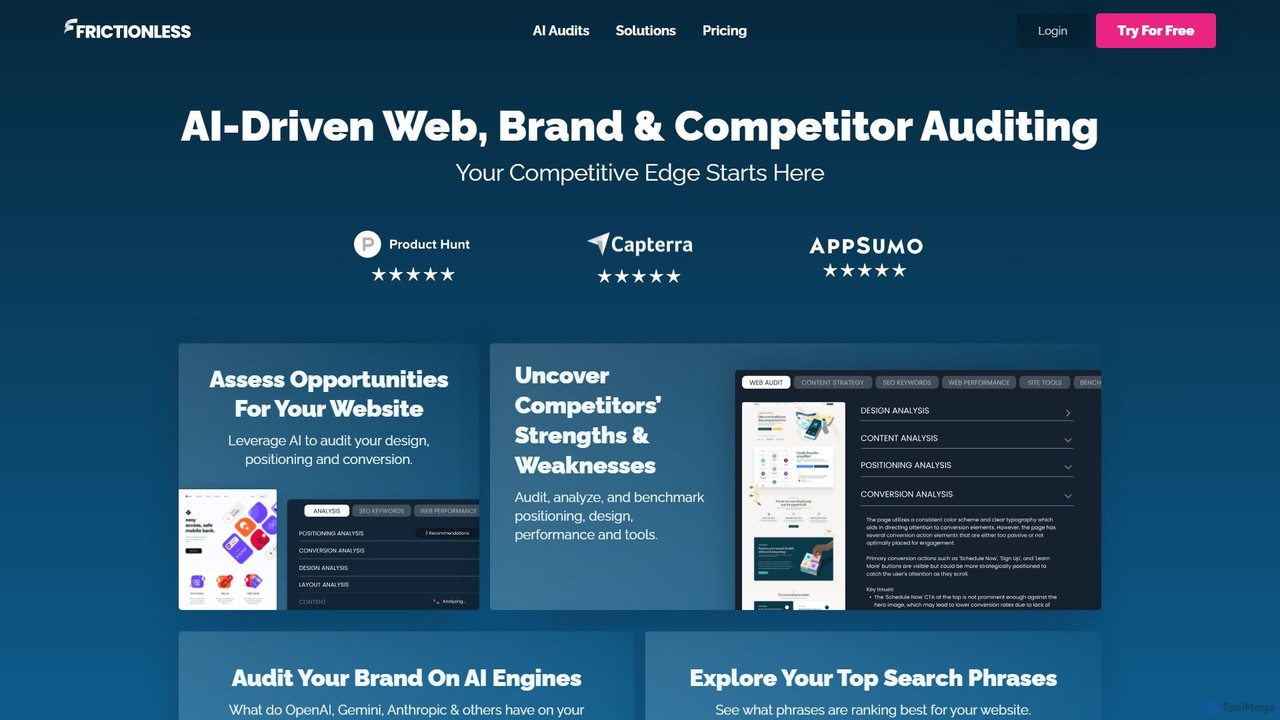
Frictionless is an AI-powered platform for comprehensive web, brand, and competitor auditing. It leverages AI trained by industry experts to analyze your website's design, positioning, and conversion. Uncover competitor strengths, audit your brand's presence on major AI engines like OpenAI and Gemini, and track your top search rankings—all within a single, collaborative hub for smarter marketing decisions.

Brand Management
Visits 14KFavorites 133Likes 138

About Auditing

AI Auditing tools are a specialized category of SEO software that automates the comprehensive analysis of a website's health. They leverage machine learning to crawl websites at scale, identifying technical errors, on-page optimization issues, and content gaps with high precision. This provides SEO professionals and website owners with actionable, data-driven insights to improve search engine rankings and user experience. These tools transform the traditionally manual and time-consuming audit process into an efficient, continuous monitoring system.

Core Features

  • Automated Site Crawling: Systematically browses a website to discover URLs, check for broken links, and map site structure.
  • Technical SEO Error Detection: Identifies issues like slow page speed, improper redirects, crawlability problems, and incorrect schema markup.
  • On-Page Content Analysis: Evaluates content elements such as title tags, meta descriptions, header usage, and keyword density for optimization opportunities.
  • Backlink Profile Audit: Analyzes the quality and relevance of incoming links to identify potentially harmful or toxic backlinks.
  • Competitive Gap Analysis: Compares your site against competitors to find keyword gaps, content opportunities, and backlink advantages.

Use Cases

AI Auditing tools are essential for SEO agencies conducting initial client assessments, in-house marketing teams performing regular health checks, and web developers ensuring new sites are SEO-friendly before launch. They are also valuable for content strategists seeking to identify gaps in their content and for digital marketers monitoring the technical integrity of large-scale websites like e-commerce stores or news portals.

How to Choose

When selecting an AI Auditing tool, consider the crawl limit and speed suitable for your website's size. Evaluate the accuracy and depth of the data provided, particularly for technical SEO issues. Check for integration capabilities with other platforms like Google Analytics and Search Console. Finally, assess the clarity of the reporting and whether it provides prioritized, actionable recommendations rather than just raw data.

Auditing use cases

1

Conducting a Technical SEO Health Check

An SEO agency onboarding a new e-commerce client uses an AI Auditing tool to perform an initial site-wide health check. The tool automatically crawls thousands of product and category pages, quickly identifying critical issues like redirect chains, 404 errors on discontinued product pages, and missing schema markup for product reviews. This allows the agency to generate a comprehensive baseline report and a prioritized action plan within hours, demonstrating immediate value to the client and setting a clear roadmap for technical improvements.

2

Pre-Launch Audit for a Website Redesign

A web development team is preparing to launch a redesigned corporate website. Before going live, they use an AI Auditing tool on the staging server. The audit flags issues that could negatively impact SEO from day one, such as incorrect canonical tags pointing to the old site, mixed content warnings, and a disallow rule in robots.txt blocking key sections. By identifying and fixing these problems pre-launch, the team ensures a smooth transition that preserves existing search rankings and avoids immediate indexing issues.

3

Identifying Content Gaps Against Competitors

A content strategist for a SaaS company uses an AI Auditing tool to analyze the websites of their top three competitors. The tool crawls all competitor blog posts and landing pages, mapping out their content clusters and identifying keywords they rank for but the company does not. The output reveals a significant content gap around 'enterprise integration solutions'. Based on this data-driven insight, the strategist commissions a new series of articles and a whitepaper targeting these specific keywords, aiming to capture valuable, high-intent traffic.

4

Monitoring for SEO Regression Issues

An in-house SEO manager for a large publisher sets up a recurring weekly audit. The AI tool automatically crawls the site and compares the results to the previous week's crawl. One week, the report flags a new, site-wide issue: hundreds of author pages have suddenly become non-indexable due to an incorrect 'noindex' tag added during a CMS update. The manager is alerted immediately, allowing the development team to fix the bug before it causes a significant drop in organic traffic and author visibility.

5

Assessing Backlink Profile Health

A digital marketing consultant is hired to improve the rankings of a website that has seen a gradual decline. As a first step, they use an AI Auditing tool's backlink analysis feature. The tool aggregates backlink data and uses machine learning to score the toxicity of each link. It identifies a large number of low-quality, spammy links from private blog networks (PBNs) acquired by a previous agency. The consultant uses this report to create a disavow file for Google, effectively cleaning up the backlink profile and setting the stage for a recovery in rankings.

6

Optimizing Internal Linking Structure

The SEO lead for a large content-heavy website wants to improve how link equity is distributed across the site. They run a full site audit with an AI tool that visualizes the internal linking structure. The report highlights 'orphan pages' (pages with no internal links pointing to them) and identifies important 'money pages' that are buried deep in the site architecture with very few internal links. Using this visual map and data, the SEO lead develops a strategy to add relevant internal links from high-authority blog posts to these under-linked pages, improving their crawlability and potential to rank.

Auditing FAQ

What are AI SEO Auditing tools?

AI SEO Auditing tools are automated software applications that use artificial intelligence and machine learning to analyze a website for SEO health. Unlike manual checks, they can crawl thousands of pages quickly to identify a wide range of issues, including technical errors (like 404s and redirect loops), on-page problems (like missing meta tags), content gaps, and backlink profile risks. Their primary purpose is to provide a comprehensive, data-driven report with actionable recommendations to improve a site's performance in search engines.

How to choose the right AI SEO Auditing tool?

Choosing the right tool depends on your specific needs. Consider the following factors:

  • Website Size: Ensure the tool's crawl limit and speed can handle the number of pages on your site.
  • Feature Set: Do you need just technical SEO analysis, or also content gap analysis, backlink auditing, and rank tracking?
  • Data Accuracy: Look for tools known for reliable data, as decisions will be based on their findings.
  • Integrations: Check if it connects with essential tools like Google Analytics and Google Search Console for more holistic insights.
  • Reporting and Usability: The tool should present complex data in an easy-to-understand format with clear, prioritized action items.
What's the difference between an AI Auditing tool and a general SEO platform?

The main difference lies in focus and depth. A general SEO platform (the parent category) is a broad suite of tools that may include keyword research, rank tracking, content creation aids, and backlink outreach, in addition to some auditing features. An AI Auditing tool (this subcategory) specializes specifically in the deep, technical, and on-page analysis of a website. While a general platform might tell you that you have broken links, a dedicated auditing tool will provide more granular detail, map their location, and often visualize the site structure to help you understand the impact. Auditing tools are built for comprehensive diagnostics, whereas general platforms are for day-to-day SEO management.

What key issues can an AI SEO audit identify?

An AI SEO audit can identify a vast range of issues that impact search engine rankings and user experience. Key areas include:

  • Technical Issues: Slow page load speed, mobile-friendliness problems, insecure pages (HTTP), duplicate content, incorrect canonical tags, and XML sitemap errors.
  • Crawlability & Indexability: Broken internal links (404s), redirect chains, incorrect robots.txt directives, and 'noindex' tags on important pages.
  • On-Page Elements: Missing or duplicate title tags and meta descriptions, improper use of header tags (H1, H2), and images without alt text.
  • Site Structure: Orphan pages with no internal links, or important pages buried too deep within the site architecture.
How often should you perform an AI SEO audit?

The frequency of audits depends on the size and dynamism of your website. For large, frequently updated websites (like e-commerce stores or news sites), a weekly or bi-weekly automated audit is recommended to catch issues quickly. For smaller, more static websites (like a local business or portfolio site), a monthly or quarterly audit is often sufficient to monitor for technical regressions and new opportunities. It's also critical to perform a full audit after major site changes, such as a redesign, migration, or significant content update.