
ToolMage
Sign in

Best 1 Ai Engine Optimization AI tools for Seo

Popular Ai Engine Optimization AI tools in Seo include SoloSphere.ai, helping you work more efficiently.

SoloSphere.ai
Paid

SoloSphere.ai

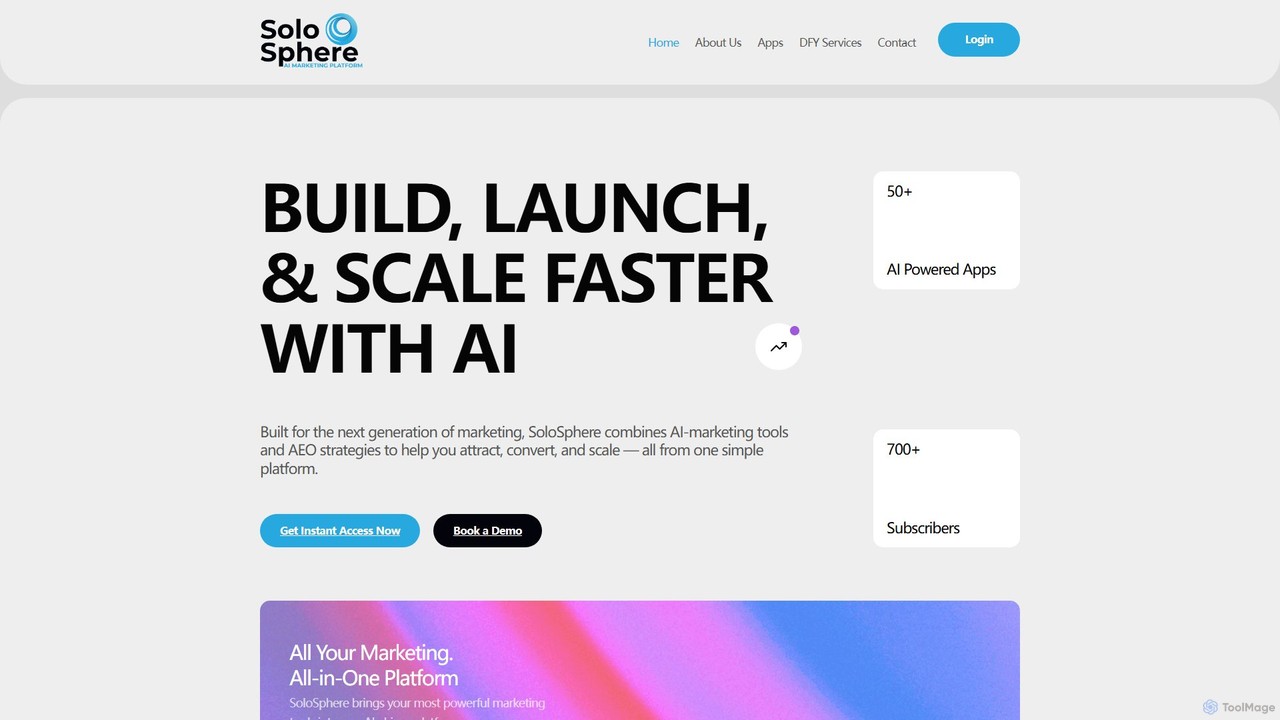
SoloSphere.ai is an all-in-one AI marketing platform designed for solopreneurs, small businesses, and agencies. It integrates over 50 AI-powered tools for funnel building, AEO (AI Engine Optimization), CRM, content creation, and more. This unified platform helps users attract, convert, and scale their business efficiently without juggling multiple subscriptions or requiring technical expertise.

Writing
Visits 3.4KFavorites 128Likes 120

About Ai Engine Optimization

AI Engine Optimization (AEO) tools are a specialized category of SEO software designed to enhance content visibility within AI-driven search and answer engines like Google's SGE. These tools analyze and structure content based on semantic context, entities, and factual accuracy, going beyond traditional keyword optimization. Their primary value lies in making websites a trustworthy and citable source for AI-generated summaries, ensuring information is accurately represented. This approach helps future-proof digital assets for the next generation of information discovery.

Core Features

  • Semantic Content Analysis: Identifies key entities, topics, and the relationships between them to align content with how AI models understand information.
  • Structured Data Generation: Automates the creation and validation of schema markup (e.g., FAQPage, Product, Article) to make data easily parsable by AI.
  • E-E-A-T Auditing: Assesses content for expertise, authoritativeness, and trustworthiness signals that are critical for AI ranking algorithms.
  • Answer Engine Simulation: Provides previews or predictions of how content might appear or be referenced in AI-generated search results.

Use Cases

AEO tools are primarily used by SEO professionals, content strategists, and digital marketing agencies. They are essential for optimizing high-value informational articles, enhancing e-commerce product pages for rich results, and ensuring local business information is correctly interpreted by AI assistants and map services.

How to Choose

When selecting an AI Engine Optimization tool, consider its depth of semantic analysis and entity recognition. Evaluate its support for a wide range of structured data types and its integration capabilities with your existing CMS or SEO platforms. Also, assess the accuracy of its answer engine simulation features and its ability to provide actionable recommendations.

Featured tool rankings

Ai Engine Optimization use cases

1

Optimizing an Article for Google SGE

An SEO specialist aims to have their company's guide on 'Sustainable Investing' featured in Google's AI-powered Search Generative Experience (SGE). They use an AEO tool to analyze the article. The tool suggests adding FAQPage schema to answer common user questions directly and implementing Article schema with author and publisher information to boost authority. It also identifies key entities like 'ESG criteria' and 'impact investing', recommending internal links to related content to build a stronger semantic cluster. After applying these changes, the article is more likely to be used as a primary source in AI-generated answers.

2

Enhancing E-commerce Product Pages

An e-commerce manager for an electronics store wants to improve how their product pages are understood by AI shopping assistants and search engines. Using an AEO tool, they automatically generate detailed Product schema for their entire catalog. This markup includes specifications like model number, dimensions, and energy efficiency, as well as aggregated review ratings and price information. The tool validates the schema for errors before deployment. This structured data allows AI engines to easily compare their products with competitors and feature them accurately in AI-driven shopping results and recommendation carousels.

3

Building a Topical Authority Map

A content strategist for a financial services blog wants to establish their site as an authority on 'retirement planning'. They use an AEO tool's semantic analysis feature to map out the entire topic. The tool identifies core concepts and related sub-topics like '401(k) rollovers', 'Roth IRAs', and 'pension plans'. It also highlights 'semantic gaps'—related questions and entities their content doesn't currently cover. Based on this map, the strategist creates a comprehensive content plan that covers the topic exhaustively, signaling to AI engines that their website is a definitive resource on the subject.

4

Auditing a Website for Factual Accuracy

A healthcare information portal needs to ensure all its medical articles are accurate and trustworthy to perform well in AI search. A content editor uses an AEO tool's E-E-A-T auditing feature to scan the site. The tool cross-references claims and statistics in their articles against authoritative medical databases and journals. It flags outdated statistics, statements lacking citations, and information that contradicts established medical consensus. The editorial team then updates these sections, strengthening the site's credibility and making it a more reliable source for AI engines answering health-related queries.

5

Preparing Local Business Data for Voice Search

The owner of a chain of coffee shops uses an AEO tool to optimize their online presence for voice assistants and AI-powered maps. The tool helps them generate and manage LocalBusiness schema across all their location pages. It ensures critical information like opening hours, addresses, phone numbers, and menu URLs is structured correctly and consistently. By doing this, when a user asks an AI assistant, 'Where can I get coffee near me?', the tool ensures their shops are presented with accurate, complete information, increasing the likelihood of a customer visit.

6

Competitive Analysis in Generative Search

A digital marketing agency wants to understand why a competitor's website is frequently cited in AI-generated answers for their target keywords. They use an AEO tool's answer engine simulation feature. The tool analyzes the competitor's cited pages, revealing a strong use of structured data, clear and concise language, and a high density of relevant entities. It also shows that the competitor's content directly answers multiple related user questions. Armed with this insight, the agency develops a new content strategy to replicate and improve upon these AEO factors to win citations in generative search results.

Ai Engine Optimization FAQ

What is AI Engine Optimization (AEO)?

AI Engine Optimization (AEO) is the practice of making a website's content and data easily discoverable, understandable, and trustworthy for AI systems, particularly generative AI search engines like Google SGE. Unlike traditional SEO which focuses on ranking in a list of links, AEO aims to have content selected and featured within AI-generated answers. This involves a heavy focus on structured data, semantic clarity, factual accuracy, and demonstrating expertise, authoritativeness, and trustworthiness (E-E-A-T).

How is AEO different from traditional SEO?

Traditional SEO primarily focuses on ranking web pages for specific keywords in a list of blue links. Its main signals are keywords, backlinks, and technical site health. AEO, while complementary, has a different goal: to become a citable source within an AI's generated answer. Therefore, AEO prioritizes different signals:

  • Structured Data: AEO relies heavily on schema markup to give AI explicit context, whereas it's a smaller component of traditional SEO.
  • Entity Focus: AEO optimizes for concepts and entities (people, places, things) over just keywords.
  • Factual Accuracy: AEO places a much higher emphasis on verifiable facts and citations, which is critical for AI trust.
  • Goal: The goal of SEO is a click. The goal of AEO is to be the answer.
What are the key features of an AI Engine Optimization tool?

Effective AEO tools typically offer a suite of features designed to make content AI-friendly. Key features include:

  • Schema Markup Generation: Tools to automatically create and validate various types of structured data (like Article, FAQ, Product, LocalBusiness) without needing to code.
  • Entity Analysis: The ability to identify important entities within your content and suggest ways to strengthen their context and relationships.
  • Content Auditing for E-E-A-T: Analysis of content to identify weaknesses in expertise, authoritativeness, and trustworthiness, such as missing author bios or unsubstantiated claims.
  • Semantic Gap Analysis: Tools that find related sub-topics and user questions that you haven't covered, helping you build topical authority.
  • SGE/Answer Engine Previews: Simulators that predict how your content might be used or displayed in an AI-generated search result.
Who should use AI Engine Optimization tools?

AI Engine Optimization tools are most beneficial for professionals who are focused on the future of search and content strategy. This includes:

  • SEO Professionals: To adapt their strategies beyond traditional keyword ranking and prepare for generative search experiences.
  • Content Strategists: To build topical authority and create content that is structured for AI consumption, ensuring long-term relevance.
  • Digital Marketing Agencies: To offer clients forward-thinking services that provide a competitive edge in the evolving search landscape.
  • Publishers and Media Companies: To ensure their informational content is seen as authoritative and is surfaced correctly in AI-powered discovery platforms.
How do I choose the right AEO tool?

Choosing the right AI Engine Optimization tool depends on your specific needs. Consider the following factors:

  • Scope of Features: Do you need a comprehensive suite with schema generation, entity analysis, and content auditing, or just a specialized tool for one of these tasks?
  • Integration: Does the tool integrate with your existing workflow, such as your Content Management System (CMS), Google Search Console, or other SEO platforms?
  • Data Accuracy: For features like SGE simulation and E-E-A-T auditing, how reliable and up-to-date is the data and analysis the tool provides?
  • User Interface and Usability: Is the tool intuitive and does it provide clear, actionable recommendations that your team can easily implement?
  • Cost vs. Value: Evaluate the pricing model against the potential return on investment in terms of improved visibility in AI-driven search and future-proofing your content.