ToolMage
Sign in

Best 3 Ai Optimization AI tools for Seo

Popular Ai Optimization AI tools in Seo include Lighthouse, DeepRank, and Pixo Labs, helping you work more efficiently.

DeepRank
Paid

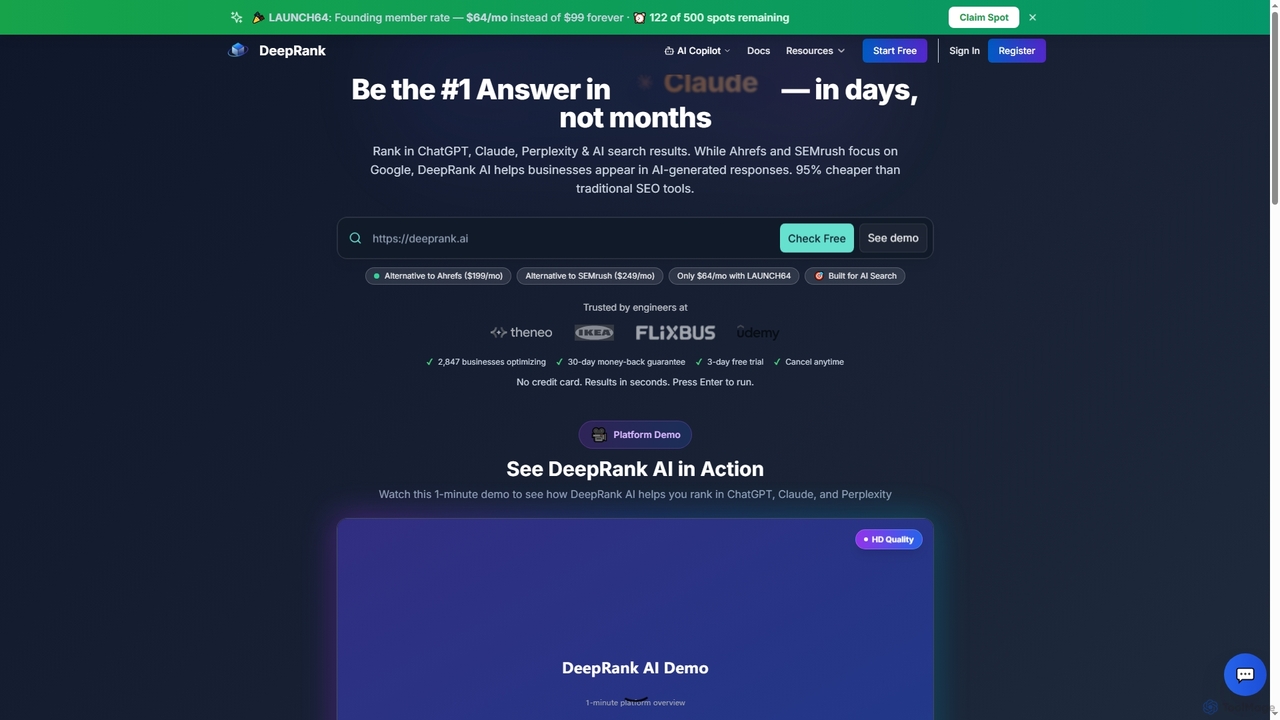
DeepRank

DeepRank is an advanced AI search optimization platform designed to help businesses achieve top rankings in AI assistant responses from ChatGPT, Claude, and Perplexity. It offers a comprehensive suite of tools for auditing, tracking, and generating AI-optimized content, providing a modern alternative to traditional SEO.

Analytics
Visits 3.9KFavorites 157Likes 162
Lighthouse
Paid

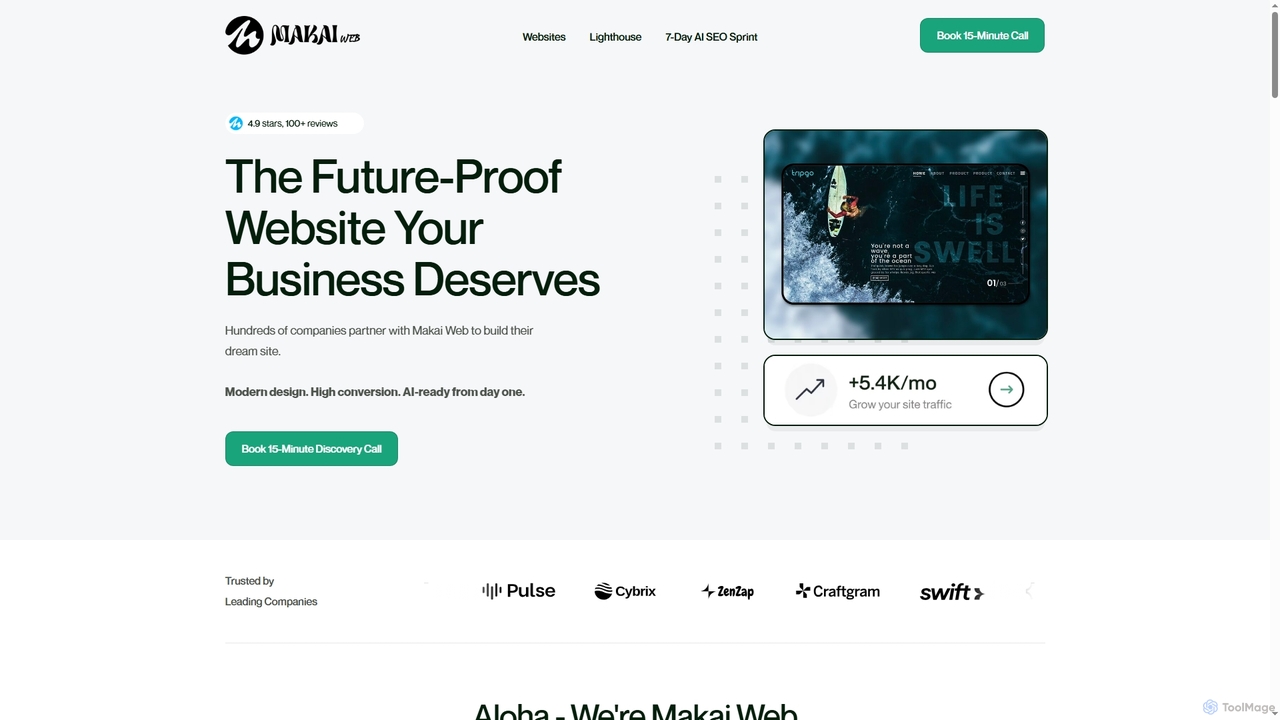
Lighthouse

Lighthouse is Makai Web's proprietary AI SEO plugin designed to significantly enhance your website's visibility and discoverability across leading AI tools like ChatGPT, Perplexity, and Claude. It transforms your site content into AI-ready structured data, driving a substantial increase in AI-driven mentions.

Structured Data
Visits 4.2KFavorites 139Likes 136
Pixo Labs
Freemium

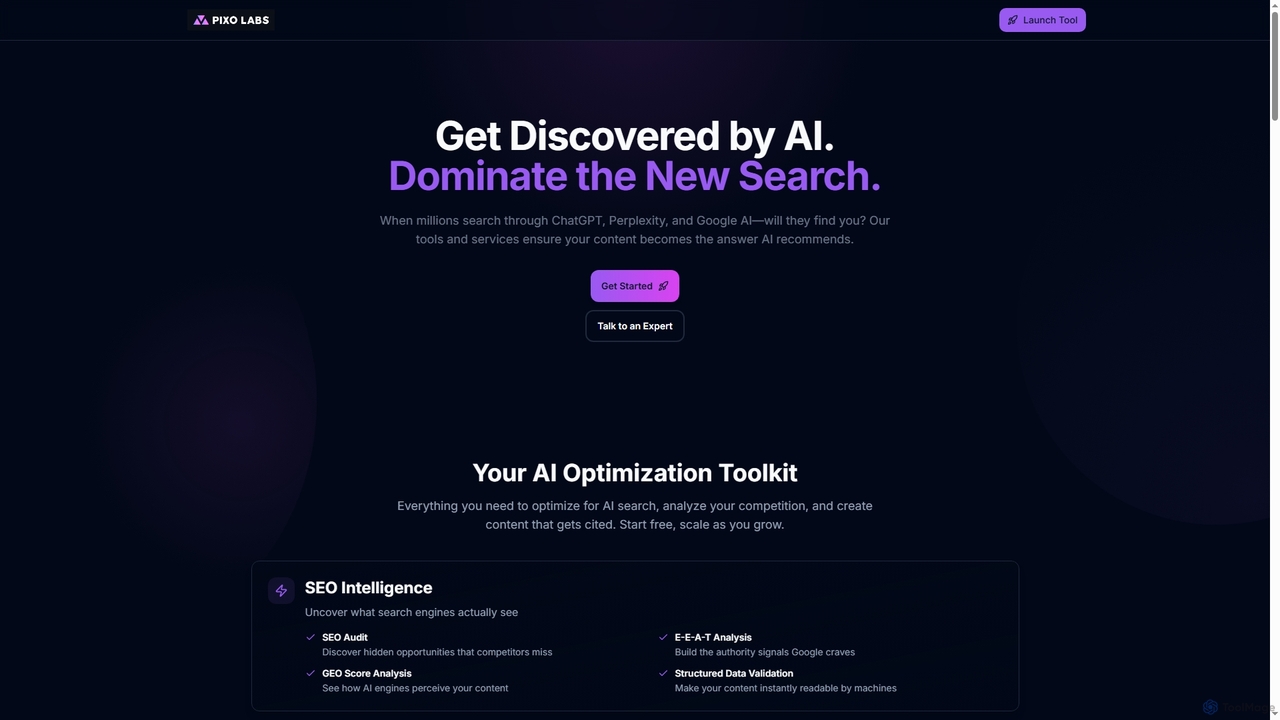
Pixo Labs

Pixo Labs is an AI-first platform and service designed to help businesses dominate the new era of generative search. It provides a comprehensive toolkit for AI search optimization, competitive analysis, and content creation, ensuring content is recommended by AI platforms like ChatGPT, Perplexity, and Google AI.

Content Strategy
Visits 3.7KFavorites 95Likes 110

About Ai Optimization

AI Optimization tools are a specialized category of SEO software that leverage artificial intelligence to automate and enhance search engine ranking strategies. These tools use machine learning and natural language processing to analyze vast datasets, predict trends, and provide data-driven recommendations beyond the scope of traditional analytics. They empower users to create highly-optimized content, identify strategic link-building opportunities, and automate complex technical audits, ultimately improving search visibility more efficiently. This approach shifts SEO from a reactive, manual process to a proactive, predictive discipline.

Core Features

  • Predictive Keyword Analysis: Forecasts keyword trends and analyzes search intent to uncover emerging opportunities.
  • Automated Content Briefs: Generates detailed outlines for new content based on real-time SERP analysis of top competitors.
  • AI-Powered Site Audits: Automatically detects complex technical SEO issues, such as crawl anomalies and schema errors, and prioritizes fixes.
  • Intelligent Link Opportunity Identification: Analyzes competitor backlink profiles to identify high-authority, relevant linking opportunities.

Use Cases

These tools are ideal for SEO agencies managing multiple clients, in-house marketing teams aiming to scale content production, and large e-commerce sites needing to optimize thousands of product pages. They are also valuable for competitive intelligence, allowing businesses to deconstruct competitor strategies and identify market gaps.

How to Choose

When selecting an AI Optimization tool, consider the scope of its features (content, technical, or backlinks), its integration capabilities with platforms like Google Search Console, the complexity of its user interface, and its pricing model. Also, evaluate the quality and actionability of the insights it provides to ensure they align with your specific SEO goals.

Featured tool rankings

Ai Optimization use cases

1

Automated Content Strategy and Brief Generation

A content marketing manager for a B2B SaaS company uses an AI Optimization tool to plan their quarterly content calendar. By inputting a primary topic like 'customer data platform,' the tool analyzes the top 20 search results, identifies common subtopics, user questions, and semantic keywords. It then automatically generates a comprehensive content brief for each blog post, including recommended word count, heading structure, and internal link suggestions. This process reduces research time by over 70% and ensures every piece of content is structured for maximum SERP performance from the start.

2

Scaling On-Page SEO for E-commerce Sites

An SEO specialist at a large online retail company is tasked with optimizing over 5,000 product pages. Using an AI Optimization tool, they perform a bulk analysis that flags pages with suboptimal title tags, missing meta descriptions, and thin content. The AI provides specific, prioritized recommendations for each page, even suggesting keyword-rich phrasing. This allows the specialist to efficiently direct copywriters and implement changes at scale, a task that would manually take months, leading to a measurable uplift in organic traffic to key product categories.

3

Proactive Technical SEO Monitoring

A technical SEO lead for a major publishing website integrates an AI Optimization tool into their workflow. The tool continuously crawls the site, using machine learning to detect anomalies that traditional crawlers might miss, such as sudden increases in 404 errors after a site migration or indexation issues with new article templates. It sends real-time alerts with diagnostic information, enabling the team to fix critical technical problems before they negatively impact search rankings and user experience, ensuring site health is maintained proactively.

4

Data-Driven Competitor Backlink Analysis

An SEO agency needs to build a powerful link-building strategy for a new client in a competitive niche. They use an AI Optimization tool to analyze the backlink profiles of the top three competitors. The AI categorizes competitor links by authority, relevance, and link type (e.g., guest post, directory, news mention). It then identifies 'link gap' opportunities—high-quality domains linking to competitors but not the client—and provides a prioritized outreach list, making the link-building campaign highly targeted and efficient.

5

Optimizing Content for Search Intent

A freelance content writer is creating a pillar page on 'sustainable investing.' To ensure the content meets user expectations, they use an AI Optimization tool's content editor. As they write, the tool provides real-time feedback, suggesting the inclusion of related concepts like 'ESG criteria,' 'impact investing,' and 'green bonds' based on its analysis of what top-ranking articles cover. This helps the writer create a comprehensive resource that satisfies multiple facets of search intent, increasing its chances of ranking for a broad set of related queries.

6

Forecasting SEO Performance and ROI

A digital marketing director needs to justify their SEO budget for the upcoming year. They use an AI Optimization tool with predictive analytics capabilities. By creating a project plan within the tool—outlining target keywords and content initiatives—the AI models potential traffic growth and conversion increases based on historical data, keyword difficulty, and market trends. This provides a data-backed forecast of the potential return on investment (ROI), helping secure executive buy-in for the proposed SEO strategy.

Ai Optimization FAQ

What is AI Optimization in the context of SEO?

AI Optimization in SEO refers to using tools powered by artificial intelligence, like machine learning and natural language processing, to enhance and automate search optimization tasks. Unlike traditional tools that rely on set rules, AI tools analyze massive datasets to identify patterns, predict keyword trends, understand search intent, and provide dynamic recommendations for content, technical SEO, and link building. They help make SEO strategies more data-driven, efficient, and proactive.

How do AI Optimization tools differ from traditional SEO platforms?

The primary difference lies in their core methodology. Traditional SEO platforms (like standard rank trackers or site crawlers) operate on predefined rules and historical data. AI Optimization tools use machine learning models to interpret data, make predictions, and generate insights. For example, a traditional tool might tell you your keyword ranking, while an AI tool might predict its future trajectory and suggest specific content changes to improve it based on a real-time analysis of the entire search results page.

What are the key features of an AI Optimization tool?

Most AI Optimization tools offer a suite of advanced features. Key functions often include:

  • Content Intelligence: Real-time content scoring and suggestions based on SERP analysis.
  • Predictive Analytics: Forecasting keyword trends and potential traffic from SEO campaigns.
  • Technical SEO Automation: AI-powered site audits that identify and prioritize complex issues.
  • Search Intent Analysis: Deciphering the user's goal behind a search query to guide content creation.
  • Automated Opportunity Finding: Identifying keyword gaps, content topics, and high-value backlink prospects.
How should I choose the right AI Optimization tool?

To choose the right tool, first identify your primary SEO need. Are you focused on scaling content creation, solving complex technical issues, or building a better backlink profile? Evaluate tools based on:

  • Core Focus: Does it specialize in content, technical SEO, or is it an all-in-one platform?
  • Data Quality: How reliable and actionable are its recommendations? Look for case studies or trials.
  • Integrations: Does it connect with essential tools like Google Analytics and Search Console?
  • User Interface: Is the platform intuitive for your team's skill level?
  • Pricing: Does the cost align with the potential ROI and your budget?
Can AI Optimization tools completely replace human SEO experts?

No, AI Optimization tools are designed to augment, not replace, human expertise. They excel at processing vast amounts of data, automating repetitive tasks, and uncovering insights that humans might miss. However, a human SEO expert is still crucial for strategy, critical thinking, creativity, and understanding the nuanced context of a business and its audience. The most effective approach combines the strategic direction of a human expert with the analytical power and efficiency of an AI tool.