
ToolMage
Sign in

Best 3 Audit AI tools for Seo

Popular Audit AI tools in Seo include SeonaAI, Plixu, and seoroast, helping you work more efficiently.

Plixu
Freemium

Plixu

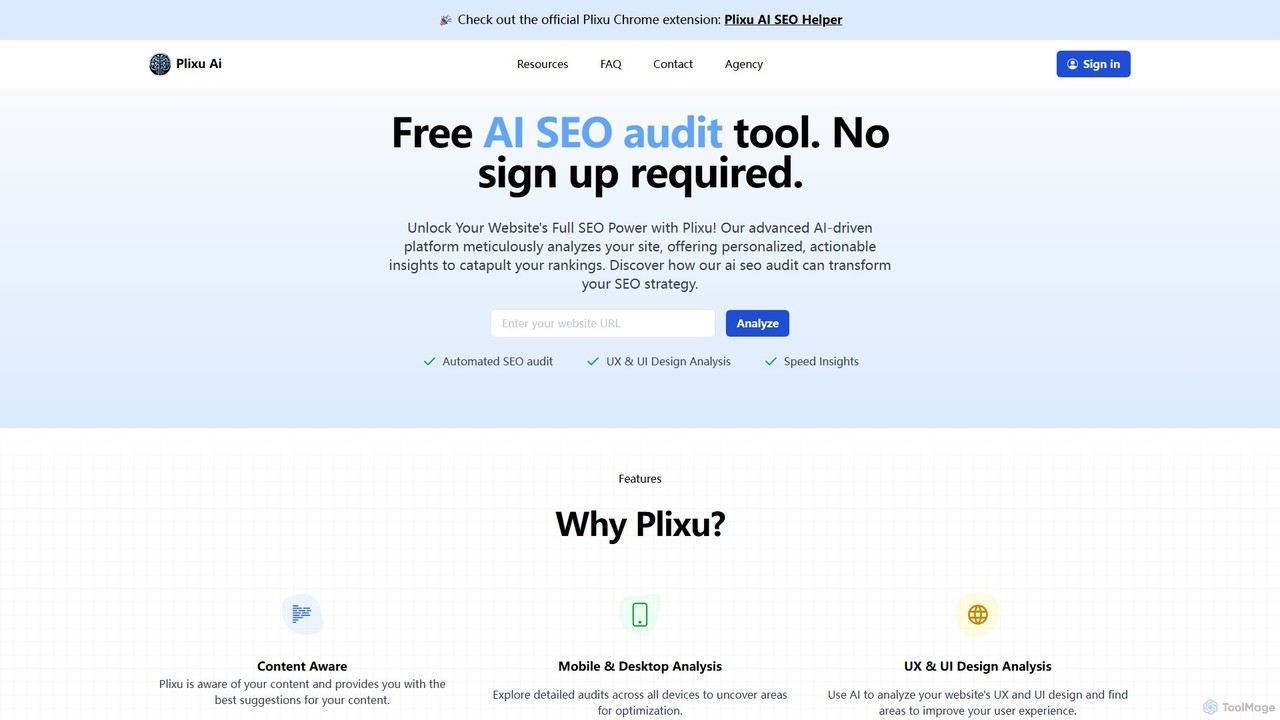
Plixu is a free, AI-powered SEO audit tool designed for marketers and website owners. It uses GPT-4 to conduct a comprehensive analysis of your website, providing actionable insights on SEO, content, UX/UI design, accessibility, and page speed. No sign-up is required to get a detailed report, making it a fast and accessible way to identify and fix core SEO issues to improve search engine rankings.

Website Optimization
Visits 4.5KFavorites 145Likes 144
seoroast
Freemium

seoroast

seoroast is a comprehensive SEO platform offering in-depth, personalized SEO audits (Roasts), a suite of free AI-powered SEO tools, and a premium library of resources. It provides actionable roadmaps to improve search rankings, outrank competitors, and significantly boost organic traffic for startups and businesses.

Content Creation
Visits 4.4KFavorites 135Likes 113
SeonaAI
Freemium

SeonaAI

SeonaAI is a free, AI-powered SEO tool designed to help businesses of all sizes optimize their websites. By simply entering a URL, users receive a comprehensive SEO audit, actionable insights, competitor analysis, and keyword research to improve search engine rankings and increase organic traffic.

Search Engine Optimization
Visits 8KFavorites 122Likes 121

About Audit

AI Audit tools are a specialized category of SEO software that automates the comprehensive analysis of a website's technical health, content performance, and backlink profile. These tools utilize advanced crawlers and machine learning algorithms to systematically scan websites, identifying issues that could hinder search engine performance. Their primary value lies in transforming vast amounts of raw data into prioritized, actionable insights, enabling users to efficiently improve their site's visibility and rankings. They serve as a foundational element for any data-driven SEO strategy.

Core Features

  • Technical SEO Analysis: Automatically detects issues like broken links (404s), redirect chains, crawl errors, slow page speed, and improper canonicalization.
  • On-Page Content Auditing: Evaluates content elements such as title tags, meta descriptions, heading structures, keyword density, and internal linking opportunities.
  • Backlink Profile Evaluation: Analyzes the quality and quantity of incoming links, identifying potentially harmful or toxic links that require disavowal.
  • Site Structure & Crawlability Review: Visualizes website architecture to identify orphaned pages, excessive click depth, and other structural impediments to search engine bots.
  • Automated Reporting: Generates detailed, customizable reports that prioritize SEO issues based on their severity and potential impact on rankings.

Use Cases

These tools are essential for SEO specialists, digital marketing agencies, and in-house marketing teams. They are frequently used for conducting initial website health checks for new clients, performing regular quarterly or monthly performance reviews, and executing pre- and post-migration audits to ensure a smooth transition without losing SEO equity.

How to Choose

When selecting an AI Audit tool, consider the crawl capacity (how many pages it can analyze), the scope of the audit (technical, content, backlinks), integration capabilities with platforms like Google Analytics and Search Console, the clarity of its recommendations, and the flexibility of its reporting features. The choice often depends on the scale of the website and the technical expertise of the user.

Featured tool rankings

Audit use cases

1

Initial Website Health Check for New Clients

An SEO agency uses an AI Audit tool to onboard a new client. Within hours of gaining access, they run a comprehensive crawl of the client's website. The tool automatically identifies and categorizes hundreds of issues, from critical 404 errors and duplicate content to low-impact warnings like missing image alt text. The agency uses the prioritized report to build a 90-day strategic roadmap, present clear, data-backed findings to the client, and demonstrate immediate value by tackling the most impactful issues first.

2

Quarterly SEO Performance and Health Review

An in-house marketing manager schedules a recurring AI audit every quarter. They compare the new report with the previous one to track progress on fixing known issues and identify any new problems that have emerged due to website updates or content changes. This regular check-up helps them maintain technical SEO hygiene, prevent small issues from becoming major problems, and provides concrete data for their quarterly performance reports to leadership, demonstrating continuous improvement in the website's foundation.

3

Pre-Launch Audit for a New Website or Redesign

Before launching a major website redesign, a web development team runs a full AI audit on the staging server. The tool crawls the new site structure, flagging critical issues like broken internal links from updated URLs, incorrect 301 redirect implementations, or pages accidentally left with 'noindex' tags. By catching these technical SEO errors before deployment, the team prevents a potential catastrophic drop in search rankings and ensures a smooth, SEO-friendly launch that preserves existing traffic and authority.

4

Competitor Strategy Deconstruction

A digital strategist uses an AI Audit tool not on their own site, but on their top three competitors. By auditing these external sites, they can reverse-engineer their competitors' on-page SEO tactics, identify the core keywords their content is optimized for, and analyze their site structure for usability and crawlability advantages. This provides invaluable competitive intelligence, highlighting strategic gaps and opportunities that can inform and refine their own SEO and content marketing roadmap.

5

Content Gap and Optimization Analysis

A content manager uses an AI Audit tool's on-page analysis features to identify underperforming content. The tool flags pages with thin content, missing meta descriptions, or poor keyword targeting. By cross-referencing this data with ranking information, the manager can quickly build a prioritized list of articles to refresh and optimize. This data-driven approach ensures that content creation efforts are focused on pages with the highest potential for traffic growth, rather than relying on guesswork.

6

Identifying and Disavowing Toxic Backlinks

An SEO specialist notices a sudden drop in rankings and suspects a negative SEO attack. They use an AI Audit tool's backlink analysis feature, which automatically assigns a 'toxicity score' to each incoming link based on various risk factors. The tool identifies a large number of spammy, low-quality links from irrelevant foreign domains. The specialist can then easily export this list, format it for Google's Disavow Tool, and submit it to signal to Google that they do not endorse these links, helping to mitigate the damage and recover rankings.

Audit FAQ

What are AI SEO Audit tools?

AI SEO Audit tools are automated software platforms designed to perform a deep analysis of a website's overall SEO health. Unlike simple crawlers, they use artificial intelligence and machine learning to not only find issues but also to analyze their severity, prioritize them based on potential impact, and provide actionable recommendations. They typically cover three core areas: technical SEO (crawlability, site speed), on-page SEO (content, keywords, meta tags), and off-page factors (backlink profile analysis).

How to choose the right AI SEO Audit tool?

Choosing the right tool depends on your specific needs. Consider these factors:

  • Scale and Crawl Limits: Ensure the tool can handle the size of your website. Some tools have limits on the number of pages they can crawl per audit or per month.
  • Scope of Analysis: Does it cover all areas you need, including technical, on-page, content, and backlink analysis? Some tools specialize in one area.
  • Data Integration: Look for tools that can integrate with Google Analytics and Google Search Console for more comprehensive data and insights.
  • Actionability of Reports: The best tools don't just list problems; they explain why they are issues and provide clear, prioritized steps for fixing them.
  • User Interface: The tool should be intuitive and allow you to easily filter, sort, and export data to share with your team or clients.
What's the difference between an AI Audit tool and a simple website crawler?

A simple website crawler, like Screaming Frog in its basic mode, is designed to discover and list URLs and associated on-page elements (titles, headers, etc.). An AI SEO Audit tool does this and much more. It adds a layer of analysis and intelligence on top of the crawl data. It automatically categorizes issues (e.g., 'Critical Error', 'Warning'), compares your site's data against SEO best practices, provides context on why an issue matters, and often suggests specific solutions. In essence, a crawler gives you raw data, while an AI audit tool gives you actionable insights.

What key issues can an AI SEO Audit tool identify?

AI SEO Audit tools can identify a wide range of issues that impact search engine rankings. Some of the most critical ones include:

  • Crawlability Errors: Broken links (404s), server errors (5xx), and incorrect redirects that prevent search engines from accessing your content.
  • Duplicate Content: Identifies pages with identical or very similar content, which can dilute ranking signals.
  • Page Speed Problems: Flags slow-loading pages, large image files, and other elements that negatively affect user experience and rankings.
  • On-Page SEO Gaps: Missing or poorly optimized title tags, meta descriptions, and H1 tags.
  • Mobile Usability Issues: Detects problems that make a site difficult to use on mobile devices, a key ranking factor.
How often should I run an SEO audit on my website?

The ideal frequency for SEO audits depends on your website's size and how often it changes. A good general guideline is:

  • Comprehensive Audit: A deep, full-site audit should be conducted at least once per quarter. This provides a strategic overview of your site's health and progress.
  • Regular Health Checks: A quicker, more focused check should be run monthly to catch any new, critical issues that may have appeared since the last full audit.
  • Event-Triggered Audits: Always run an audit before and after major website changes, such as a site migration, a complete redesign, or a significant change in content structure (e.g., launching a new blog section).