Huckabuy
Huckabuy is an automated technical SEO platform that boosts website performance and organic traffic. It specializes in automating …
Huckabuy is an automated technical SEO platform that boosts website performance and organic traffic. It specializes in automating structured data implementation, improving page speed and Core Web Vitals, and ensuring search engines can effectively crawl and index your site. It's a SaaS solution designed to handle complex SEO tasks, freeing up your team to focus on other priorities.
Plixu
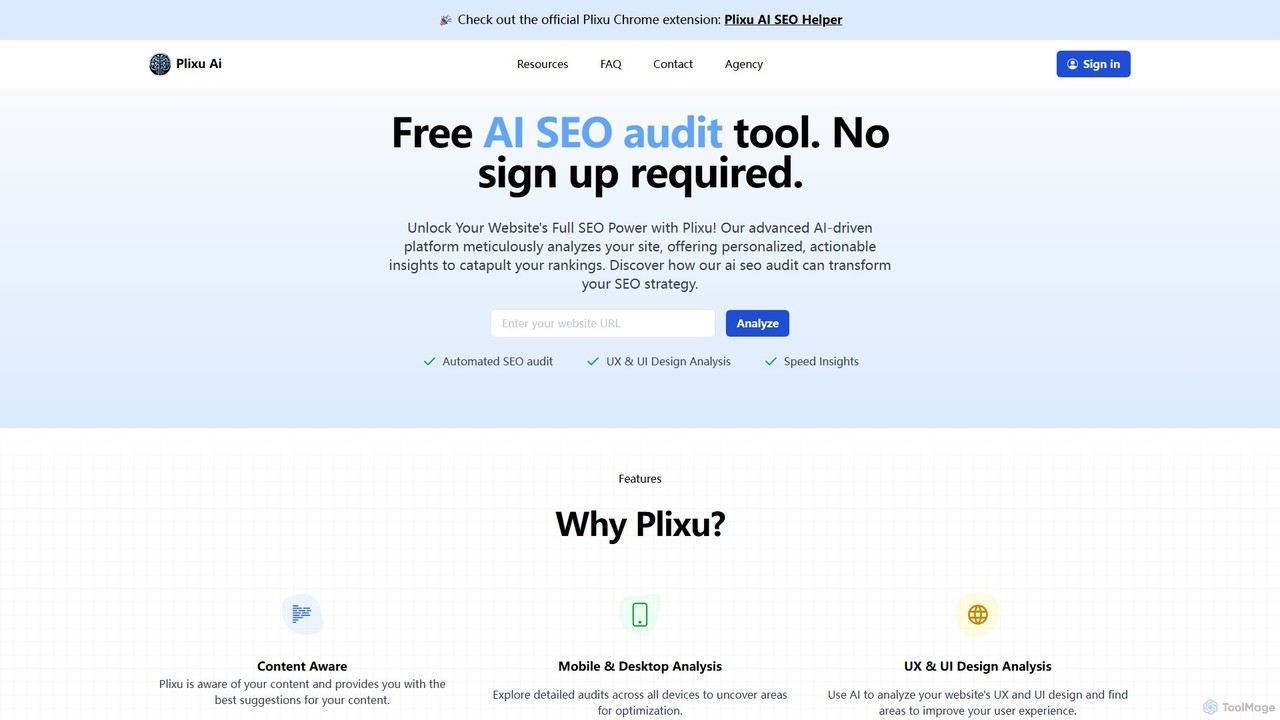
Plixu is a free, AI-powered SEO audit tool designed for marketers and website owners. It uses GPT-4 to …
Plixu is a free, AI-powered SEO audit tool designed for marketers and website owners. It uses GPT-4 to conduct a comprehensive analysis of your website, providing actionable insights on SEO, content, UX/UI design, accessibility, and page speed. No sign-up is required to get a detailed report, making it a fast and accessible way to identify and fix core SEO issues to improve search engine rankings.
UltimateWebSpeed
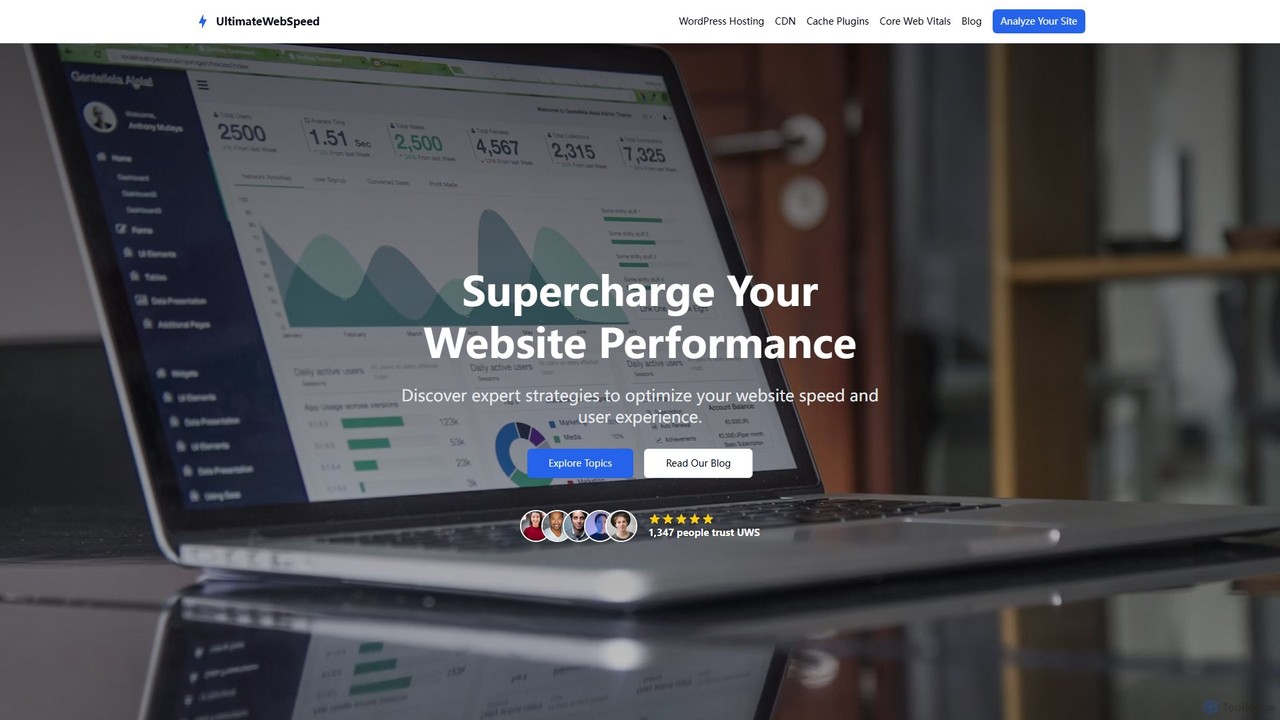
UltimateWebSpeed is a comprehensive platform featuring a free, AI-powered SEO analyzer. It provides detailed reports on website performance, …
UltimateWebSpeed is a comprehensive platform featuring a free, AI-powered SEO analyzer. It provides detailed reports on website performance, Core Web Vitals, keyword optimization, and content quality, offering actionable insights to boost site speed, search rankings, and user experience.
About Website Optimization
AI Website Optimization tools are a class of software that use machine learning to automatically analyze and improve a website's performance, user experience, and conversion rates. These tools go beyond simple analytics by actively implementing changes, running A/B tests, and personalizing content in real-time based on user behavior data. Their primary value lies in automating complex optimization tasks, enabling businesses to achieve data-driven improvements in speed, engagement, and revenue without extensive manual intervention. This approach allows for continuous optimization at a scale and speed that is difficult to achieve manually.
Core Features
- Automated A/B Testing: AI algorithms automatically generate and test variations of headlines, layouts, and CTAs to identify the highest-converting combinations.
- Predictive Personalization: Analyzes visitor data to deliver tailored content, product recommendations, and user experiences in real-time.
- Performance Automation: Automatically compresses images, minifies CSS/JavaScript, and optimizes resource loading to improve page speed and Core Web Vitals.
- Content & SEO Analysis: Evaluates on-page content for SEO effectiveness, suggests keyword improvements, and can generate optimized meta tags.
- Behavioral Analytics: Uses AI to interpret heatmaps, session recordings, and user flows to identify points of friction and opportunities for UX improvement.
Applicable Scenarios
These tools are widely used in e-commerce to increase sales through conversion rate optimization (CRO). Digital marketing teams use them to personalize landing pages for ad campaigns, improving ROI. Developers in SaaS companies leverage them to ensure their web applications are fast and responsive, reducing churn and improving user satisfaction.
Selection Criteria
When choosing a tool, consider its primary focus: is it for speed optimization, A/B testing, or personalization? Evaluate its integration capabilities with your existing platforms like WordPress, Shopify, or Google Analytics. Assess the level of automation versus manual control it provides, and ensure its pricing model aligns with your traffic volume and business goals.
Website OptimizationUse Cases
E-commerce Conversion Rate Optimization
An e-commerce manager for an online fashion retailer needs to increase the add-to-cart rate on product pages. They use an AI website optimization tool to automatically test multiple variations of product images, descriptions, call-to-action button colors, and layouts simultaneously. The AI analyzes real-time user interactions and quickly identifies the combination that leads to the highest engagement and conversions. Within weeks, the system has implemented the winning variation across the site, resulting in a measurable 15% uplift in add-to-cart actions without requiring a dedicated development team for testing.
Automating Core Web Vitals Improvements
A web developer is tasked with improving the site's Core Web Vitals scores to enhance SEO rankings and user experience. Instead of manually optimizing hundreds of images and scripts, they integrate an AI performance optimization tool. The tool automatically compresses all images to next-gen formats like WebP, minifies CSS and JavaScript files, and implements lazy loading for off-screen assets. It continuously monitors the site's performance, making real-time adjustments to the CDN configuration. This automated process helps the website consistently achieve 'Good' scores across all Core Web Vitals metrics, saving the developer dozens of hours per month.
Personalizing Content for B2B Lead Generation
A marketing manager at a B2B SaaS company wants to increase qualified leads from their website. They implement an AI personalization tool that analyzes visitor data, such as industry, company size (via reverse IP lookup), and on-site behavior. The tool then dynamically changes the homepage headline, customer testimonials, and case studies to match the visitor's profile. For example, a visitor from the healthcare industry sees testimonials from hospitals, while one from finance sees case studies on banking solutions. This targeted approach significantly increases the relevance of the content, leading to a 30% rise in demo requests from key target accounts.
AI-Powered SEO Content Auditing
A content marketing team manages a blog with over 500 articles. To improve organic traffic, they use an AI optimization tool to perform a site-wide content audit. The AI scans every article, comparing them against top-ranking competitors for target keywords. It identifies articles with outdated information, low word counts, and missing semantic keywords. The tool provides specific recommendations for each post, such as 'Add a section on X' or 'Include keywords Y and Z'. It even generates optimized meta descriptions automatically. This process allows the team to efficiently prioritize their content refresh efforts, leading to a 40% increase in organic traffic to updated articles over three months.
Identifying User Experience Friction with AI Heatmaps
A UX designer for a travel booking website notices a high drop-off rate during the checkout process. They deploy an AI-powered analytics tool that generates advanced heatmaps and identifies user frustration signals like 'rage clicks' (repeatedly clicking in one area) and erratic mouse movements. The AI highlights a specific, non-obvious section of the payment form where users are getting confused. Based on this insight, the designer simplifies the form fields in that section. Subsequent analysis shows a 25% reduction in checkout abandonment and a significant decrease in frustration signals, directly improving revenue.
Dynamic Pricing for Travel and Hospitality
A hotel chain's website manager uses an AI optimization tool to implement dynamic pricing. The AI analyzes real-time data including competitor pricing, local events, flight availability, and on-site demand patterns. Based on this analysis, it automatically adjusts room rates on the website to maximize occupancy and revenue. For example, prices increase slightly during a high-demand conference weekend and decrease to attract last-minute bookings during slower periods. This automated strategy replaces manual price adjustments and leads to an average 8% increase in revenue per available room (RevPAR).