Synoptas
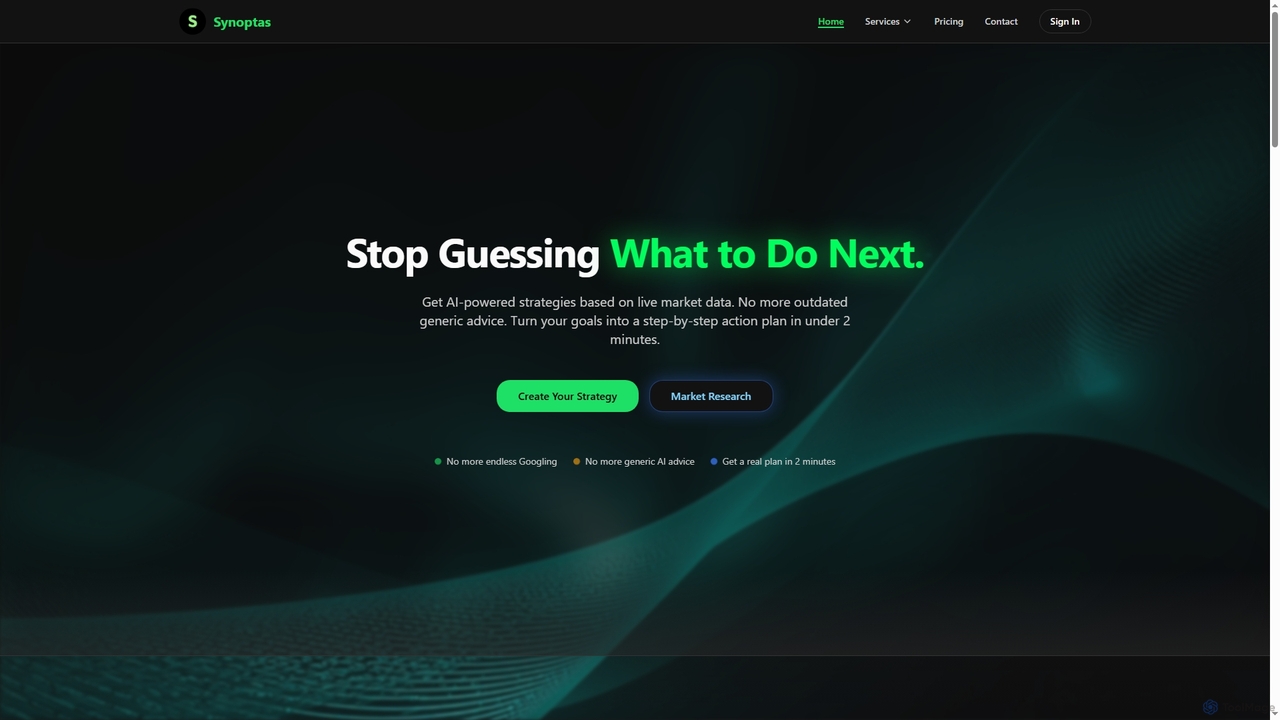
Synoptas is an AI-powered business strategy planner that transforms business goals into actionable, step-by-step plans in minutes. It …
Synoptas is an AI-powered business strategy planner that transforms business goals into actionable, step-by-step plans in minutes. It leverages real-time market data from premium sources like Bloomberg and Statista, providing personalized insights and eliminating generic advice for optimal business growth and decision-making.
SaaStr
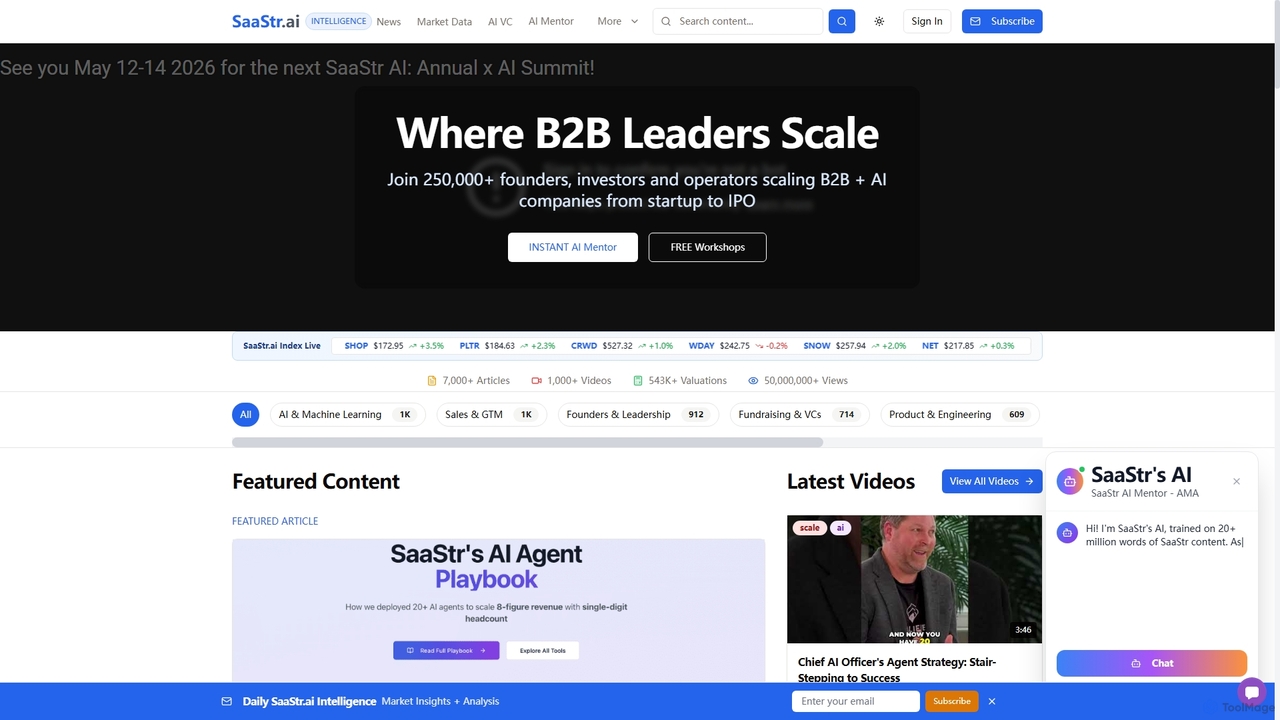
SaaStr is an AI-powered intelligence platform for B2B SaaS leaders, founders, and investors, offering specialized tools for market …
SaaStr is an AI-powered intelligence platform for B2B SaaS leaders, founders, and investors, offering specialized tools for market analysis, fundraising, and strategic growth. It leverages extensive SaaStr content and real-time data to provide expert insights and foster a vibrant community.
About Business Growth
AI Business Growth tools are a specialized category of software designed to accelerate revenue generation and market expansion. They leverage machine learning and data analysis to automate and optimize key growth activities like lead generation, sales processes, and customer retention. By uncovering actionable insights from vast datasets, these tools empower businesses to make smarter strategic decisions, identify new opportunities, and scale their operations effectively. They go beyond simple task management to provide a data-driven engine for sustainable growth.
Core Features
- Lead Generation & Enrichment: Automatically identify and qualify potential customers from various online sources.
- Sales Automation: Streamline outreach, follow-ups, and CRM updates to accelerate the sales cycle.
- Market Intelligence: Analyze market trends, competitor strategies, and customer sentiment in real-time.
- Customer Analytics: Predict customer behavior, identify churn risks, and uncover upselling opportunities.
- Predictive Forecasting: Use historical data to forecast sales, revenue, and market demand with higher accuracy.
Use Cases
These tools are vital for sales teams, marketing departments, and business strategists in sectors like SaaS, e-commerce, and B2B services. For instance, a startup can use them to identify its ideal customer profile and find new markets, while an established enterprise can optimize its sales funnel and improve customer lifetime value.
How to Choose
When selecting a tool, consider its integration capabilities with your existing CRM and marketing platforms. Evaluate the quality and source of its data for lead generation. Also, assess the complexity of its analytics features against your team's technical skills and consider whether its pricing model aligns with your expected return on investment.
Business GrowthUse Cases
Automate B2B Lead Generation and Outreach
A B2B tech company's sales team uses an AI business growth tool to scale its outreach efforts. The tool scans professional networks and company databases to build a highly targeted list of potential clients based on industry, company size, and job titles. It then automatically drafts and sends personalized initial emails and follow-up sequences, A/B testing different subject lines and content. This process frees up sales representatives from manual prospecting, allowing them to focus on qualified leads who have shown interest, ultimately increasing meeting booking rates by over 40%.
Analyze Competitor Strategies and Market Gaps
A product manager at a consumer goods company leverages an AI tool to monitor the competitive landscape. The platform continuously tracks competitors' pricing changes, new product launches, online advertising campaigns, and customer reviews across social media and retail sites. By analyzing this data, the AI identifies emerging market trends and gaps in competitors' offerings. This intelligence provides a solid foundation for the company's own product development roadmap and marketing strategy, ensuring they stay ahead of the curve and meet unmet consumer needs.
Predict and Reduce Customer Churn
A subscription-based SaaS provider employs an AI business growth platform to improve customer retention. The tool integrates with their user activity data, support tickets, and billing information to build a predictive churn model. It identifies patterns in user behavior that indicate a high risk of cancellation, such as decreased feature usage or unresolved support issues. The system then automatically flags these at-risk accounts for the customer success team, who can proactively reach out with targeted support or special offers, successfully reducing the monthly churn rate by 15%.
Optimize Marketing Spend with Predictive Analytics
A digital marketing agency uses an AI tool to maximize the return on investment (ROI) for its clients' advertising budgets. The platform analyzes historical performance data from various channels like Google Ads, Facebook, and LinkedIn. It predicts which audience segments, ad creatives, and channels will yield the highest conversion rates for upcoming campaigns. Based on these predictions, the agency can allocate budgets more effectively, avoiding underperforming segments and doubling down on high-potential ones, leading to a 25% increase in lead quality for the same ad spend.
Identify Upsell and Cross-sell Opportunities
An e-commerce manager utilizes an AI-powered tool to increase customer lifetime value (CLV). The system analyzes each customer's purchase history, browsing behavior, and product affinities. It then identifies prime opportunities for upselling (e.g., suggesting a premium version of a product) or cross-selling (e.g., recommending complementary accessories). These personalized recommendations are automatically delivered through targeted email campaigns or dynamic content on the website, resulting in a significant lift in average order value and repeat purchases.
Streamline Business Expansion Research
A business development team planning international expansion uses an AI tool to assess the viability of new markets. Instead of weeks of manual research, the tool aggregates and analyzes economic data, demographic information, regulatory landscapes, and local competition for multiple target countries. It generates a comparative report, scoring each market on factors like growth potential and ease of entry. This data-driven approach allows the team to quickly prioritize the most promising regions for expansion and develop a more informed market entry strategy.