ToolMage
Sign in

Best 1 Saas Intelligence AI tools for Business

Popular Saas Intelligence AI tools in Business include SaaStr, helping you work more efficiently.

SaaStr
Freemium

SaaStr

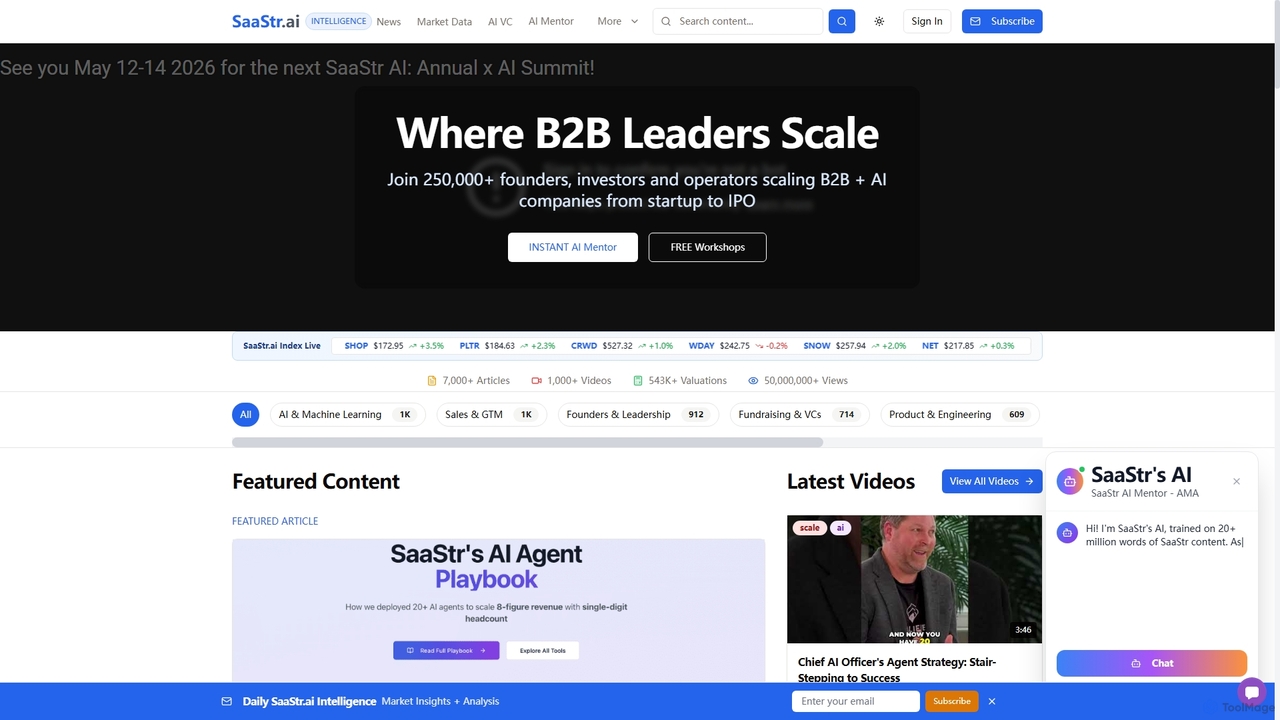
SaaStr is an AI-powered intelligence platform for B2B SaaS leaders, founders, and investors, offering specialized tools for market analysis, fundraising, and strategic growth. It leverages extensive SaaStr content and real-time data to provide expert insights and foster a vibrant community.

Market Analysis
Visits 36.7KFavorites 115Likes 115

About Saas Intelligence

SaaS Intelligence tools are AI-powered platforms designed to help businesses gain comprehensive insights into their Software as a Service (SaaS) ecosystem. As a critical component within the broader 'Business' category, these tools leverage data analytics and machine learning to track SaaS subscriptions, monitor usage patterns, and optimize spending. They enable organizations to manage their software assets efficiently, reduce unnecessary costs, and mitigate security risks associated with unmanaged applications, thereby enhancing overall business efficiency and strategic decision-making.

Core Features

  • SaaS Discovery & Inventory: Automatically identify all active SaaS applications within an organization, including 'shadow IT'.
  • Usage Monitoring & Analytics: Track real-time user engagement and feature adoption for each SaaS application.
  • Cost Optimization & Spend Management: Analyze SaaS expenditure, identify redundant subscriptions, and negotiate better deals.
  • License Management: Optimize license allocation, reclaim unused licenses, and ensure compliance.
  • Security & Compliance Monitoring: Assess security risks associated with SaaS applications and ensure adherence to regulatory standards.

Use Cases

SaaS Intelligence is vital for IT departments, finance teams, and procurement specialists. It helps them gain a centralized view of all SaaS applications, understand actual usage versus licensed capacity, and make data-driven decisions to optimize software portfolios. This leads to significant cost savings and improved operational efficiency across the business.

How to Choose

When selecting a SaaS Intelligence tool, consider its integration capabilities with existing systems, the breadth of its discovery features, the granularity of usage analytics, its cost optimization recommendations, and its security monitoring functionalities. Scalability, ease of use, and vendor support are also crucial for long-term success and effective SaaS management.

Saas Intelligence use cases

1

Optimizing SaaS Spend for Enterprises

A large enterprise's finance department uses SaaS Intelligence to identify duplicate subscriptions across different teams and reclaim unused licenses from departed employees. By analyzing usage data, they can downgrade underutilized plans, leading to significant annual savings and a more efficient budget allocation for software.

2

Mitigating Shadow IT Risks

An IT security team leverages SaaS Intelligence to discover unauthorized SaaS applications being used by employees (shadow IT). The tool provides insights into the security posture of these applications, allowing the team to assess potential data breaches and implement appropriate security policies or consolidate to approved alternatives.

3

Improving Software License Compliance

A procurement manager utilizes SaaS Intelligence to monitor license usage for critical business applications. The tool alerts them when usage approaches license limits, preventing overspending on unnecessary licenses or ensuring timely renewals for essential services, thus maintaining compliance and avoiding penalties.

4

Enhancing SaaS Portfolio Management

A CIO employs SaaS Intelligence to gain a holistic view of the company's entire SaaS portfolio. By analyzing adoption rates and feature usage, they can identify underperforming tools, consolidate redundant applications, and make strategic decisions about future software investments that align with business goals.

5

Streamlining Onboarding and Offboarding

HR and IT teams integrate SaaS Intelligence into their employee lifecycle management. During onboarding, the tool automates provisioning of necessary SaaS access based on roles. During offboarding, it ensures all access is revoked promptly, enhancing security and preventing unnecessary license costs for inactive users.

6

Benchmarking SaaS Performance

A business operations team uses SaaS Intelligence to compare their SaaS application usage and spending against industry benchmarks. This allows them to identify areas where their organization might be overspending or underutilizing tools, providing data-backed insights for negotiation with vendors and internal process improvements.

Saas Intelligence FAQ

What is SaaS Intelligence?

SaaS Intelligence is a category of AI-powered tools designed to provide businesses with comprehensive visibility and actionable insights into their Software as a Service (SaaS) ecosystem. It helps organizations track, manage, and optimize their SaaS subscriptions, usage, and spending, ensuring efficient resource allocation and mitigating risks.

How does SaaS Intelligence differ from traditional IT Asset Management (ITAM)?

While both manage software assets, SaaS Intelligence specifically focuses on cloud-based SaaS applications, offering granular insights into subscription details, real-time usage, and spend optimization unique to the SaaS model. Traditional ITAM often deals more with on-premise software licenses and hardware, lacking the dynamic, usage-based tracking capabilities essential for SaaS.

What are the key benefits of implementing a SaaS Intelligence solution?

Implementing a SaaS Intelligence solution offers several key benefits, including significant cost savings through identifying unused or redundant subscriptions, enhanced security by detecting shadow IT and assessing application risks, improved operational efficiency through streamlined license management, and better strategic decision-making based on accurate usage data.

Who typically uses SaaS Intelligence tools within an organization?

SaaS Intelligence tools are primarily used by IT departments for managing software assets and security, finance teams for budget control and cost optimization, and procurement specialists for vendor negotiations and license compliance. Business leaders and CIOs also leverage these insights for strategic planning and portfolio management across the organization.

What should I look for when choosing a SaaS Intelligence platform?

When choosing a SaaS Intelligence platform, prioritize features like comprehensive SaaS discovery, real-time usage analytics, robust cost optimization recommendations, strong integration capabilities with existing systems (e.g., SSO, HRIS), and advanced security and compliance monitoring. User-friendliness, scalability, and reliable vendor support are also important considerations for long-term success.