
Palm
Palm is an AI-powered platform for strategic workforce planning and talent management. It helps HR teams map skills, …
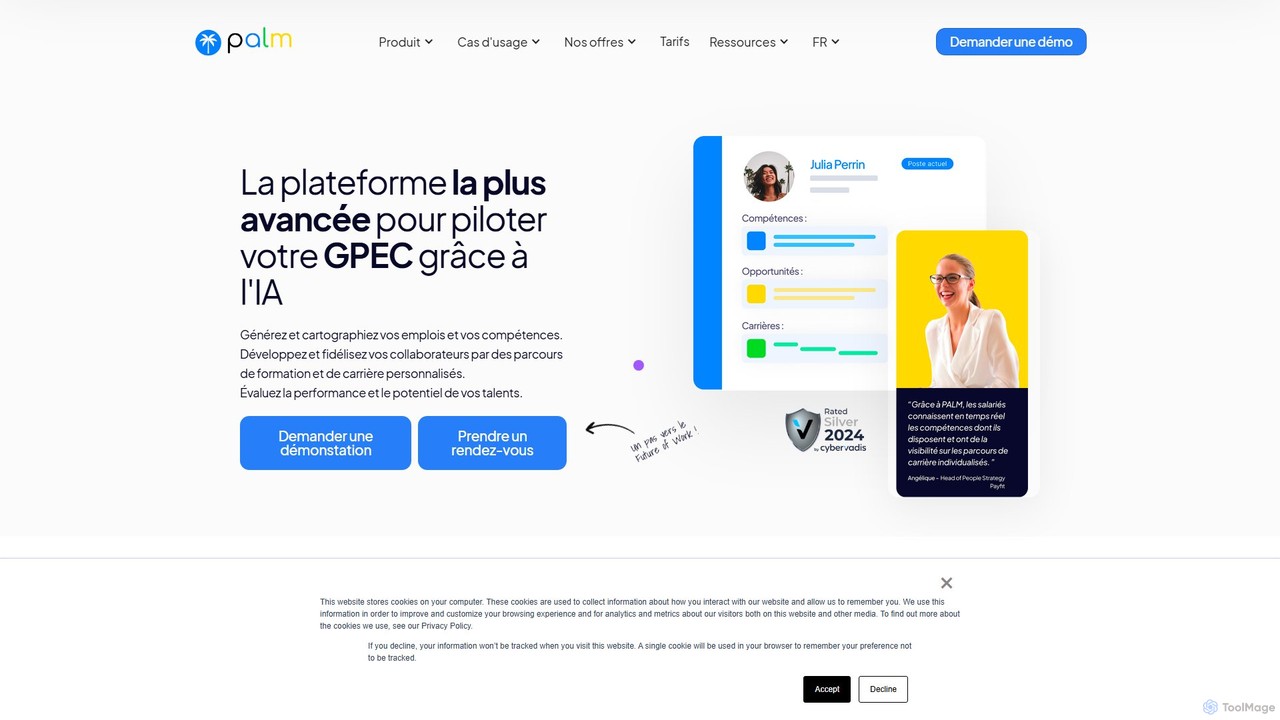
Palm is an AI-powered platform for strategic workforce planning and talent management. It helps HR teams map skills, create personalized career paths, evaluate performance, and foster internal mobility. By automating HR processes and providing data-driven insights, Palm aims to increase employee retention, engagement, and overall business performance.
About Workforce Planning
AI Workforce Planning tools are a specialized category of productivity software that uses predictive analytics and machine learning to forecast future talent needs. These tools analyze historical data, market trends, and business objectives to model staffing requirements accurately. They empower organizations to proactively address skills gaps, optimize labor costs, and align their human capital strategy with long-term growth. This data-driven approach transforms HR from a reactive function to a strategic business partner.
Core Features
- Demand Forecasting: Predicts future hiring needs based on growth projections, turnover rates, and project pipelines.
- Skills Gap Analysis: Identifies the disparity between the current workforce's skills and future business requirements.
- Scenario Modeling: Simulates the impact of various business events, like mergers or new market entry, on staffing.
- Succession Planning: Uses performance data to identify and prepare high-potential employees for future leadership roles.
- Cost Optimization: Analyzes salary benchmarks and attrition data to help manage and forecast labor budgets effectively.
Use Cases
These tools are primarily used by HR leaders, strategic planners, and finance departments in mid-to-large enterprises. Industries like technology, manufacturing, healthcare, and retail leverage them for strategic growth planning, managing seasonal staffing fluctuations, and navigating industry-wide skill shifts. For example, a manufacturing firm can plan for the transition to automation by identifying reskilling opportunities for its current workforce.
How to Choose
When selecting an AI Workforce Planning tool, consider its integration capabilities with your existing HRIS and ERP systems. Evaluate the transparency and accuracy of its predictive models. Data security and compliance with regulations like GDPR are paramount. Also, assess the tool's scalability to ensure it can grow with your organization and the quality of its data visualization features for clear reporting to stakeholders.
Workforce PlanningUse Cases
Strategic Headcount Planning for Tech Expansion
A fast-growing SaaS company plans to expand into the European market. The Head of Strategy uses an AI workforce planning tool to model this expansion. By inputting revenue targets, product roadmaps, and regional market data, the tool forecasts the required number of sales representatives, customer support agents, and software engineers needed each quarter for the next two years. This allows the company to create a proactive, data-backed hiring plan, secure budget approvals early, and avoid talent shortages that could delay market entry.
Optimizing Seasonal Staffing in Retail
A national retail chain faces significant fluctuations in staffing needs during the holiday season. An HR analyst uses a workforce planning tool that integrates with sales data and foot traffic sensors. The AI model predicts peak hours and days for each store location, recommending optimal staffing levels to meet customer demand without overstaffing. The system generates dynamic schedules, reducing overtime costs by 15% and improving customer satisfaction scores by ensuring adequate floor coverage during busy periods.
Identifying and Closing Critical Skills Gaps
A manufacturing company is transitioning to smart factory technologies (IoT, robotics). The L&D Manager uses a workforce planning tool to conduct a skills gap analysis. The system maps the current skills of the workforce against the future skills required for operating the new technology. It identifies a critical shortage of data analysts and robotics maintenance technicians. Based on this, the company develops targeted reskilling programs for existing employees and creates precise job descriptions for external hiring, ensuring a smooth transition and maximizing ROI on the new technology.
Proactive Succession Planning for Leadership Roles
A multinational corporation wants to build a robust leadership pipeline. The Chief Human Resources Officer (CHRO) employs an AI planning tool to identify high-potential employees for succession. The tool analyzes performance reviews, 360-degree feedback, project completion rates, and competency scores. It generates a list of potential successors for critical leadership roles and highlights their development needs. This enables HR to create personalized development plans, reducing the risk associated with unexpected leadership vacancies and ensuring business continuity.
Modeling Workforce Impact of a Merger
Two financial services firms are merging. The integration team uses a scenario modeling feature within their workforce planning tool. They simulate various organizational structures to identify role redundancies and skill overlaps between the two companies. The model helps them visualize the combined workforce, estimate potential cost savings from consolidation, and identify key talent at risk of leaving. This data-driven approach facilitates a smoother integration process, allowing for fair and strategic decisions about the new organizational design.
Optimizing Labor Costs in a Healthcare System
A large hospital network needs to manage its labor budget, which is its largest expense. A financial planner in the HR department uses a workforce planning tool to analyze nurse-to-patient ratios, overtime hours, and reliance on expensive agency staff. The AI model forecasts patient admission trends and recommends adjustments to full-time, part-time, and per-diem nurse staffing levels. By optimizing schedules and reducing dependency on temporary staff, the hospital network reduces its annual labor costs by 7% while maintaining high standards of patient care.