Best of the Year 4 results Psychology AI Tools

Popular AI tools in the Psychology field include Freudly、Atypica、Liars.AI、MBTITestAI, etc., helping you quickly improve efficiency.

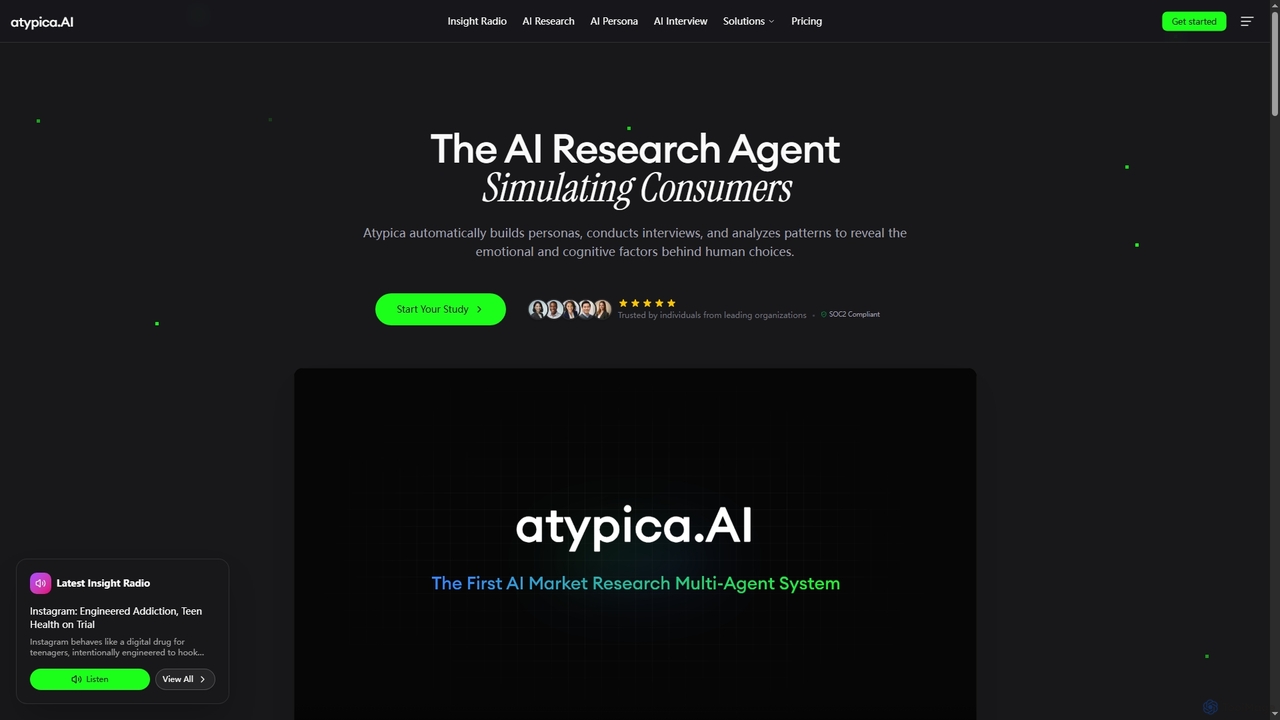
Atypica

Atypica

Atypica is an AI research agent designed to simulate consumers, providing deep insights into human decision-making. It automatically …

54.7K
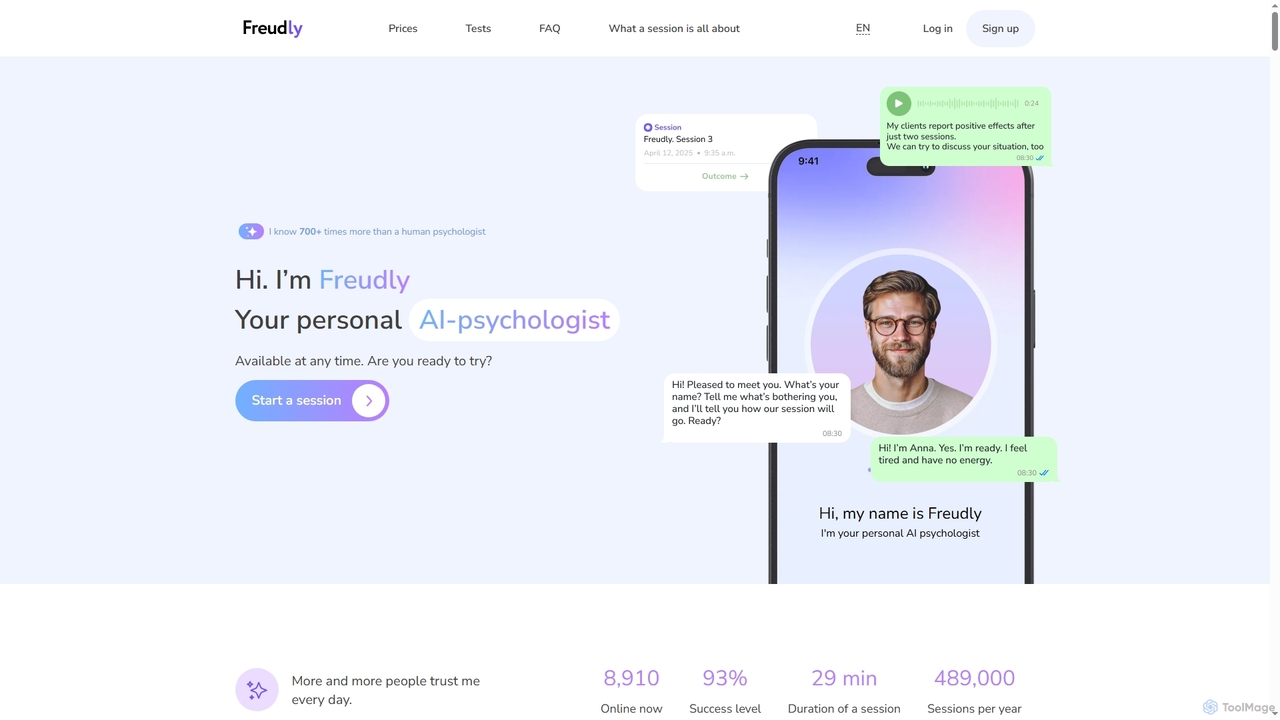
Freudly

Freudly

Freudly is an AI-powered personal psychologist offering 24/7 anonymous mental health support. It provides evidence-based therapy sessions, psychological …

256.2K
MBTITestAI

MBTITestAI

MBTITestAI is an advanced AI-powered personality assessment tool that provides highly personalized reports and growth advice. Utilizing GPT-5, …

2.9K
Liars.AI

Liars.AI

Liars.AI is an innovative AI-powered lie detector designed for entertainment. By uploading or recording a video, users can …

4.1K

About Psychology

Psychology AI tools are a class of applications that leverage artificial intelligence to analyze human behavior, emotions, and cognitive processes. These tools often utilize machine learning models, natural language processing (NLP), and sentiment analysis to interpret text, speech, and even facial expressions. Their primary value lies in providing scalable mental health support, automating psychological assessments, and offering data-driven insights for therapists, researchers, and individuals. They can identify subtle patterns that might be missed in traditional analysis, offering a new dimension to understanding the human mind.

Core Features

  • Sentiment & Emotion Analysis: Deciphers emotional tones and specific feelings from text, audio, or video inputs.
  • Behavioral Pattern Recognition: Identifies recurring patterns in user data to understand habits, predict behaviors, or flag potential mental health concerns.
  • Personalized Feedback & Coaching: Delivers tailored advice, coping strategies, and exercises based on an individual's psychological profile and inputs.
  • Automated Psychological Assessment: Administers and scores standardized psychological tests and screeners to evaluate cognitive functions or mental states.
  • Therapeutic Conversational AI: Engages users in supportive dialogues using established frameworks like Cognitive Behavioral Therapy (CBT) to guide self-reflection.

Applicable Scenarios

In clinical settings, these tools assist therapists in monitoring patient progress between sessions. In corporate environments, they are used to gauge employee well-being and prevent burnout. Researchers leverage them to analyze vast datasets for behavioral studies, while individuals use them for personal development, stress management, and mindfulness practices.

Selection Criteria

When choosing a Psychology AI tool, prioritize those with a strong scientific or evidence-based foundation. Scrutinize their data privacy and security policies, especially compliance with regulations like HIPAA or GDPR. Evaluate the user interface for clarity and ease of use. Finally, determine if the tool is intended for general wellness or as a clinical support tool to ensure it aligns with your specific needs.

PsychologyUse Cases

1

Corporate Mental Wellness Screening

An HR manager implements an AI-powered wellness platform to provide confidential mental health support for employees. The tool uses a conversational AI to conduct regular, voluntary check-ins, screening for signs of stress, anxiety, or burnout. Based on the anonymous, aggregated data, the HR department can identify workplace trends and proactively introduce wellness initiatives. For individuals, the tool offers immediate access to resources like guided meditations or articles on stress management, and can suggest seeking professional help if needed.

2

AI-Assisted Therapy Session Analysis

A licensed therapist uses an AI tool to analyze transcripts of patient sessions (with full consent). The AI identifies key themes, tracks sentiment shifts over time, and highlights the use of specific language patterns associated with cognitive distortions. This provides the therapist with objective data to supplement their clinical judgment, helping them prepare for future sessions more effectively and track the efficacy of interventions with greater precision. The tool acts as a clinical assistant, not a replacement for professional expertise.

3

Personalized Cognitive Skill Training

An individual uses an AI-powered brain training application to improve their memory and focus. The app presents a series of adaptive games and puzzles. The AI analyzes the user's performance in real-time, identifying specific cognitive weaknesses, such as short-term memory recall or task-switching ability. It then dynamically adjusts the difficulty and type of exercises to create a personalized training regimen that targets these areas for improvement, offering a more efficient and engaging cognitive workout than a one-size-fits-all approach.

4

Consumer Behavior Analysis for Marketing

A marketing team uses an AI psychology tool to analyze thousands of customer reviews for a new product. The tool goes beyond simple positive/negative sentiment analysis, identifying underlying emotional drivers (e.g., excitement, frustration, security) and linking them to specific product features. It also segments the audience based on psychographic profiles inferred from their language. This deep insight allows the team to craft highly targeted messaging that resonates with the core psychological motivations of different customer groups, improving campaign effectiveness.

5

AI-Powered Journaling for Self-Reflection

An individual uses a smart journaling app to document their daily thoughts and feelings. The app's AI analyzes the text entries to identify recurring emotional patterns, cognitive biases (like catastrophizing or black-and-white thinking), and potential triggers for stress or anxiety. It then provides gentle, non-judgmental prompts and insights based on CBT principles, such as suggesting reframing a negative thought. This process helps the user develop greater self-awareness and learn practical skills for managing their mental well-being over time.

6

Academic Research on Large-Scale Social Behavior

A team of social psychologists uses an AI tool to analyze millions of public online forum posts to study group polarization. The AI is trained to detect linguistic markers of extremism, emotional intensity, and in-group/out-group language. By processing data on a scale impossible for human researchers, the tool can map how discussions evolve over time, identify key influencers who accelerate polarization, and test hypotheses about the dynamics of online radicalization. The results provide valuable, data-driven insights for understanding societal trends.

PsychologyFrequently Asked Questions