Best of the Year 1 results Public Safety AI Tools

Popular AI tools in the Public Safety field include Paladin Drones, etc., helping you quickly improve efficiency.

Paladin Drones

Paladin Drones

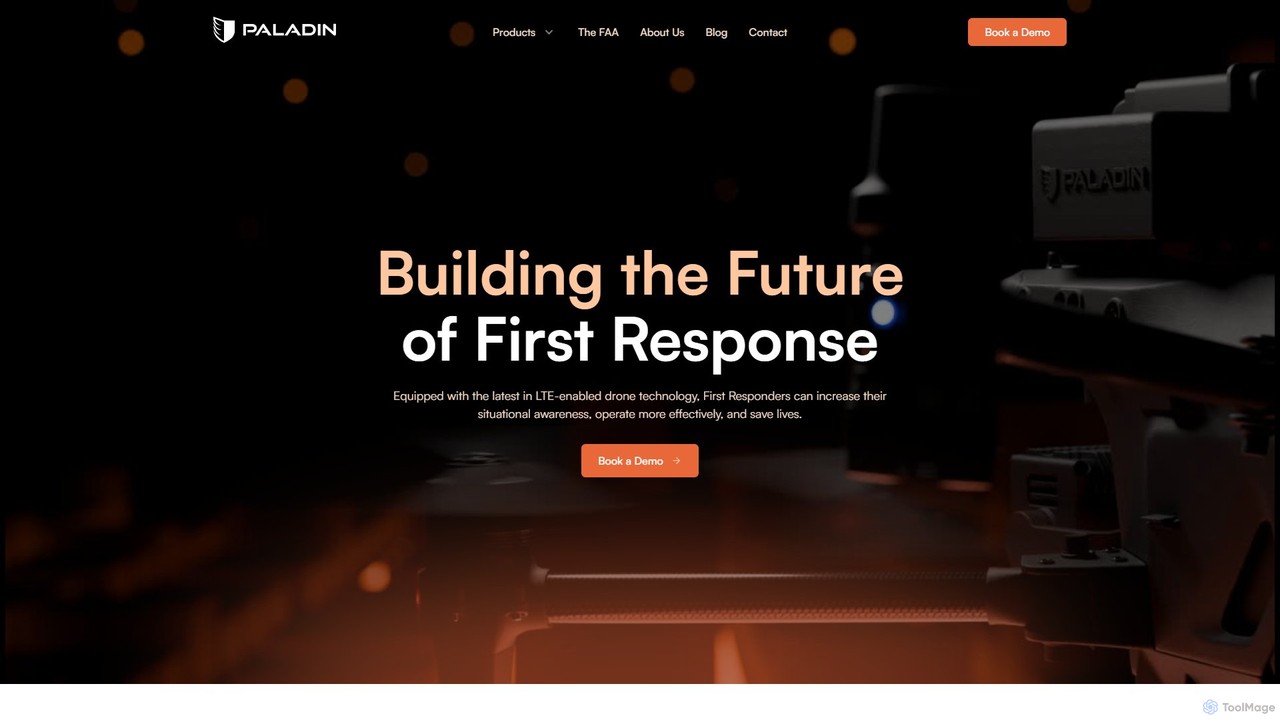
Paladin Drones offers an all-in-one Drone as First Responder (DFR) solution for public safety. It autonomously dispatches LTE-enabled …

13.9K

About Public Safety

Public Safety AI tools are a class of technologies that leverage artificial intelligence to enhance the operational capabilities of law enforcement, emergency services, and civic agencies. These tools utilize machine learning, computer vision, and predictive analytics to process vast amounts of data, identifying patterns and forecasting potential incidents. Their primary value lies in enabling proactive crime prevention, optimizing emergency response, and improving overall community safety through data-driven decision-making. This technology helps agencies allocate resources more effectively and respond faster to critical events.

Core Features

  • Predictive Analytics: Analyzes historical data to forecast crime hotspots, traffic accidents, or potential public disturbances.
  • Real-time Video Analysis: Uses computer vision to automatically detect anomalies such as weapons, fights, or crowd surges from CCTV feeds.
  • Emergency Response Optimization: Calculates the most efficient routes for emergency vehicles and suggests optimal resource allocation during crises.
  • Intelligent Data Fusion: Consolidates and analyzes data from multiple sources like reports, social media, and sensors to uncover investigative leads.
  • Threat Intelligence Monitoring: Scans public data sources to identify emerging threats or coordinate information during large-scale events.

Applicable Scenarios

These tools are primarily used by police departments for patrol planning, emergency management agencies for disaster response coordination, and city governments for monitoring urban infrastructure. For instance, a police force might use predictive analytics to deploy officers to high-risk areas, while an emergency operations center could use AI to manage resources during a natural disaster.

Selection Criteria

When choosing a Public Safety AI tool, focus on data security and compliance with privacy regulations like GDPR. Evaluate the model's accuracy and the provider's commitment to mitigating algorithmic bias. Ensure it can integrate with your existing systems (e.g., dispatch, records management). Finally, assess its real-time processing capabilities and scalability to handle large data volumes effectively.

Public SafetyUse Cases

1

Crime Hotspot Prediction for Patrol Planning

A police department analyst uses a predictive policing tool to analyze historical crime data, demographic information, and temporal patterns. The AI model identifies future high-risk zones and time windows for specific crimes like burglaries or assaults. Based on these predictions, the department strategically allocates patrol resources, increasing police presence in forecasted hotspots to deter criminal activity and improve community safety without over-policing other areas.

2

Automated Anomaly Detection in Public Spaces

A city's security operations center monitors thousands of CCTV cameras. An AI video analytics tool automatically flags unusual events in real-time, such as abandoned packages, crowd surges, traffic accidents, or individuals carrying weapons. This system alerts human operators to focus on verified threats, drastically reducing response times and enabling proactive intervention before a situation escalates. It enhances situational awareness without requiring constant manual monitoring of all feeds.

3

Optimizing Emergency Vehicle Dispatch and Routing

During a large-scale emergency, an emergency management agency uses an AI-powered dispatch system. The system analyzes real-time traffic data, road closures, incident locations, and vehicle availability. It then calculates and suggests the optimal routes for ambulances and fire trucks, bypassing congestion to ensure they reach victims as quickly as possible. This dynamic routing adapts to changing conditions, improving response times and potentially saving lives.

4

Accelerating Investigations with Data Analysis

An investigator is faced with thousands of documents, witness statements, and digital evidence for a complex case. An AI tool processes this unstructured data, automatically identifying and linking entities like people, locations, and organizations. It visualizes connections and timelines that would be nearly impossible for a human to spot manually. This capability helps investigators generate critical leads faster, understand complex criminal networks, and build stronger cases for prosecution.

5

Natural Disaster Impact Assessment

After a hurricane, a government agency needs to quickly assess damage. An AI system analyzes satellite and drone imagery, automatically identifying damaged buildings, flooded areas, and blocked roads. This automated assessment is completed in hours instead of days, enabling a faster, more targeted deployment of rescue teams, medical aid, and relief supplies to the areas most in need. It provides a comprehensive overview for better resource allocation and recovery planning.

6

Social Media Monitoring for Public Threat Intelligence

A public safety intelligence unit uses an AI tool to monitor public social media feeds for early warnings of potential threats. The AI filters out noise and uses natural language processing to identify credible information related to planned civil unrest, emerging public health crises, or misinformation campaigns. This allows analysts to verify threats and provide timely intelligence to decision-makers, enabling preemptive measures to ensure public safety and manage events effectively.

Public SafetyFrequently Asked Questions