ToolMage
Sign in

Best 2 Reading AI tools

Popular Reading AI tools include Chai Reader and TextWiz, helping you work more efficiently.

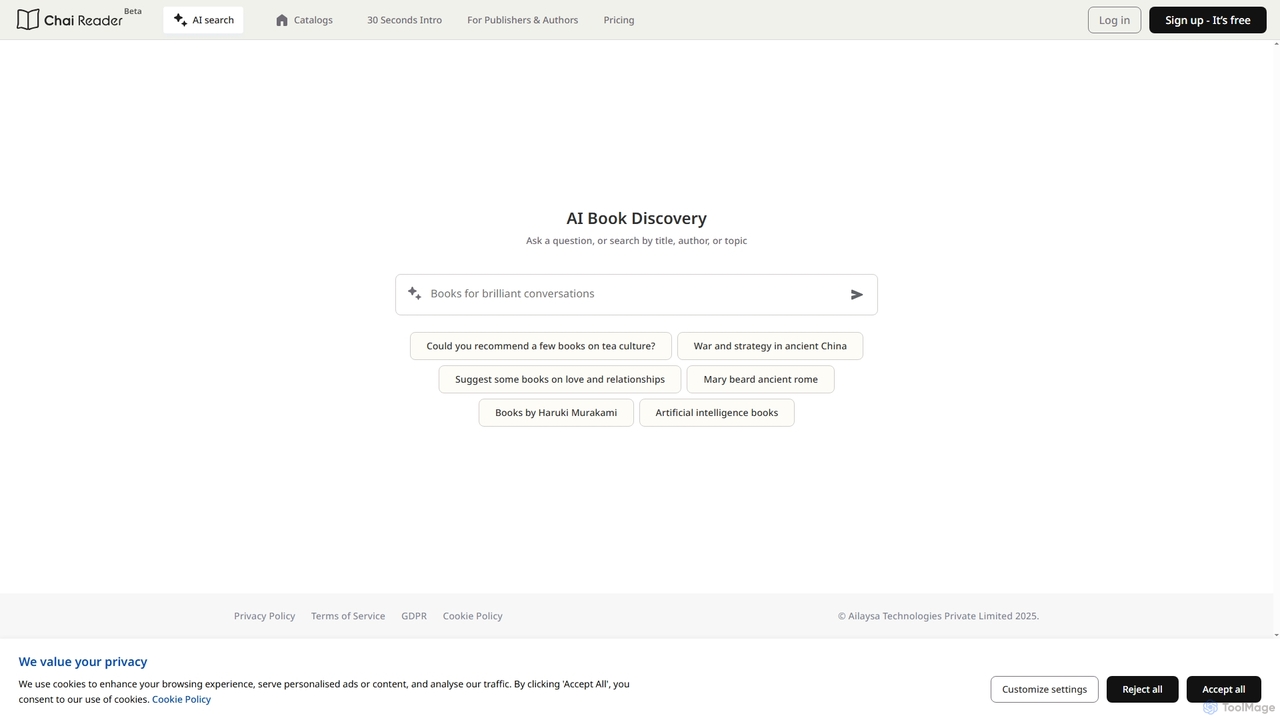
Chai Reader

Chai Reader is an advanced AI-powered platform that transforms reading into an interactive experience. It helps users discover books through AI-driven search and recommendations, offering a unique "Chatbooks" format for engaging with content before and after purchase.

Content Generation
Visits 4.1KFavorites 109Likes 129
Freemium

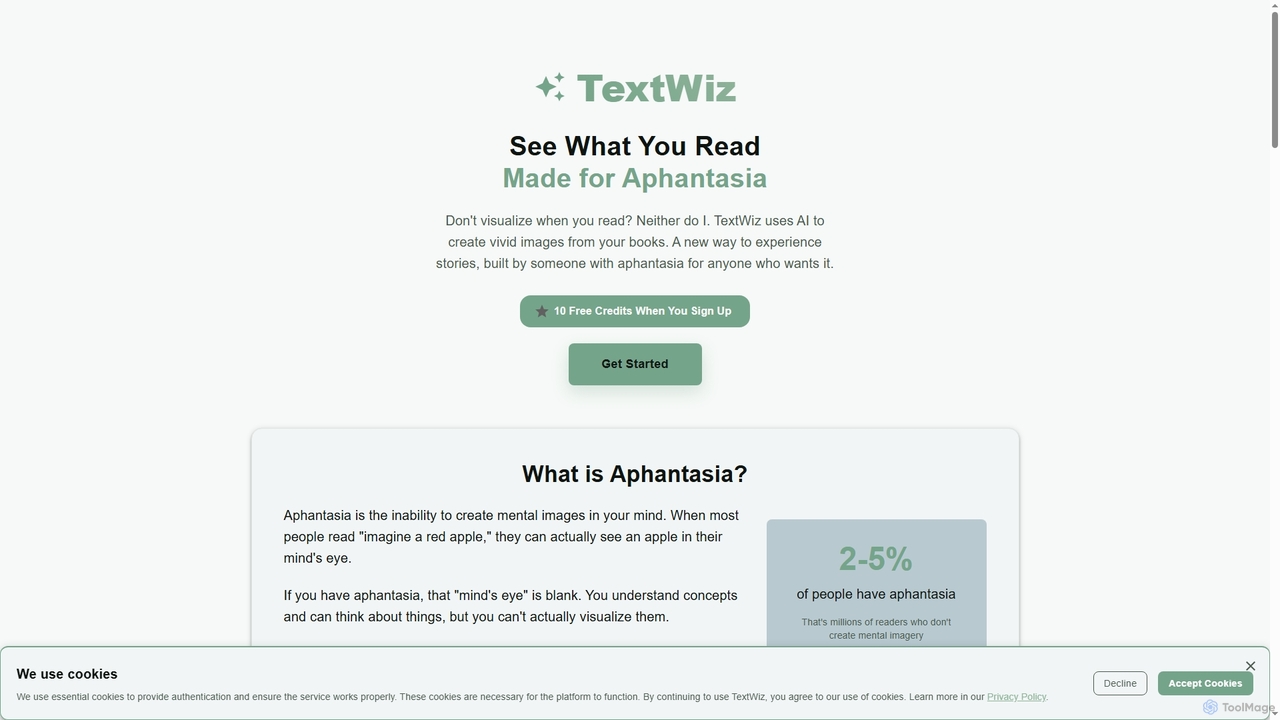
TextWiz

TextWiz is an innovative AI tool designed to transform your digital books into visually rich experiences. It generates vivid images from EPUB files, enhancing comprehension and engagement for readers, especially those with aphantasia or visual learners, by seamlessly integrating contextual artwork into stories.

Visual Aids
Visits 3.5KFavorites 122Likes 131

About Reading

AI Reading tools are applications that leverage artificial intelligence to enhance and automate the process of understanding written content. They utilize technologies like Natural Language Processing (NLP) to summarize long articles, extract key data from documents, and answer questions based on the text. This enables users to quickly grasp complex information, save significant time on research, and manage their knowledge more effectively. These tools transform passive reading into an interactive dialogue with your documents.

Core Features

  • AI-Powered Summarization: Condenses lengthy documents, articles, or books into concise, coherent summaries.
  • Document Q&A: Allows users to ask specific questions about the content of a file and receive direct answers.
  • Information Extraction: Automatically identifies and pulls specific data points like names, dates, and figures from unstructured text.
  • Readability Enhancement: Simplifies complex sentences, explains jargon, and provides definitions to improve comprehension.
  • Intelligent Text-to-Speech: Converts text into natural-sounding audio, often with options for different voices and speeds.

Use Cases

These tools are widely used by students, academic researchers, legal professionals, financial analysts, and journalists. For instance, a researcher can quickly digest dozens of academic papers by reviewing their AI-generated summaries, while a lawyer can instantly locate specific clauses within a 200-page contract by asking direct questions.

How to Choose

When selecting an AI Reading tool, consider the types of documents it supports (PDF, DOCX, URL). Evaluate the accuracy and quality of its summarization and Q&A features. Check for essential integrations, such as browser extensions or connections to note-taking apps. Finally, assess the pricing model to ensure it aligns with your usage volume and budget.

Featured tool rankings

Reading use cases

1

Accelerate Academic Research and Literature Reviews

A graduate student is tasked with writing a comprehensive literature review on a complex scientific topic, requiring them to analyze over 50 research papers. Instead of spending weeks reading each one, they upload the papers to an AI Reading tool. The tool generates concise summaries for each paper, allowing the student to quickly identify the most relevant studies. They then use the Q&A feature to ask specific questions like 'What was the sample size in this study?' or 'Compare the methodologies of these three papers,' extracting critical information efficiently. This process reduces research time by over 70%, enabling a more thorough and faster synthesis of existing knowledge.

2

Efficient Legal Contract Analysis and Due Diligence

A paralegal at a law firm needs to review a 150-page commercial lease agreement for a client under a tight deadline. They upload the PDF to an AI Reading tool. The tool immediately identifies and extracts key information such as the lease term, renewal options, rent escalation clauses, and termination conditions. The paralegal then asks direct questions like 'What are the landlord's maintenance responsibilities?' and receives precise answers with citations to the relevant page and clause. This allows them to draft a summary report for the senior attorney in under an hour, a task that would have manually taken half a day, ensuring accuracy and saving valuable billable hours.

3

Digest Financial Reports and Market Analysis

A financial analyst needs to quickly understand the performance of several competitor companies by reviewing their quarterly earnings reports. Each report is a dense, 50+ page document. Using an AI Reading tool, the analyst uploads all the reports. They request summaries of the Management's Discussion and Analysis (MD&A) section for each. The tool also extracts key financial metrics like revenue, net income, and EPS, presenting them in a structured format. The analyst can then ask comparative questions, such as 'Which company had the highest revenue growth this quarter?', to gain insights rapidly. This approach automates data collection and initial analysis, allowing the analyst to focus on strategic interpretation and forecasting.

4

Stay Informed with Daily News Summaries

A busy executive wants to stay updated on industry news and global events but lacks the time to read multiple long-form articles each day. They use an AI Reading tool's browser extension. While browsing news websites, they click the extension icon on any article page. A concise, bullet-pointed summary appears in a sidebar, highlighting the key takeaways. This allows them to consume the essential information from ten different articles in the time it would normally take to read just one. They can quickly identify which articles warrant a full read, ensuring they remain well-informed without sacrificing productivity.

5

Enhance Accessibility for Readers with Disabilities

A university student with dyslexia finds it challenging to process dense academic textbooks. They use an AI Reading tool that offers multiple accessibility features. First, they use the intelligent text-to-speech function, which reads the text aloud in a clear, natural-sounding voice, allowing them to follow along visually. When they encounter a complex paragraph, they use the 'simplify' feature, which rephrases the content in more straightforward language without losing the core meaning. The tool also provides on-demand definitions for technical jargon. This multi-faceted support transforms a difficult reading task into a manageable learning experience, promoting educational equity.

6

Explore Themes and Concepts in Books

An avid reader wants to gain a deeper understanding of a dense philosophy book before committing to reading it cover to cover. They upload the e-book file to an AI Reading tool. They start by asking for a chapter-by-chapter summary to get an overview of the book's structure and arguments. Then, they explore specific concepts by asking questions like, 'Explain the concept of existentialism as presented in this book' or 'Trace the author's argument against determinism.' The tool provides detailed explanations and points to relevant passages. This interactive exploration allows the reader to engage with the book's core ideas efficiently, making the subsequent full read more insightful and rewarding.

Reading FAQ

What are AI Reading tools?

AI Reading tools are software applications designed to help users understand, analyze, and interact with written content more efficiently. They use artificial intelligence, primarily Natural Language Processing (NLP), to perform tasks like summarizing long documents, answering specific questions about the text, and extracting key information. Unlike simple e-readers, these tools don't just display text; they process its meaning, turning passive reading into an active, interactive experience. They are particularly useful for anyone dealing with large volumes of information, such as students, researchers, and legal professionals.

How to choose the right AI Reading tool?

Choosing the right AI Reading tool depends on your specific needs. Consider these key factors:

  • Supported Formats: Ensure the tool can handle the file types you use most, such as PDF, DOCX, EPUB, or web pages.
  • Feature Set: Do you primarily need summarization, in-depth Q&A, data extraction, or accessibility features like text-to-speech? Match the tool's strengths to your main tasks.
  • Accuracy and Quality: Test the tool with a sample document. Evaluate the coherence of its summaries and the relevance of its answers to ensure high-quality output.
  • Integrations: Look for integrations with your existing workflow, such as browser extensions for online articles or connections to note-taking apps like Notion or Zotero.
  • Pricing Model: Compare subscription plans, pay-per-use options, or free tiers to find a model that fits your budget and expected usage.
What's the difference between AI Reading tools and simple Text-to-Speech (TTS)?

The key difference lies in comprehension. A simple Text-to-Speech (TTS) tool converts written text into spoken words without understanding the content; its only function is to read aloud. In contrast, an AI Reading tool uses Natural Language Processing (NLP) to understand the context, structure, and meaning of the text. This allows it to perform advanced tasks like creating summaries, answering complex questions about the content, and identifying key themes. While many AI Reading tools include an advanced TTS feature, their core capability is comprehension, not just narration.

Are AI Reading tools accurate?

The accuracy of AI Reading tools has improved significantly and is generally reliable for most common tasks. For summarization, they are effective at capturing the main points and key arguments of a text. For data extraction, they can accurately identify specific information like dates, names, and figures. However, their performance can vary depending on the complexity and quality of the source document. Highly technical, nuanced, or poorly formatted texts may pose a challenge. It is a good practice to use the AI-generated output as a first draft or a powerful assistant, and to cross-verify critical information, especially in professional or academic contexts.

Who can benefit from using AI Reading tools?

A wide range of individuals and professionals can benefit from AI Reading tools. Key user groups include:

  • Students and Researchers: To quickly review academic papers, summarize textbooks, and accelerate literature reviews.
  • Legal Professionals: To analyze long contracts, depositions, and case law to find relevant information quickly.
  • Financial Analysts: To digest dense earnings reports, market analyses, and regulatory filings to extract key metrics.
  • Content Creators and Journalists: To research topics efficiently and summarize source materials.
  • Busy Professionals: To stay informed on industry news and reports without spending hours reading.
  • Individuals with Reading Disabilities: To use accessibility features like text-to-speech and text simplification for better comprehension.