
Huntware
Huntware is an AI-powered search engine that helps you discover software and tools through natural language. Simply ask …
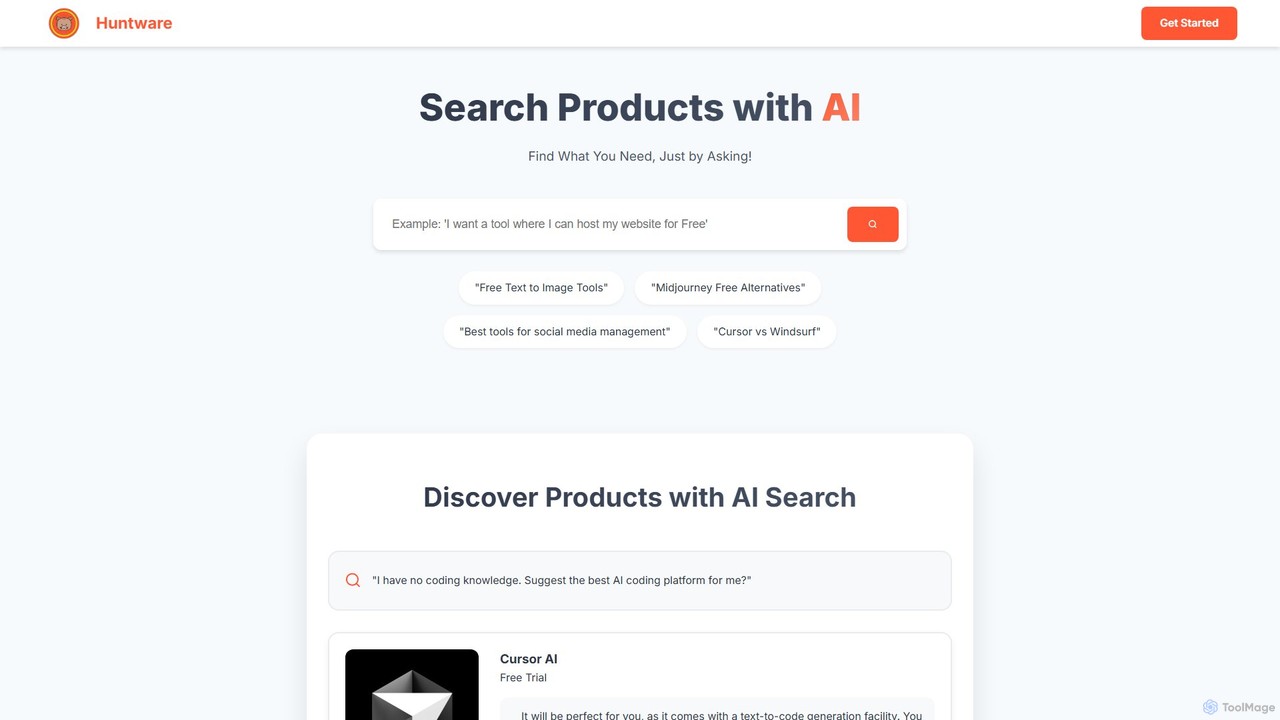
Huntware is an AI-powered search engine that helps you discover software and tools through natural language. Simply ask what you need, and Huntware provides personalized recommendations, comparisons, and detailed answers, making product discovery intuitive and efficient.
About Tool Directory
An AI Tool Directory is a curated platform that systematically organizes and presents a wide range of AI tools. Unlike a simple list, these directories provide structured data, advanced search filters, and comparison features to facilitate efficient discovery. They serve as a centralized hub for users to explore, evaluate, and select the most suitable AI solutions for their specific needs. This structured approach saves significant time in research and helps users make more informed decisions.
Core Features
- Structured Categorization: Tools are meticulously organized by function, industry, and use case for easy navigation.
- Advanced Search & Filtering: Allows users to narrow down options based on criteria like pricing, features, integrations, and platform compatibility.
- Detailed Tool Profiles: Each tool has a comprehensive page with descriptions, key features, pricing models, and user reviews.
- Side-by-Side Comparison: Functionality to directly compare the features and specifications of multiple tools.
- Community Ratings & Reviews: Provides authentic user feedback and ratings to help assess a tool's real-world performance.
Use Cases
AI Tool Directories are valuable for a wide range of users. Developers use them to find specific APIs or libraries for their projects. Marketers search for automation tools for campaigns and analytics. Entrepreneurs and product managers conduct competitive analysis and explore the technology landscape. Researchers and students also leverage these directories to track trends and find tools for their academic work.
How to Choose
When selecting an AI Tool Directory to use, consider several factors. Evaluate the comprehensiveness and diversity of its database—a good directory should cover a wide spectrum of tools. Check for the freshness of information, ensuring tools and their data are regularly updated. Powerful and intuitive search and filtering capabilities are crucial for efficiency. Finally, look for a transparent system for user reviews and ratings to ensure authenticity.
Tool DirectoryUse Cases
Market Research for a New SaaS Product
A product manager planning a new AI-powered copywriting tool uses a tool directory for competitive analysis. They filter for 'AI Writing' and 'Marketing' categories, then further refine the search by features like 'SEO optimization' and 'multi-language support'. By comparing the top 10 tools side-by-side, they can identify market gaps, analyze pricing strategies, and gather insights from user reviews on existing pain points. This structured data allows them to define a unique value proposition for their product in a matter of hours, rather than days of manual searching.
Finding a Specific API for a Development Project
A freelance developer is building an application that requires real-time language translation. Instead of scouring GitHub or general search engines, she turns to an AI tool directory. She filters by 'API', 'Translation', and 'Pay-as-you-go' pricing. The directory presents several options with detailed profiles showing supported languages, response times, and links to documentation. By reading user reviews from other developers, she quickly identifies an API known for its accuracy and reliability, integrating it into her project within the same day.
Expanding a Content Creator's Toolkit
A YouTuber wants to improve their video quality and workflow efficiency. They visit a tool directory and explore the 'Video Editing' and 'Voice Generation' categories. They filter for tools with a free trial and high user ratings. They discover a video editor with AI-powered features like automatic jump-cut removal and an AI voice generator that offers realistic voices for narration. By comparing a few top-rated options, they select two new tools to test, potentially saving hours of manual editing time per video and enhancing the overall production value of their channel.
Academic Research on AI Trends in Healthcare
A university researcher is writing a paper on the adoption of AI in medical diagnostics. They use an AI tool directory to identify and categorize relevant software. By filtering for the 'Healthcare' industry and 'Diagnostics' function, they quickly compile a list of tools for analysis. The directory's detailed profiles provide information on each tool's underlying technology, regulatory approvals (like FDA clearance), and published case studies. This curated resource allows the researcher to gather comprehensive data efficiently, strengthening their analysis of the current market landscape and technological advancements.
Small Business Adopting an AI Chatbot
The owner of a small e-commerce store wants to provide 24/7 customer support without hiring more staff. They use a tool directory to find an affordable AI chatbot. They filter by 'Customer Support', 'E-commerce' integration, and a pricing model suitable for small businesses. The directory allows them to compare chatbots based on ease of setup, customization options, and their ability to integrate with their Shopify store. User reviews from other small business owners provide crucial insights into real-world performance and customer service, helping them choose a reliable solution that fits their budget.
Venture Capitalist Sourcing New Investments
An analyst at a venture capital firm is tasked with identifying emerging startups in the generative AI space. They use a comprehensive AI tool directory as a primary sourcing channel. By sorting tools by 'launch date' and monitoring categories like 'AI Agents' and 'Multimodal AI', they can spot new entrants early. The directory provides a snapshot of each company, its product, and sometimes its funding status. This allows the analyst to efficiently track the market, identify promising teams, and initiate contact with potential investment opportunities long before they appear in mainstream tech news.